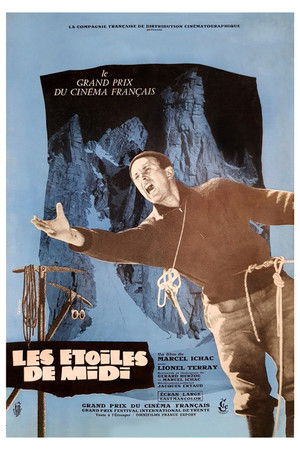
Les Etoiles de Midi is an engaging docudrama about some of the more spectacular exploits of French mountain climbers over the last several decades. In one re-enacted story, there is a wartime escape through the mountains, and in another, a daring rescue of a pair of climbers who had been missing. The actors themselves are adept at the sport of climbing, and they give the scenes an immediacy and real daring that brings the stories alive. A combination of their acrobatics and skill and the outstanding episodes in the history of French climbing creates a winning 78 minutes.
Reinhold Messner - The Fifteenth 8000er
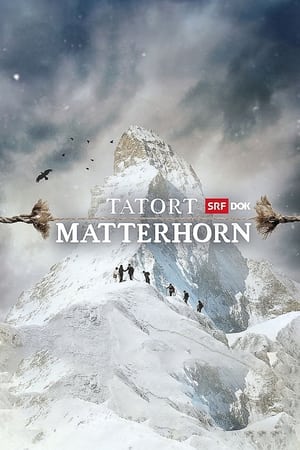
The Great North Faces of the Alps: Matterhorn
27-year-old German alpinist Jost Kobusch wants to climb Everest, alone, without oxygen and in Winter, when the roof of the world is deserted.
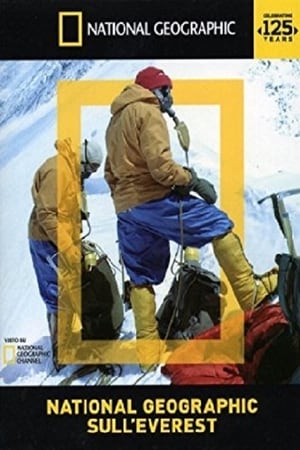
National Geographic sull'Everest
Following Ontario farmer John Gorzo Jr. from the spring planting through the fall harvest this stark, intimate film strips away our bucolic fantasies and reveals how incredibly hard farmers work to produce the food we eat. As Gorzo struggles with unpredictable weather, globalized markets and rocky finances, we marvel at his perseverance in the face of such uncertain gain. “As the months went by, we clearly could see the strain on John’s face,” says director Paul Eichhorn. “It really offers viewers the chance to see first-hand the challenges facing farmers today.”
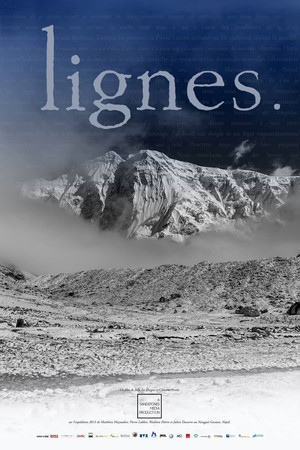
Lignes chronicles the sublime interplay between alpine literature and an expedition seeking the true meaning of mountaineering. Four high-mountain guides—Matthieu Maynadier, Pierre Labbre, Matthieu Détrie, and Julien Dusserre—embark on a project: to summit Nangpai-Gosum, an unclimbed 7,000-meter peak in Nepal, using the "alpine style" adapted to the Himalayas—the toughest and purest approach of all. Through this expedition, Lignes attempts to answer the question: "Why do we climb mountains?" Why, despite the harsh conditions and exhaustion, do these four Alpine guides pursue a perilous dream in a realm that belongs to no one? Lignes finds some answers in the past, drawing on 150 years of alpine literature. Serving as both narrator and seasoned guide, Raymond Renaud takes us on a tour of his books and speaks of the "conquerors of the useless"—from the turn of the century to the present day.
The compelling story of 30-year-old climber Tom Ballard who disappeared on one of the Himalayas' most deadly mountains, Nanga Parbat, in February 2019. Tom was the son of mountaineer Alison Hargreaves, who perished on K2 in 1995. Mother and son, two of the greatest climbers of all time, died at almost the same age in neighbouring mountain ranges, both doing what they loved best. They now lie forever encased in the ice of two of the world’s highest mountains. Left behind to cope with the enduring tragedy are Tom’s sister, Kate, and their father, Jim.
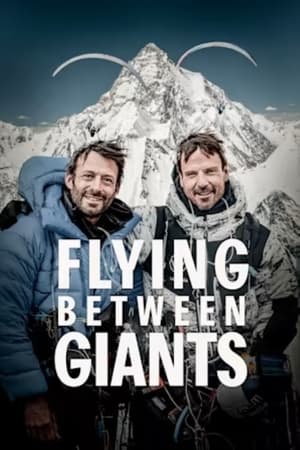
Flying Between Giants
First Macedonian Traverse is a film about mountain traverse in western region of Republic of Macedonia. Starting at Ljuboten peak at Shar Mountain crosses till Ohrid Lake, makes one of the most beautiful mountain trails at the Balkans and in Europe, with length of 200 km that passes through picturesque and diverse terrain at altitude above 2000 meters. Film follows the journey of the mountaineers passed the restored traverse in 2014 year, complemented with interviews of the establishers that set the basis of the route 40 years ago.
In the valleys of Appalachia, a battle is being fought over a mountain, the consequences of which affect every American; it's a battle that has taken innocent lives and threatens to take more. It is a battle over protecting our health and environment from the destructive power of Big Coal. Mining and burning coal is at the epicenter of America's struggle to balance its energy needs with environmental and health concerns. Nowhere is that concern greater than in Coal River Valley, West Virginia, where a small but passionate group of ordinary citizens are trying to stop Big Coal corporations, like Massey Energy, from continuing the devastating practice of Mountain Top Removal.
Account of the first French expedition to the Himalayas, which attempted to climb the hidden peak (Gasherbrum I) in 1936, from the preparations for the trip to the end of the ascent. After a long approach walk through quasi-desert regions, then on a huge glacier, the caravan of 700 porters arrives at the foot of Hidden Peak. The expedition was led by Henry de Ségogne, with Jean Charignon, Pierre Allain, Raymond Leininger, Jean Carle, Jean Deudon, Louis Neltner, Jacques Azémar, doctor Jeand Arlaud and director Marcel Ichac. Weather conditions, logistical problems and a strike among Sherpas forced the team to retire at 6900m on the south face. The film received the Silver Lion at the Venice Film Festival in 1938.
The Great North Faces of the Alps: Cima Grande di Lavaredo
The Great North Faces of the Alps: Grandes Jorasses
The Great North Faces of the Alps: Eiger
The Great North Faces of the Alps: Piz Badile
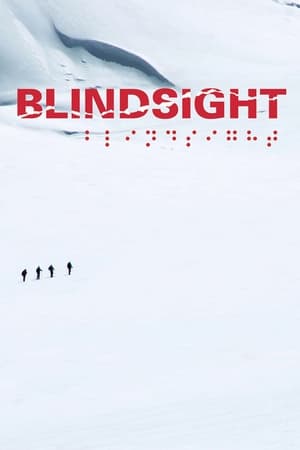
Six blind Tibetan teenagers climb the Lhakpa-Ri peak of Mount Everest, led by seven-summit blind mountain-climber Erik Weihenmayer.
The first ascent of the Matterhorn was made on July 14, 1865 by Edward Whymper, Francis Douglas, Charles Hudson, Douglas Hadow, Michel Croz and two guides from Zermatt, Peter Taugwalder father and son. Douglas, Hudson, Hadow and Croz are killed on the descent after Hadow slips and drags the other three men down the north face. Whymper and the two Taugwalders, who survive, are later accused of having cut the rope that connected them to the rest of the group so as not to be dragged into the fall, but the ensuing investigation finds no evidence of their guilt and they are acquitted. The Matterhorn is the last great peak in the Alps to be conquered and its ascent marks the end of the golden age of mountaineering. One hundred and fifty years later, a team undertakes the same expedition in order to unravel the mystery.
In 1966, John Harlin II died while attempting Europe's most difficult climb, the North Face of the Eiger in Switzerland. 40 years later, his son John Harlin III, an expert mountaineer and the editor of the American Alpine Journal, returns to attempt the same climb.
In 2019, Nepalese mountain climber Nirmal “Nims” Purja set out to do the unthinkable by climbing the world’s fourteen highest summits in less than seven months. (The previous record was eight years). He called the effort “Project Possible 14/7” and saw it as a way to inspire others to strive for greater heights in any pursuit. The film follows his team as they seek to defy naysayers and push the limits of human endurance.