County Durham, England, 1984. The miners' strike has started and the police have started coming up from Bethnal Green, starting a class war with the lower classes suffering. Caught in the middle of the conflict is 11-year old Billy Elliot, who, after leaving his boxing club for the day, stumbles upon a ballet class and finds out that he's naturally talented. He practices with his teacher Mrs. Wilkinson for an upcoming audition in Newcastle-upon Tyne for the royal Ballet school in London.
During his birthday’s celebration, Prince Siegfried must choose a bride. Trying to escape reality, he dreams of a perfect love. His tutor tries to bring him down to Earth and reminds him of his duties. On a dreamlike getaway, the prince meets Odette, a princess who has been transformed into a swan by the powerful sorcerer Rothbart. Only true love can break the spell. Captivated, Siegfried promises Odette to save her and invites her to his party. To trap the prince, the sorcerer sends his daughter Odile, disguised as Odette, to seduce him.
Matthew Bourne choreographs this version of Tchaikovsky's ballet performed at Sadler's Wells Theatre. Bourne sets the first part of the story in 1890, the year in which Tchaikovsky completed his version of Charles Perrault's classic fairy tale, with Beauty pricking herself on the poisoned rose in 1911 and awakening 100 years later in the contemporary world.
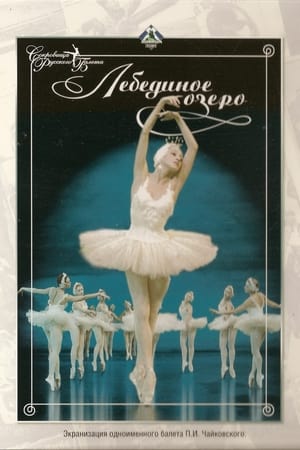
Tchaikovsky's Swan Lake, a ballet in three acts, is present by the Ballet Company of the National Opera of Ukraine, with music provided by the Orchestra of the National Opera of Ukraine, conducted by Mykola Dyadura
A magical blend of choreography, stop-motion and live action, Stories from a Flying Trunk captures the enchantment of three classic stories from Hans Christian Andersen. Conceived, written and directed by Oscar nominated Christine Edzard and featuring the dancers of the Royal Ballet, choreographed by Frederick Ashton. The Kitchen contains household objects which come to life and hold an animated conversation. The Little Match Girl updates Andersen's heart-rending tale to London's East End in the late seventies. Little Ida is an inspired celebration of dance featuring members of the Royal Ballet.
The Bolshoi presents the famous star-crossed lovers from Shakespeare’s most tragic love story set to Prokofiev’s cinematic score.
Raymonda is betrothed to Jean de Brienne, a gallant knight who pledged to go on a crusade led by the King of Hungary. When her beloved leaves, Abderakhman, a foreign knight, makes a bid for the hand of Raymonda and threatens her fate when she rejects him…
Inspired by Lord Byron’s epic poem, this jewel of the repertoire boasts a lavish production complete with a shipwreck, pirates, and some of ballet’s most renowned scenes.
Ballet performance by The Royal Ballet, recorded at Covent Garden, London, United Kingdom, July 1984.
The classic Mariinsky (Kirov) production of the greatest of all ballets. Filmed in the imperial splendor of the Mariinsky Theatre, St Petersburg. Starring Ulyana Lopatkina, Danila Korsuntsev and the breathtaking Mariinsky corps de ballet. Conducted by the great Russian maestro Valery Gergiev.
"MacMillan's vision has been vital in shaping The Royal Ballet's style and repertory, and what better way to appreciate his art than with this rare chance to experience three contrasting works in a single performance. Abstract, dramatic, humorous - this programme gives a wonderfully varied introduction not just to MacMillan's work but to the beauty and dramatic power of ballet itself. Concerto, to Shostakovich's Second Piano Concerto, contrasts moments of exuberance and elegiac reflection. The Judas Tree places a single woman among 13 men to enact a harrowing event that is recognizably contemporary but with biblical overtones. Elite Syncopations completes the programme with a sparkling evocation of a dance hall that brings ragtime rhythms to the dance, and a ragtime band to the stage.
Two playwrights and a former burlesque queen travel to Louisiana to research a musical they're planning on a local Southern hero.
Le Lac des Cygnes
Scenes from the ballet Petrushka, performed by the Paris Opera Ballet at the National Opera Theatre.
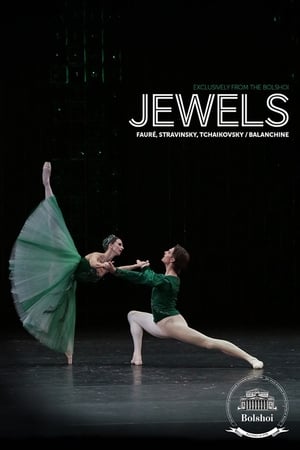
George Balanchine's jewel-themed triptych, strikingly choreographed to the music of Faure, Stravinsky and Tchaikovsky. This three act masterpiece is renowned as the world's first full-length abstract ballet. The Russian-born co-founder of the New York City Ballet, Balanchine was inspired by the artistry of jewellery designer Claude Arpels to create a trio of distinct movements revealing the essence of each precious stone. Each part also evokes three different cities: Paris, New York and St. Petersburg. 'Emeralds' was conceived as a tribute to the French romantic school, with music by Gabriel Faure. The fiery and energetic 'Rubies' taps into the rich tradition of Broadway musicals, with music by Stravinsky. 'Diamonds' honours the grandeur of Imperial Russia and the Maryinsky Theater, choreographed to the music of Tchaikovsky. With its jewel-like costumes, this is a celebration of the influences on the choreographer who was described as the father of American ballet.
An old timbal performer in a puppet theater has a secret past.
The wicked fairy Carabosse is furious she wasn’t invited to Princess Aurora’s christening. She gives the baby a spindle, saying that one day the Princess will prick her finger on it and die. The Lilac Fairy makes her own christening gift a softening of Carabosse’s curse: Aurora will not die, but will fall into a deep sleep, which only a prince’s kiss will break. The masterful 19th-century choreography of Marius Petipa is combined with sections created for The Royal Ballet by Frederick Ashton, Anthony Dowell and Christopher Wheeldon. Recorded live as part of the Royal Opera House Live Cinema Season 2019/20 with encore screenings broadcast online during the #OurHousetoYourHouse programme.
Ten short pieces directed by ten different directors, including Ken Russell, Jean-Luc Godard, Robert Altman, Bruce Beresford, and Nicolas Roeg. Each short uses an aria as soundtrack/sound, and is an interpretation of the particular aria.
The first revival of Wayne McGregor’s critically acclaimed ballet triptych to music by Max Richter, inspired by the works of Virginia Woolf.
The Sleeping Beauty holds a special place in The Royal Ballet’s repertory. It was the ballet with which the Company reopened the Royal Opera House in 1946 after World War II, its first production at its new home in Covent Garden. Margot Fonteyn danced the role of the beautiful Princess Aurora in the first performance, with Robert Helpmann as Prince Florimund. Sixty years later, in 2006, the original 1946 staging was revived by then Director of The Royal Ballet Monica Mason and Christopher Newton, returning Oliver Messel’s wonderful designs and glittering costumes to the stage.