An exploration —manipulated and staged— of life in Las Hurdes, in the province of Cáceres, in Extremadura, Spain, as it was in 1932. Insalubrity, misery and lack of opportunities provoke the emigration of young people and the solitude of those who remain in the desolation of one of the poorest and least developed Spanish regions at that time.
Joshua Littman, a 12-year-old boy with Asperger's syndrome, interviews his mother, Sarah. Joshua's unique questions and Sarah's loving, unguarded answers reveal a beautiful relationship that reminds us of the best—and the most challenging—parts of being a parent.
Cormac McCarthy has spent the last 25 years writing his novels at the mountain top retreat of the Santa Fe Institute (SFI) in New Mexico. An institute dedicated to the formal analysis of complex systems. In this documentary filmed at the library at SFI (and in the desert), Cormac in conversation with his colleague David Krakauer, reflects on isolation, mathematics, character, and the nature of the unconscious
Actor/cult icon Bruce Campbell examines the world of fan conventions and what makes a fan into a fanatic.
A short government funded industrial documentary showing the hard work and craftsmanship of labourers in the leather industry that otherwise goes unnoticed, (deserving as much attention as the exploits of a famous boxer).
A short documentary funded by the Belgian Ministry for foreign affairs showing the manufacturing and transportation of Belgian locomotives.
João Pedro Rodrigues answers the question from the title with an autobiographical short-film.
After the capture of Shanghai, Japanese soldiers make a trip to Suzhou.
June 1971 - in a fluid landscape completely below sea level, a young biology student dies during the last year of his studies, leaving behind an unfinished scientific collection. More than fifty years later, a group of ecologists and volunteers are trying to understand and document the same environment as it is today.
Internet comedian Carl Déman from the humor group JLC lived a life that looked glorious. But beneath the surface was a terrible gambling addiction that almost cost him his life. In 2019, he and other gambling addicts struggle to stay afloat in a contemporary age marinated in gambling advertising. Carl wants to ask those who make the advertising how they think and wonders why the advertising profiles now also come from the world of culture and entertainment.
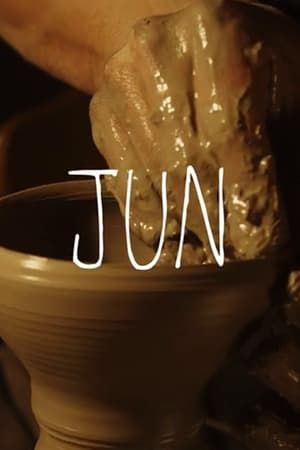
“Sardar Gurcharan Singh was the father of studio pottery in India. "Daddyji" as most called him lovingly was very close to my father. I often tagged along to visit his home studio where pottery wheels were lined up under the big neem trees in his old brick house. My father wanted me to make a film on Daddyji, who was then 95. He was afraid that Daddyji's wonderful story would be left untold. He not only introduced studio pottery in India but due to his longevity, mentored many potters. So despite not knowing anything about films, I made the documentary, Imprint in Clay with a classmate of mine, which was mostly funded by my father.”
Stringtrosan - troslådans dramaqueen
Since Rosa was little, people used to say around town that her grandfather was a black dog. The legend, belonging to the Valley of Oaxaca, spoke of a man who had the ability to turn into a black dog and roam the streets at night. Through images of the town, interviews with the brothers and animated interventions, the documentary tells the story of the myth and its importance in the collective memory.
Animated training film depicting the fundamentals of electricity and how electrical signals can be used to keep an airplane on correct course and altitude through an autopilot.
Buster Brown creater R.F. Outcault sketches his creation. Part of the Buster Brown series for Edison film studio.
Belgian art historian and filmmaker Paul Haesaerts (1901–1974) made a significant contribution to the promotion of modern Flemish art. In the late 1940s, he started experimenting with the medium of film to practice a new form of lens-based art criticism. The understudied documentary "Quatre peintres belges au travail" (1952) presents Belgian artists Edgar Tytgat, Albert Dasnoy, Jean Brusselmans and Paul Delvaux at work in their studio. On a large sheet of glass placed in front of the camera, they each paint one of the seasons that also represent a stage in a person’s life. A close reading of this Kodachrome color film sheds light on the context of mid-century art reproductions, mass media and post-war Flemish culture. It also examines in what way this film operates as Haesaerts’s concept of cinéma critique, while raising questions as to the way Haesaerts attempted to reconcile the spatial art of painting with the temporal medium of film.
The Veterans of Foreign Wars as a fraternal and social organization, with emphasis on their projects that benefit community life and cohesion.
Short documentary about the Belgian leather industry.
Two countries, two restaurants, one vision. At Gabriela Cámara's acclaimed Contramar in Mexico City, the welcoming, uniformed waiters are as beloved by diners as the menu featuring fresh, local seafood caught within 24 hours. The entire staff sees themselves as part of an extended family. Meanwhile at Cala in San Francisco, Cámara hires staff from different backgrounds and cultures, including ex-felons and ex-addicts, who view the work as an important opportunity to grow as individuals. A Tale of Two Kitchens explores the ways in which a restaurant can serve as a place of both dignity and community.
To the city come men, women, fruits, flowers, vegetables, goats and sheep – all ready for consumption. It is the process of consumption/exploitation that forms the core of the film.