A discussion with her family brings a daughter an occasion to ponder the past. Presence and absence lead to an immersion into memories, and ultimately, to the future.
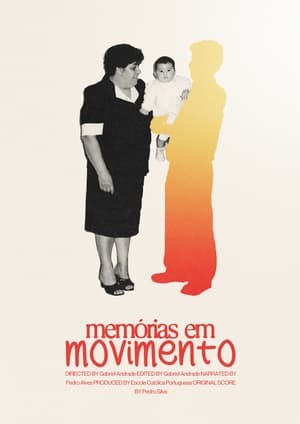
Rafaela, an 80-year-old woman, has a long conversation with her grandson, going over his path from childhood to old age. Now that she has been diagnosed with chronic breast cancer, faith is more present in her life than ever, which coexists with Rafaela's fear of death, and her grandson's fear of dying.
Haja Fatma, a mother to eight children, tells the tale of family life in Tripoli during the Libyan Revolution. Women, young and old, all contributed during these hostile months in their own unique way. A human portal into the acts of ordinary people in their hope for freedom.
When a Mongolian nomadic family's newest camel colt is rejected by its mother, a musician is needed for a ritual to change her mind.
One Sunday in a public housing project, an Italian immigrant family. Through the character of the mother, we experience the family's Sunday ritual. More than just this somewhat ancestral ritual, which is still relevant today, we get a glimpse of this Mediterranean culture.
An Austrian director followed five successful African music and dance artists with his camera and followed their lives for a year. The artists, from villages in Ghana, Gambia and Congo, were the subjects of Africa! Africa! touring across Europe, but they have unbreakable roots to their homeland and their families. Schmiderer lovingly portrays his heroes, who tell their stories about themselves, their art and what it means to them to be African with captivating honesty. The interviews are interwoven with dance scenes and colourful vignettes set to authentic music.
In Argentina, almost all adopted children are under 5 years of old. Luis and Valeria open the doors of their home and tell us their family story. A true story full of obstacles, fears and love about paths that connect and people who meet by chance.
The artist Johanna Faust is about to leave her children to finally devote herself to her art again. A vague memory comes to her mind: Didn't her grandmother do the same thing, with terrible consequences? The intimate road movie tells of lost mothers and abandoned children, of the temptations and the price of self-fulfilment, of the abysses of motherhood and of the deep longing for another life.
Plataneros
The hairstyles of four Afro-descendant people from Mexican - Senegalese families, represent the starting point to reflect, through memories that emerge from their past and present, what it is like to live in México wearing a Black Crown and the consequences that implies.
Jasmin is joy, living in the moment. A 15-year-old boy described as "non-verbal autistic." He communicates through his eyes. He makes sounds, says a word. He constantly sings the rhythm of a song whose lyrics only he knows. A bubble of sweetness and love.
A documentary about the parents of director Ivette Löcker, who have been living apart in their shared home for 20 years.
"The Boy Of The Fish" follows Noon, a young boy living in a Syrian refugee camp, who finds solace and a sense of freedom in a whale-shaped doll he names "Bahr." Set against the challenging realities of camp life, Noon’s journey is both a story of resilience and a testament to the boundless imagination of childhood. Through vivid symbolism and a unique soundscape, the film explores themes of loss, hope, and the longing for freedom amidst confinement. Shot entirely on an iPhone due to restrictions in the conflict zone, the film combines raw authenticity with poetic depth to capture the emotional landscape of a young soul navigating adversity.
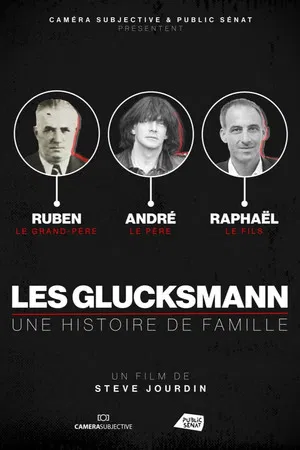
What would your family reminiscences about dad sound like if he had been an early supporter of Hitler’s, a leader of the notorious SA and the Third Reich’s minister in charge of Slovakia, including its Final Solution? Executed as a war criminal in 1947, Hanns Ludin left behind a grieving widow and six young children, the youngest of whom became a filmmaker. It's a fascinating, maddening, sometimes even humorous look at what the director calls "a typical German story." (Film Forum)
Brayden Olson has spent his life wondering about the father he never knew. Armed with only a name, a faded photograph, and an improbable lead, he sets out across continents to uncover the mystery of Carlos. But as each revelation brings him closer to the truth, Brayden risks unraveling the life he’s always known — especially the bond with the mother who raised him alone. Raw, intimate, and deeply human, Finding Carlos explores identity, family, and the silent epidemic of fatherlessness.
As the months pass through her, Mai gives us a glimpse into old age that explores between being abandoned and being belonged, passing the time and living the time.
Three juxtaposing stories taking place in Portugal, Austria and Cuba create an intimate and poetic portrait of the daily lives and struggles of the elderly in an unstable world, seen through the eyes of their grandchildren.
Ensayos y errores
An older woman cooks for a fisherman by the sea.
Call Me Malcolm is an amazing story of the human spirit and God's spirit, and the liberating struggle to realize and express with confidence the marvelous gift of one's truest sense of self. As Malcolm shares his own story and through the stories of others we meet, Call Me Malcolm offers us a glimpse into the real lives of real people who are transgender. But it is only a glimpse. There are many stories to be told and Malcolm helps us make connections to our own stories, encouraging us to share them. That can seem daunting in a culture which has done more to heap shame on persons who identify as transgender. The good news of Malcolm's story is the way in which shame and fear are overcome by grace, compassion and knowledge. Viewers cannot help but come to a deeper understanding of faith, love, and gender identity, and by doing so, arrive at a deeper understanding of their own journey.