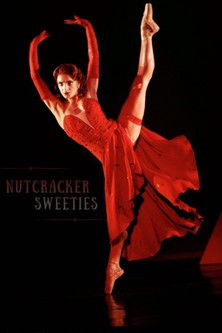
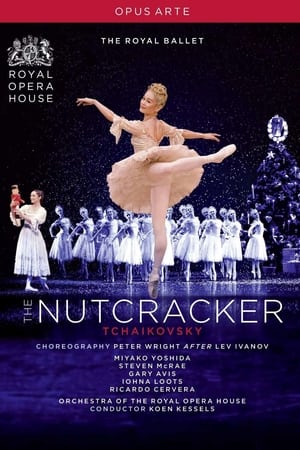
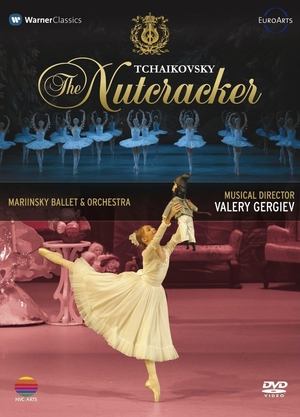
The Nutcracker is Mikhail Baryshnikov's breathtaking and critically acclaimed Emmy-nominated production. This spectacular performance is danced by the magnificent team of Baryshnikov, one of the greatest classical dancers of the century, and Gelsey Kirkland, both showcased at the peak of their careers, with members of the American Ballet Theatre.
Tchaikovsky's Swan Lake, a ballet in three acts, is present by the Ballet Company of the National Opera of Ukraine, with music provided by the Orchestra of the National Opera of Ukraine, conducted by Mykola Dyadura
Frederick Ashton's La Fille mal gardée (The Wayward Daughter) is one of the choreographer's most joyous and colourful creations. Inspired by his love for the Suffolk countryside, the ballet is set on a farm and tells a story of love between Lise, the daughter of Widow Simone, and Colas, a young farmer. It contains some of Ashton's most stunning choreography, most strikingly in the series of energetic pas de deux that express the youthful passion of the young lovers, performed here by Natalia Osipova and Steven McRae. The ballet is laced with exuberant good humour, and elements of national folk dance, from dancing chickens and a maypole dance to a Lancashire clog dance for Widow Simone, performed by Philip Mosley.
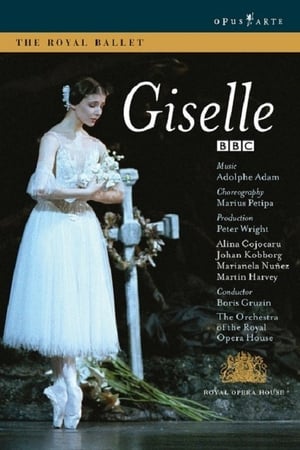
Giselle is the quintessential Romantic ballet. Its title role, one of the most technically demanding and emotionally challenging in the classical repertory, is here danced by Alina Cojocaru, partnered by Johan Kobborg as Count Albrecht. This tale of the transcendental power of love over death is evocatively portrayed through Peter Wrights sensitive staging and John Macfarlanes designs, which beautifully contrast the human and supernatural worlds mastered from a High Definition recording and true surround sound. Conductor : Boris Gruzin Orchestra : The Orchestra of the Royal Opera House
Filmed on the stage of London's Covent Garden. Includes extracts from Swan lake, Ondine & The Firebird.
Sergei Prokofiev's setting of the fairy tale "Cinderella" premiered at Moscow's Bolshoi Theater in 1945. In 1986, Rudolf Nureyev, then ballet director of the Paris Opera, choreographed the ballet anew and transposed the story into a private cinema, with sets reminiscent of Fritz Lang's "Metropolis." ARTE shows the Paris Opera performance from December 31, 2018.
The Royal Ballet presents the world premiere of Cathy Marston's first work for the Company on the Main Stage alongside a revival of Jerome Robbins’s timeless classic of pure dance. The Cellist is a one-act ballet about British cellist Jacqueline du Pré, from her discovery of the cello through her celebrity as one of the most extraordinary players of the instrument to her frustration and struggle with multiple sclerosis. Jerome Robbins's Dances at a Gathering is a fluid exercise in pure dance for five couples, set to piano music by Fryderyk Chopin.
The film recording of the ballet performance of the State Theatre in Brno was expensively realized in a theatrically stylized set built in the Barrandov studios. The original ballet music by Václav Trojan, based on Shakespeare's fairy tale comedy, was preceded by incidental music for theatre and radio, and in particular the soundtrack to Jiří Trnka's feature-length puppet film A Midsummer Night's Dream.
A small-town shoemaker with a knack for spinning yarns, Hans encounters happiness and heartbreak on his road to becoming a full-fledged writer.
In his 45th year as artistic director of Hamburg Ballet, John Numeier directs a modern adaptation of Tolstoy's masterpiece "Anna Karenina" in co-production with the Bolshoi Theatre and the National Ballet of Canada.
Le Lac des Cygnes
Scenes from the ballet Petrushka, performed by the Paris Opera Ballet at the National Opera Theatre.
A one-hour version of Tchaikovsky's classic ballet, with a somewhat revised storyline reminiscent of "The Wizard of Oz".
The Royal Ballet Company brings Squirrel Nutkin, Tom Thumb, Hunca Munca, Jemima Puddle-Duck, Jeremy Fisher, Pigling Bland, and Pigwig to the screen doing pirouettes and pas de deux in this filmed ballet production directed by Reginald Mills. The film more properly belongs, however, to choreographer Frederick Ashmore, composer John Lanchbery, and costume designer Rostislav Douboujinsky. This literal adaptation concerns the shy Beatrix Potter and how, when all of the toy animals in her room come to life, she emerges from her shell and begins to enjoy life. Sequences include a rowdy dance with Tom Thumb and Hunca Munca destroying a collection of plaster food, a midnight pas de deux between Pigling Bland and Pigwig, and a corps de ballet of dancing mice.
Swanhilda notices her fiancee Franz is infatuated with the beautiful Coppélia who sits reading on her balcony each day. Nearly breaking up the two sweethearts, Coppélia is not what she seems and Swanhilda decides to teach Franz a lesson… The Bolshoi’s unique version of Coppélia exhibits a fascinating reconstruction of the original 19th century choreography of this ebullient comedy involving a feisty heroine, a boyish fiancee with a wandering eye, and an old dollmaker. The company’s stunning corps de ballet shines in the divertissements and famous “dance of the hours,” and its principals abound in youthful energy and irresistible humor in this effervescent production.
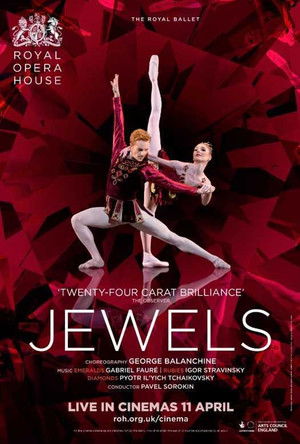
George Balanchine's jewel-themed triptych, strikingly choreographed to the music of Faure, Stravinsky and Tchaikovsky. This three act masterpiece is renowned as the world's first full-length abstract ballet. The Russian-born co-founder of the New York City Ballet, Balanchine was inspired by the artistry of jewellery designer Claude Arpels to create a trio of distinct movements revealing the essence of each precious stone. Each part also evokes three different cities: Paris, New York and St. Petersburg. 'Emeralds' was conceived as a tribute to the French romantic school, with music by Gabriel Faure. The fiery and energetic 'Rubies' taps into the rich tradition of Broadway musicals, with music by Stravinsky. 'Diamonds' honours the grandeur of Imperial Russia and the Maryinsky Theater, choreographed to the music of Tchaikovsky. With its jewel-like costumes, this is a celebration of the influences on the choreographer who was described as the father of American ballet.
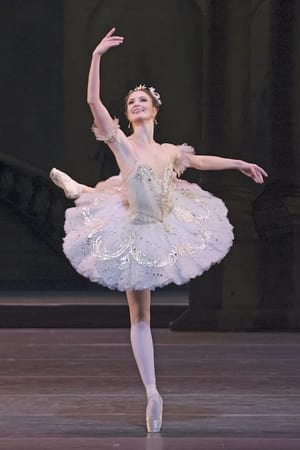
The wicked fairy Carabosse is furious she wasn’t invited to Princess Aurora’s christening. She gives the baby a spindle, saying that one day the Princess will prick her finger on it and die. The Lilac Fairy makes her own christening gift a softening of Carabosse’s curse: Aurora will not die, but will fall into a deep sleep, which only a prince’s kiss will break. The masterful 19th-century choreography of Marius Petipa is combined with sections created for The Royal Ballet by Frederick Ashton, Anthony Dowell and Christopher Wheeldon. Recorded live as part of the Royal Opera House Live Cinema Season 2019/20 with encore screenings broadcast online during the #OurHousetoYourHouse programme.
The peasant girl Giselle discovers the true identity of her lover Albrecht – and that he is promised to another. This is one of The Royal Ballet’s most loved and admired productions, faithful to the spirit of the 1841 original yet always fresh at each revival. This performance features former Bolshoi star and now Royal Ballet Principal Natalia Osipova in a breath-taking interpretation of the title role.
This thrilling, audacious, and witty production is perhaps still best known for replacing the female corps-de-ballet with a menacing male ensemble, which shattered convention, turned tradition upside down and took the dance world by storm. Filmed Live at Sadler's Wells.
Ever since its triumphant premiere in 1960, Frederick Ashton's La Fille mal gardee has been treasured as one of his happiest creations - his artistic tribute to nature, and an expression of his feelings for his beloved Suffolk countryside. Marianela Nunez and Carlos Acosta perfectly portray the young lovers Lise and Colas, determined to thwart the plans of Widow Simone to marry off her wayward daughter to Alain, the simple son of wealthy Farmer Thomas. Osbert Lancaster's colourful, picture-book designs, along with Ferdinand Herold's tuneful score, arranged by John Lanchbery, provide the perfect setting for Ashton's blissfully bucolic ballet, complete with haywain, pony, maypole and ribbons, a cockrel and his chickens and, of course, the famous clog dance, here wonderfully led by William Tuckett as the irascible but lovable Widow Simone.