Through abrupt soundtrack shifts, this short film jumps between historical political imagery to explore the cinematic language of propaganda, unpacking complex concepts through sensory explosions — from the Brazilian military dictatorship to the Chinese revolution.
Three children living in a displacement camp in northern Uganda compete in their country's national music and dance festival.
A free and intimate portrait behind the scenes of Valeria Bruni Tedeschi's creation. In front of the camera, she transmits to today’s young actors the memory of the 1980s.
From Italian set designer to Brazilian stage director, Gianni Ratto, born in Italy in 1916 and based in Brazil since 1954, retraces the geographical path of his life, accompanied by his daughter, passing through Genoa, Milan, Florence, São Paulo, and Rio de Janeiro, visiting places and people who marked his journey. At each encounter, Gianni speaks of his work and reveals the ideas of someone who not only executes but also thinks about theater from a humanist perspective.
A look at the entire process of creating and developing Patrice Chéreau’s third staging of "In the Solitude of Cotton Fields" by Bernard Marie Koltès with Pascal Greggory and Chéreau himself. From the first reading around the table through the first contact with the performance space, rehearsals and lighting to opening night, the entire creative process unfurls in front of our eyes. The film shows us the evolving and ongoing dialogue between Greggory and Chéreau, a dialogue full of crises and magical moments of harmony and insight via which the truth, intensity, complexity, mystery and depth of Koltès’ text gradually emerge to form an implicit bond between these two men. The film also shows Chéreau directing rehearsals for Mozart’s "Don Giovanni" in Salzburg, revealing both the unity of and profound differences between his opera and theater work.
Opening with the first day of rehearsals of the London production of "Sweeney Todd", this ninety-minute documentary focuses on the rehearsal process with the musical's director, composer and actors.
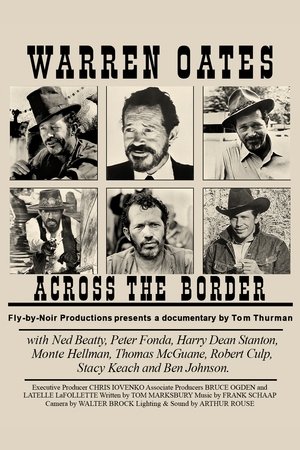
A retrospective of the work of the late actor Warren Oates, with clips from his films and interviews with cast and crew members who worked with him.
This documentary looks back on a career of a woman who, very early on, refused to accept the roles assigned to her. In the 1980s, while others were trying to please, she wrote "Les hommes préfèrent les grosses" (Men Prefer Fat Women), a manifesto ahead of its time, funny, feminist, and blunt. Later, with "Gazon maudit" (Damned Grass), she tackled homosexuality with a freedom that is still shocking today.
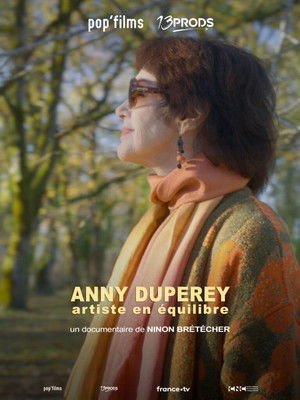
A popular actress, Anny Duperey lived a precarious life for many years until she found a place to settle down in Creuse. It is there that she keeps her photos, writes, and recharges her batteries. In this portrait, she breaks with convention by playing with her image and openly questioning the desires of an actress as her career is revisited.
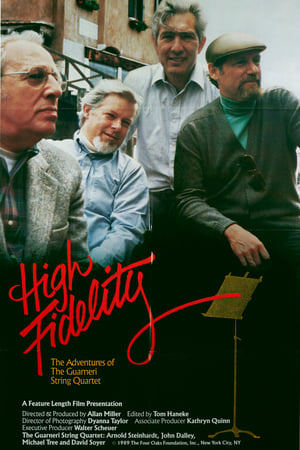
Relationships, rehearsals, performances, hobbies, and family life of the members of the Guarneri String Quartet.
An English-speaking film produced on behalf of the Israeli Center of the International Theater Institute, providing international audience with an overview of modern Israeli theater, including scenes of renowned Israeli theater productions from the theater season of 1967. The film opens with excerpts from “The Dybbuk” at Habima Theater, and includes scenes from the successful musicals of the Cameri Theater “Utz Li Gutz Li” (Rumpelstiltskin) and “King Solomon and Shalmai The Shoemaker”. Other excerpts include scenes from the plays “The American Princess” by Nissim Aloni at the Seasons Theater, “He Walked Through the Fields” by Moshe Shamir at the Haifa Theater, Ibsen’s “Hedda Gabler”, “Who’s Afraid of Virginia Wolf”, and more.
At Olivet, some students don’t meander past the Dairy Queen near the stoplight..but those who make the trek to the Sims Building are creative minds who are bursting with ideas. Purpose Productions presents a film that leads you through a journey of inspiration, color, and heart. All you have to do is go off the beaten path.
A century after a village and its paper mill were abandoned, a group of actors is tasked with recreating the fantasized daily life of its inhabitants.
A documentary about one night at Alexander Theatre in Helsinki. Staff prepares for 300 guests, serves them and closes this historically significant building for the night.
Oriza Hirata is Japan's leading playwright and director, who runs his own theatrical company, Seinendan. Theatre 2 (Observational Film Series #4) examines the dynamic relationship between theatre and the society through depicting Hirata's activities. In order for his art and his not-so-commercial company to survive this highly capitalistic modern society, what kind of strategy does Hirata have and practice?
A German TV documentary that chronicles the daily rehearsals, the filming and all the behind the scenes of Jean-Jacques Annaud's classic "The Name of the Rose". From actors perspectives to the ideas used by the director to produce an impeccable international epic adaptation of Umberto Eco's best selling novel, the film presents the obstacles behind the creation of a production of such large scale and also the making of the many difficult scenes, most of the ones presented here are the characters' murders inside the mysterious abbey.
The film is not merely a record of rehearsals, but above all an intimate look at the relationships between its individual protagonists. Nor is it a classic documentary, because the line between acting, creation, and recording reality is too thin. The film thus reflects not only the aging of outstanding actors, but also their relationship to today's world and their disappointment with the current state of Czech film and theater. It speaks to their fears, desires, and efforts to give their best.
From the 1st projection to the newest technology IMAX and 4DX, we will travel trough the history of french theaters, asking questions about technological developments throughout history, and finally, the hoped-for future of movie theaters and how they envision themselves in 20 years.
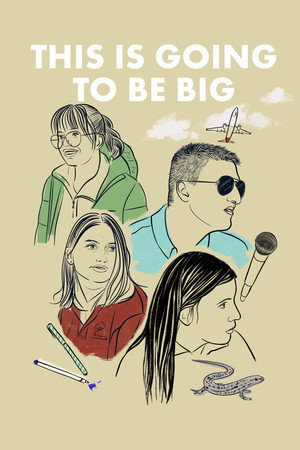
Peer behind the curtain as a cast of neurodivergent teens prepare to come of age and hit the stage in their school’s time-travelling, John Farnham–themed musical.
The Black Contribution – Literature and Theater 1978 is a rare documentary highlighting the voices and cultural impact of African American writers and performers during the civil rights era. Introduced by NAACP leader Benjamin Hooks and narrated by Roscoe Lee Brown, the film weaves together dramatic readings, theatrical excerpts, and candid urban street footage. Margaret Walker’s poem For My People is performed alongside scenes of daily Black life in New York City — children playing, families on stoops, open fire hydrants, and the realities of poverty in 1970s neighborhoods. James Baldwin appears in interview footage, while signs for his play The Amen Corner and stage excerpts from Lorraine Hansberry’s A Raisin in the Sun underscore the powerful presence of Black voices in American theater. With rare shots of Harlem life, literature, and performance, this film documents the enduring contributions of African American artists to U.S. culture and history.