U B(ON) IN MY EYES
Flooded McDonald's is a new film work in which a convincing life-size replica of the interior of a McDonald's burger bar, without any customers or staff present, gradually floods with water.
A ritual of grids, reflections and chasms; a complete state of entropy; a space that devours itself; a vertigo that destroys the gravity of the Earth; a trap that captures us inside the voids of the screen of light: «That blank arena wherein converge at once the hundred spaces» (Hollis Frampton).
After concluding the now-legendary public access TV series, The Pain Factory, Michael Nine embarked on a new and more subversive public access endeavor: a collaboration with Scott Arford called Fuck TV. Whereas The Pain Factory predominantly revolved around experimental music performances, Fuck TV was a comprehensive and experiential audio-visual presentation. Aired to a passive and unsuspecting audience on San Francisco’s public access channel from 1997 to 1998, each episode of Fuck TV was dedicated to a specific topic, combining video collage and cut-up techniques set to a harsh electronic soundtrack. The resultant overload of processed imagery and visceral sound was unlike anything presented on television before or since. EPISODES: Yule Bible, Cults, Riots, Animals, Executions, Static, Media, Haterella (edited version), Self Annihilation Live, Electricity.
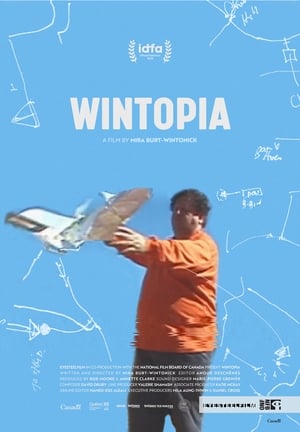
IDFA and Canadian filmmaker Peter Wintonick had a close relationship for decades. He was a hard worker and often far from home, visiting festivals around the world. In 2013, he died after a short illness. His daughter Mira was left behind with a whole lot of questions, and a box full of videotapes that Wintonick shot for his Utopia project. She resolved to investigate what sort of film he envisaged, and to complete it for him.
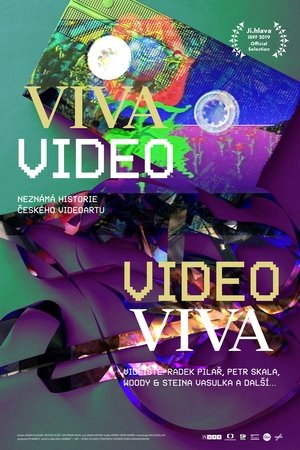
Today, analogue video is attractive primarily thanks to the distinctive aesthetic quality of its pixelated image and raster errors. But for Czech artists who first explored the possibilities offered by video art in the late 1980s, this medium represented a path towards freedom. Through a portrait of her grandfather Radek Pilař, one of the pioneers of Czech video art, the director explores her own legacy of imperative creative fascination. Her film’s main story, i.e., the process of reconstructing the 1989 exhibition Video Day, contrasts this enchantment with life in the final days of the totalitarian regime, which different sharply with the adventures of those who decided to emigrate – whom the filmmaker also visits in order to discover forgotten works, get to know their creators, and re-establish broken ties.
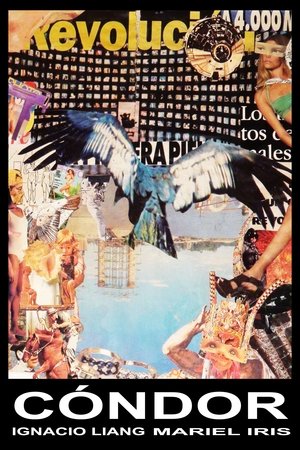
Cóndor
The Machine That Killed Bad People is about the cultural and political history of the Philippines leading up to the overthrow of President Ferdinand Marcos in 1986. It also addresses the role of electronic media in the struggle for power, and more broadly, American intervention in the Third World. Using a structure that emulates the way television news programs construct meaning through fragmentation, the tape interweaves clips of Filipino activists and reporters, a fictional television anchorwoman and correspondent, commentary by independent filmmaker Trinh T. Minh-ha, Fagin's off-camera voice and script, and anonymous excerpts from commercial television.
Presented without commentary, this film reveals the thinking behind the work of John Baldessari over the course of his career, and provides clues to the understanding of the artist's paintings, photographic work and books.
In this program video artist Gary Hill uses a number of his pieces to investigate otherness and ambiguity, dislocation of the senses, the boundary between words and comprehension, the physicality of text, and figurative interactivity.
From his photo-text canvases in the 1960s to his video works in the 1970s to his installations in the 1980s, John Baldessari’s (b.1931) varied work has been seminal in the field of conceptual art. Integrating semiology and mass media imagery, he employed such strategies as appropriation, deconstruction, decontextualization, sequentiality, and text/image juxtaposition. With an ironic wit, Baldessari's work considers the gathering, sorting, and reorganizing of information. “Something that is part of my personality is seeing the world slightly askew. It’s a perceptual stance. The real world is absurd sometimes, so I don’t make a conscious attempt, but because I come at it in a certain way, it seems really strange,” Baldessari says in this interview with Nancy Bowen. A historical interview originally recorded in 1979 and re-edited in 2003 with support from the Lyn Blumenthal Memorial Fund.
Pia Yona Massie's Sayonara Super 8 uses personal archival footage to ask questions about the fragile nature of memory, human relationships and the foibles of the medium itself.
An ironic and touching moment between a mother and son shot in this short film by Mahdi Baraghithi
Poet and artist Vito Acconci points his finger towards the camera and his own reflection in an offscreen video monitor.
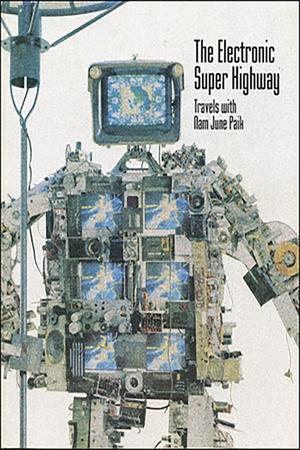
The quixotic journey of Nam June Paik, one of the most famous Asian artists of the 20th century, who revolutionized the use of technology as an artistic canvas and prophesied both the fascist tendencies and intercultural understanding that would arise from the interconnected metaverse of today's world.
Director Anthony Ramos joins his good friend, painter Frederick J. Brown, on a trip to Beijing for a retrospective of Brown’s work at the National Museum of China in Tiananmen Square in 1988, the first retrospective of an American artist in China.
A film exploration of the work and aesthetic concepts of Yayoi Kusama, painter, sculptor, and environmentalist, conceived in terms of an intense emotional experience with metaphysical overtones, an extension of my ultimate interest in a total fusion of the arts in a spirit of mutual collaboration. —Jud Yalkut
These 131 video monitors stacked in a grid present simultaneous, continuous footage of the German artist during the last year of his life. In this filmed diary-project that Dieter Roth executed while convalescing in Reykjavik and Basel, we see him not only working in his studio but also while he sleeps, bathes, and uses the bathroom. It is nearly impossible to pay attention to only one video without becoming distracted by an unexpected sound or movement coming from one of the many other screens. Each monitor broadcasts a different point in the artist's daily routine, while the gridlike arrangement of monitors reinforces a sense of order and chronology.
Guy Ben-Ner, one of Israel's foremost video artists, gained international recognition with a series of low-tech films, starring his family in absurdist settings carved out of their intimate spaces and their everyday surroundings. Many of his videos are inspired by screenplays for films, folktales and novels. Analyzing these literary and cinematographic passages allows him to exploit the conventions of film narrative: how to tell a story, captivate an audience through a tale, sustain a degree of tension and entertainment, and so on. At the same time, he corrupts the magic of fiction by openly showing us the entrails of everything he records, without worrying about revealing the tricks of the trade. A large part of his filmic oeuvre features a conglomeration of cinematic and literary references which the artist quotes, adapts or interprets. Ben-Ner self-referentially links the great themes and their literary, cinematic and artistic realization.
El resto es porno