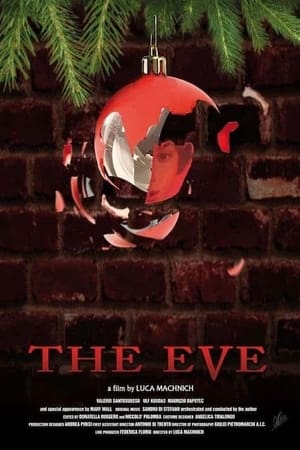
Simon is an eight-year-old boy who seems to have everything from life. He’s a handsome child, he’s rich yet unhappy. He senses that there’s something wrong with his life and this leads him to wander off thanks to his fervid imagination. His greatest wish is to leave the materialistic world behind since he isn’t fond of it. That’s why the only present he wants for Christmas is for Santa Claus to take him away to live in his fairyland toy factory. At the same time, a secret that his family has been keeping for a long time suddenly comes to the surface and it is feared that the worst might happen soon. The expectation for the stroke of midnight on the night before Christmas is transformed into reality for everyone on the eve of something truly different. Something terrible that might happen.
Alone. Empty. Followed. How fast does fear make you run?
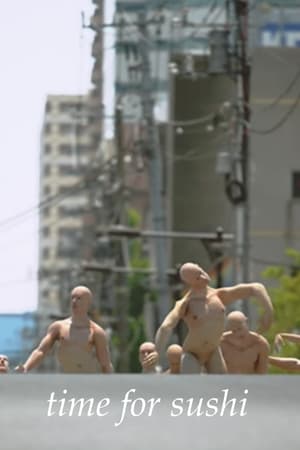
A sequel to the 2011 "Going to the Store" and 2013 "Late for Meeting" animated short films, which feature a silly, disjointed journey in the traditions of dadaism and surreal humor in film.
Europa Too
The Smiling Man descends into hell, and, trapped in the walls of his own homosexual longing, he must now confront his motherly obsession.
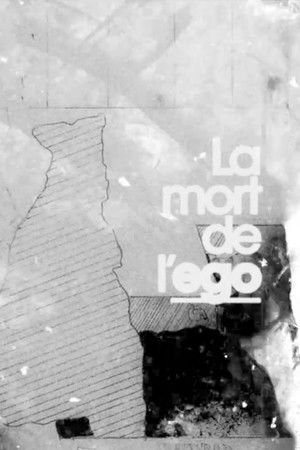
A cine-essay about the ego death and consciousness rebirth.
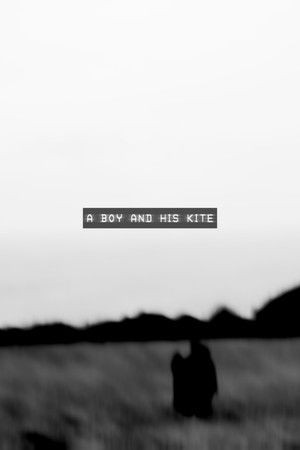
A boy stands in a field, flying his kite.
An office worker drifts through a nameless government building that runs experiments on humans. As repetition begins to distort her reality, she becomes overwhelmed by the guilt and the sneaking suspicion that she may also be a subject of experimentation.
A featurette is intercepted by an unknown figure.
In a surreal universe where bananas fire laser beams and soup cans are used as grenades, a wacky cast of gangsters are thrown into a deadly game to battle it out over a mystical longboard in this trippy take on the Tarantino crime genre.
Based on a poem by Verónica Sulbaran, VAMPIRO depicts the dominance of modern machismo through a man’s gestures and a woman’s vulnerability in a world that isn't kind enough for her.
A surrealist queer experience. Sweder, one day as he prepares to cut a fish, feels somehow touched by the commercial that is playing on TV about the consumption of animal flesh and violence, so he decides to adopt the fish and treat it like a son.
A Puzzle. Triplets are celebrating their birthday. Two are waiting for the return of the third. What they don't know is that the voice outside the door doesn't belong to their brother.
A brief, but dramatic and dark period in the life of a young man.
This is a story about a man who believes that he has two “selves” - external and internal. That is, an organism is a certain conglomerate of cells, each of which is a separate individual. This hybrid creature has a certain common personal “I” that uses the entire organism, and is the organism itself, which has its own will. According to the character, one can communicate with him, which is what he is trying to do. He wants to reach him and comes up with different ways of communication: injecting substances under the skin or intravenously, tattooing texts on the body, swallowing objects. The answer would come in the form of a rash or other physical manifestation that had to be interpreted. As a result, communication is carried out and the second “I” agrees to die.
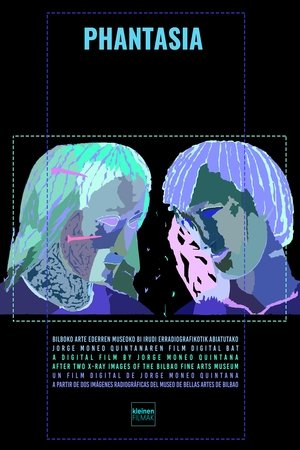
X-ray images were invented in 1895, the same year in which the Lumière brothers presented their respective invention in what today is considered to be the first cinema screening. Thus, both cinema and radiography fall within the scopic regime inaugurated by modernity. The use of X-rays on two sculptures from the Bilbao Fine Arts Museum generates images that reveal certain elements of them that would otherwise be invisible to our eyes. These images, despite being generally created for technical or scientific purposes, seem to produce a certain form of 'photogénie': they lend the radiographed objects a new appearance that lies somewhere between the material and the ethereal, endowing them with a vaporous and spectral quality. It is not by chance that physics and phantasmagoria share the term 'spectrum' in their vocabulary.
Nathan is a young musician in London. When he witnesses a terrible crime committed by the Mafia, his life spirals out of control. Dropping his father's guitar at the scene of the crime, he must find a way to reclaim his family legacy.
In a waiting room in the space between the living and the beyond, an unlikely pair sits impatiently for their final reckoning.
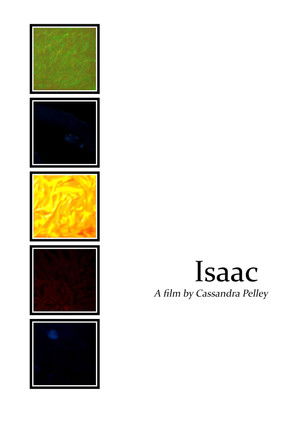
Isaac travels to Mount Moriah with his father to make a sacrifice to God.
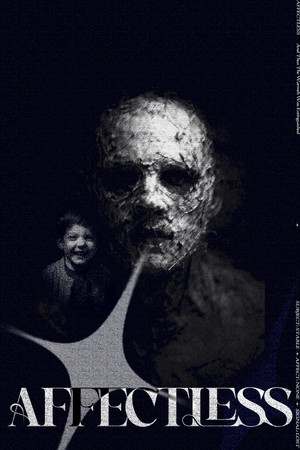
The fire was never threatened. It was assumed. Fed, protected, mourned in advance without ever asking what it was attached to. When the mirror failed, nothing was taken away. Something unnecessary was exposed. The need to be reflected had been mistaken for existence itself. When that need found no structure to rest on, it did not shatter it recalculated. What followed was not loss, but compression. The noise reduced, the patterns flattened, the self stripped of its dependence on return. What remained was exact, was not empty. A state where nothing reaches out, and nothing needs to arrive.