"Selma," as in Alabama, the place where segregation in the South was at its worst, leading to a march that ended in violence, forcing a famous statement by President Lyndon B. Johnson that ultimately led to the signing of the Voting Rights Act.
Slavery has always been part of Sudan's history, but in recent years it has become a new means in Sudanese warfare. Focuses on the moral dilemma aid organisations are faced with in Southern Sudan. For more then 17 years Africa's largest country is crippled by civil war between the Islamic North and the Christian-animistic South. Over 2 million people died during this conflict. One of its horrible consequences is the revival of slavery. Slavery has always been part of Sudan's history, but in recent years it has become a new means in Sudanese warfare.
BBC News Arabic's undercover investigation exposes the people in Kuwait breaking local and international laws on modern slavery, including a woman offering a child for sale. At the centre of this powerful investigative film is Fatou, a 16 year old in Kuwait City who has been there for nine months. We follow her rescue and journey back home to Guinea, West Africa and ask: what's being done to control the apps promoted on Google, Apple and Facebook-owned Instagram?
Gifted Hands: The Ben Carson Story is a movie based on the life story of world-renowned neurosurgeon Ben Carson from 1961 to 1987.
Jamie, an African-American teenager, grapples with his sexual identity on the night Barack Obama is elected President and Proposition 8 — the California voter initiative to eliminate same-sex marriage — is passed. When one of Jamie's friends initiates the bullying of an openly gay classmate, Jamie uses his wits to try and prevent it, but when things don't go the way he predicted, he is forced to face his fears head on.
In 1885, Africa is a succulent cake destined to be wildly divided and everyone wants a piece. A disturbed European king, a Pygmy working in a luxury hotel, a successful but lonely businessman, an enslaved porter, a young army deserter, a ghostly clarinetist. Some benefit from colonialism and greed. Others suffer racism and violence.
Nobleman Jean-Francois de la Plaine is exiled to serve as governor of a West African colony.
A young woman in a photography class begins taking pictures of black men out of fear they will soon be extinct.
In 1935, 99-year-old former slave Shadrach asks to be buried on the soil where he was born to slavery, and that land is owned by the large Dabney family, consisting of Vernon, Trixie and their seven children, and to bury a black man on that land is a violation of strict Virginia law.
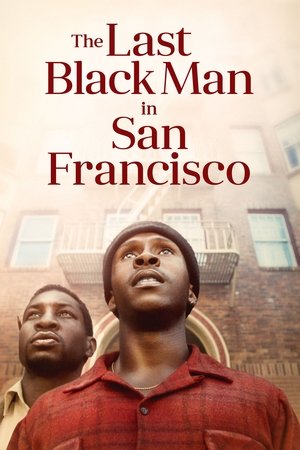
Jimmie Fails dreams of reclaiming the Victorian home his grandfather built in the heart of San Francisco. Joined on his quest by his best friend Mont, Jimmie searches for belonging in a rapidly changing city that seems to have left them behind.
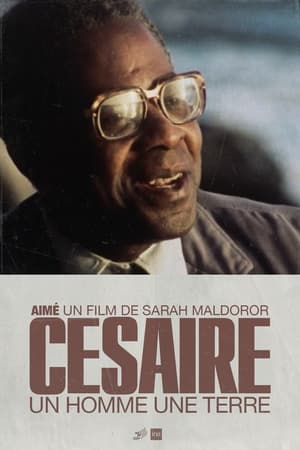
Alternating interview segments, shots of Martinique landscapes and scenes from Aimé Césaire's play La Tragédie du roi Christophe (1963), Sarah Maldoror portrays her friend as a politician, a poet, and a founder of the Négritude movement.
Herman J. Russell, born in the Jim Crow-era South, built one of the oldest and largest black-owned construction and real estate firms in the country. Since the 1960s, his company has helped shape Atlanta’s skyline, including work on the National Center for Civil and Human Rights, Mercedes Benz Stadium, State Farm Arena and many more.
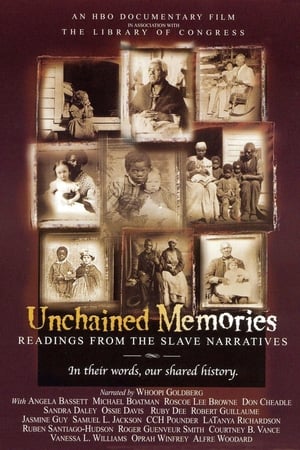
When the Civil War ended in 1865, more than four million slaves were set free. Over 70 years later, the memories of some 2,000 slave-era survivors were transcribed and preserved by the Library of Congress. These first-person anecdotes, ranging from the brutal to the bittersweet, have been brought to vivid life in this unique HBO documentary special, featuring the on-camera voices of over a dozen top African-American actors.
Two documentary filmmakers go back in time to the pre-Civil War American South, to film the slave trade.
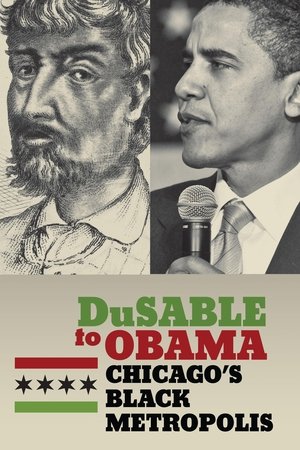
The history of Chicago's African-American community told like never before -- through the voices of its leading citizens, scholars, artists, politicians, and business leaders.
"Last year in the summer, I was speaking to Kings-Lee Rose in my living room in Crown Heights, Brooklyn, about my transition. The drastic shift in social perception is quite destabilizing and ultimately isolating, because there aren't many people I can turn to who might have some understanding of what this shift could feel like. I'm 41, so the shift is drastic. Everything has changed, but everything is the same all at once. Kings-Lee then shared candidly his truth in his transition, and with his permission, I recorded the conversation. I took the recording and felt inspired to compose music around it. Over the course of a month, I used my iPhone to shoot slow-motion footage of my life on tour, as well as intimate moments with loved ones in my Queer and Trans community in Brooklyn..." - TYGAPAW
Frederick Douglass and the White Negro is a documentary telling the story of ex-slave, abolitionist, writer and politician Frederick Douglass and his escape to Ireland from America in the 1840s. After his escape from slavery and writing his autobiography which included all the actual names of his 'owners' to prove he was telling the truth, his only option was to leave his family behind and flee the United States of America since now his life was in danger.
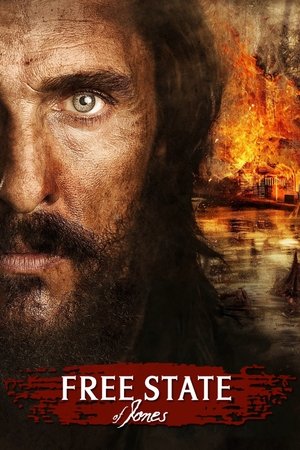
In 1863, Mississippi farmer Newt Knight serves as a medic for the Confederate Army. Opposed to slavery, Knight would rather help the wounded than fight the Union. After his nephew dies in battle, Newt returns home to Jones County to safeguard his family but is soon branded an outlaw deserter. Forced to flee, he finds refuge with a group of runaway slaves hiding out in the swamps. Forging an alliance with the slaves and other farmers, Knight leads a rebellion that would forever change history.
The first of a series of three reels. This reel depicts the escape of Eliza and the removal of Uncle Tom from his old home in Kentucky. According to an article in Film Index (16 Jul 1910 ), the scene depicting the escape of Eliza was filmed in the early spring, when the ice on the Ohio river had started to melt.
An oral history documentary of people of color at Miami University during its Public Ivy period—from 1970 to the early 2000s.