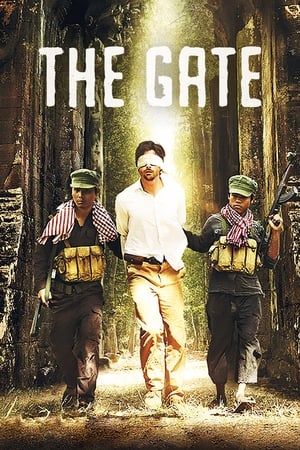
The Khmer Rouge slaughtered nearly two million people in the late 1970s. Yet the Killing Fields of Cambodia remain unexplained. Until now. Enter Thet Sambath, an unassuming, yet cunning, investigative journalist who spends a decade of his life gaining the trust of the men and women who perpetrated the massacres. From the foot soldiers who slit throats to Pol Pot's right-hand man, the notorious Brother Number Two, Sambath records shocking testimony never before seen or heard. Having neglected his own family for years, Sambath's work comes at a price. But his is a personal mission. He lost his parents and his siblings in the Killing Fields. Amidst his journey to discover why his family died, we come to understand for the first time the real story of Cambodia's tragedy.
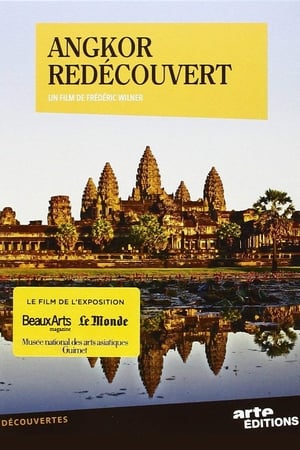
Angkor et Les Mystères de L'Empire Khmer
The face of Cambodia is a documentary about the city Angkor Wat. Angkor Wat was lost for 700 years and is one of the Seven wonders of the World. The population of Angkor was around a million and the city covers more than a 400 square kilometer area.
The Khmer Empire - officially 'The Angkor Empire' was a powerful 13th century Hindu-Buddhist state in Southeast Asia. Using sophisticated technologies to see inside Khmer temples, combined with statues, casts, and documents discovered by 19th century explorers, scientists today discover how they operated, the meaning of their architecture, and how the capital become the largest city in the world.
A look at the ruins of the ancient city of Angkor. The largest collection of sculptures the world has ever seen - an entire metropolis of palaces and temples recovered from the jungle.
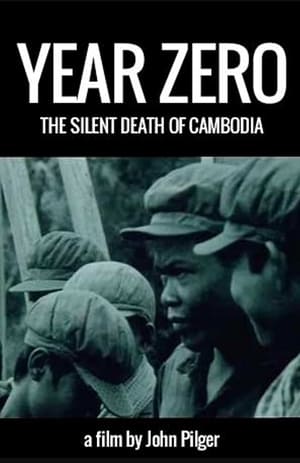
John Pilger vividly reveals the brutality and murderous political ambitions of the Pol Pot/Khmer Rouge totalitarian regime which bought genocide and despair to the people of Cambodia while neighboring countries, including Australia, shamefully ignored the immense human suffering and unspeakable crimes that bloodied this once beautiful country.
Since the fall of the genocidal Khmer Rouge regime in 1979, Cambodia has struggled to find its uniqueness and rebuild its society. Waiting For Cambodia features interviews and discussions with a variety of citizens, many of who represent a face of change and hope, and many who remain dedicated to the Khmer Rouge ideology. Images of cultural beauty are displayed through ritualistic dance and song, serving as a powerful accompaniment to the rough images of conflict. The attempts to regain culture, individual rights, and freedom are prevalent themes within the film, and footage of Cambodian relief camps and liberation organizations are displayed as efforts of change.
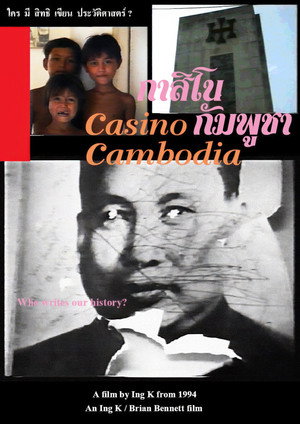
A trip to post-war Cambodia as it turns itself into a business opportunity and playground raises the question of who gets to write history.
A tour of the ancient Cambodian temples of Angkor Wat and Bayon
An overview of the ruins of Angkor, the former capital of the Khmer Empire.
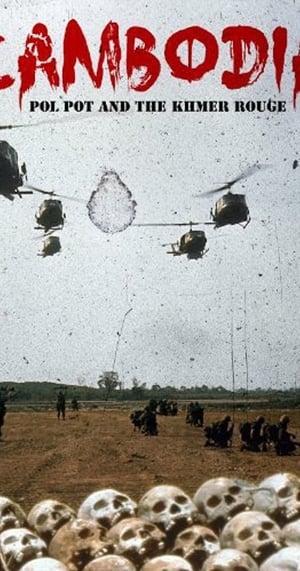
Between April, 1975 and January, 1979, Pol Pot and the Khmer Rouge were responsible for the deaths of 1.7 million people in Cambodia. A quarter of the population were wiped out in one of the most brutal and virulent genocides of the twentieth century. This new film explores the life of Pol Pot, the ever-smiling, obsessively secretive leader of the Khmer Rouge. What drove him to inflict such a radical experiment on his own people? How did the Khmer Rouge turn from a band of nationalist revolutionaries into a ruthless killing machine? And why did the West stand by and let it happen? As an international tribunal in Cambodia finally brings the surviving leaders of the Khmer Rouge to justice, it's time to re-examine the gruesome legacy of Pol Pot.
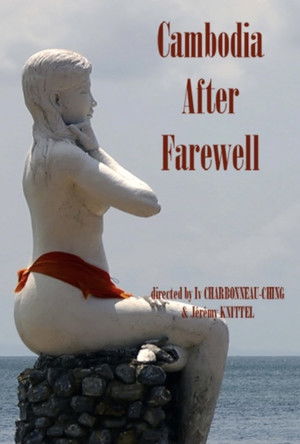
Hope and closure are not always words that come to mind when discussing a film about the Khmer Rouge, whose bloody, fanatical rule from 1975 to 1979 resulted in the deaths of more than two million people from starvation, disease, torture and executions. But these two do come together, despite the pain of memories, in Cambodia After Farewell, a well-acclaimed, 100-minute documentary by French Cambodian director Iv Charbonneau-Ching and Jeremy Knittel to mark 4 decades since the Khmer Rouge took control of the Southeast Asian country to put in place the purest form of communism and the ideal agrarian society. The documentary follows the journey back to Cambodia – and into the past – of the family of Iv Charbonneau-Ching, with his mother and aunt, as they reconstruct, piece by piece, what happened to the family members they lost to the Khmer Rouge.
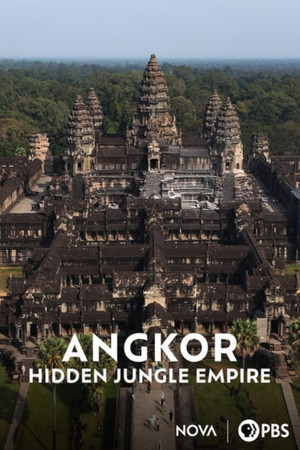
Uncover the lost secrets of a once-mighty empire. The city of Angkor, the seat of the great Khmer Empire in Southeast Asia for 500 years, was once the biggest city in the world. For centuries, this incredible civilization flourished, building the largest religious monument on Earth, Angkor Wat, and mastering urban engineering in a challenging landscape. But then it was mysteriously abandoned, swallowed by the jungle. Now, cutting-edge technology and new discoveries are finally revealing how this astounding empire rose to global prominence – and what likely led to its devastating collapse.
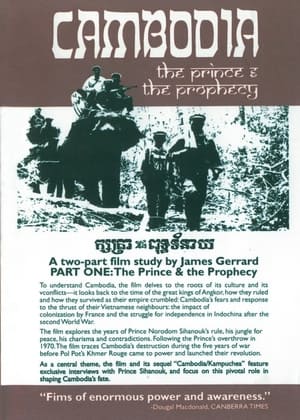
CAMBODIA: THE PRINCE AND THE PROPHECY explores the years of Prince Norodom Sihanouk’s rule, his juggling for peace, his charisma and contradictions. Following the Prince’s overthrow in 1970, the film traces Cambodia’s destruction during the five years of war before Pol Pot’s Khmer Rouge came to power and launched their revolution… As a central theme, the film and its sequel CAMBODIA/KAMPUCHEA feature exclusive interviews with Prince Sihanouk, and focus on his pivotal role in shaping Cambodia’s fate.
1989. An examination of how the UN protected and revitalised the Khmer Rouge.
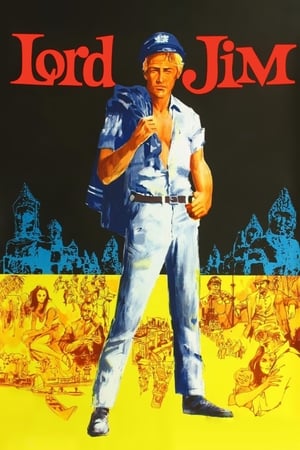
After being discredited as a coward, a 19th century seaman lives for only one purpose: to redeem himself. Preserved by the Academy Film Archive in partnership with Sony Pictures Entertainment in 2000.
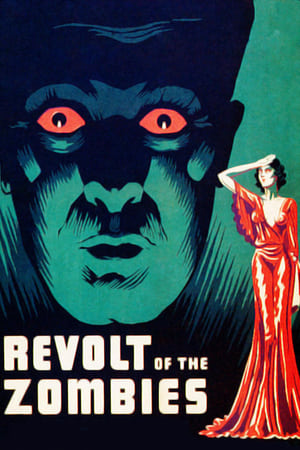
The story is set in Cambodia in the years following WWI. An evil count has come into possession of the secret methods by which men can be transformed into walking zombies and uses these unholy powers to create a race of slave laborers. An expedition is sent to the ruins of Angkor Wat, in hopes of ending the count's activities once and for all. Unfortunately, one of the members of the expedition has his own agenda.
Two decades after forging an unlikely alliance in Pol Pot's Cambodia, a French ethnologist and a former Khmer Rouge official meet again after the latter is arrested for crimes against humanity.
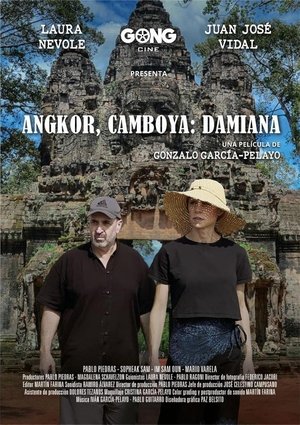
Damiana is a married couple who, on a visit to Cambodia, are shaken by the revelation that the woman (Laura Nevole), sick with terminal cancer, makes to her husband (Juan José Vidal): she She lived in that country in the past, fell in love with a Khmer and had a child with him, something that her current partner was completely unaware of.
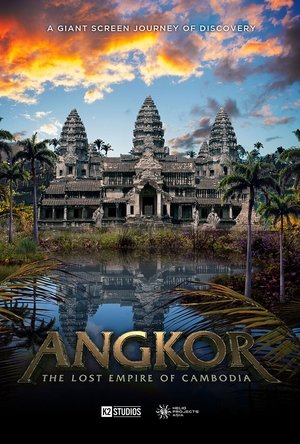
At the height of its power between the 9th and 15th centuries, Angkor was a resplendent city, considered the most extensive urban complex of the pre-industrial world. But by the late 16th century, the empire was in its death throes. The people of Angkor left not a single word explaining their kingdom's collapse. Come along on this giant screen adventure to unveil the mysteries behind this lost jewel of Cambodia!