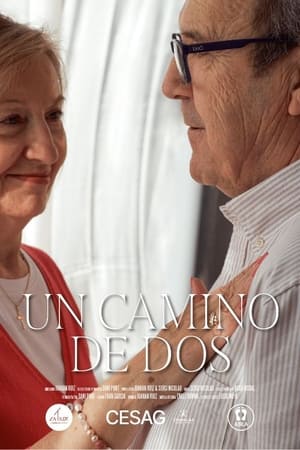
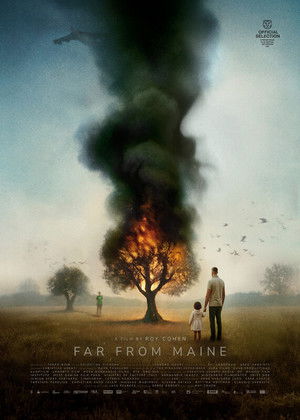
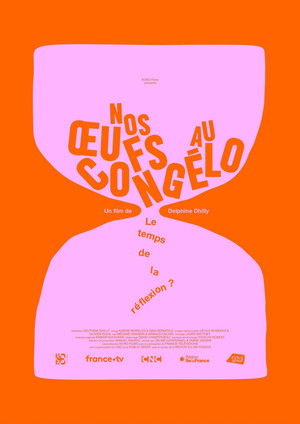
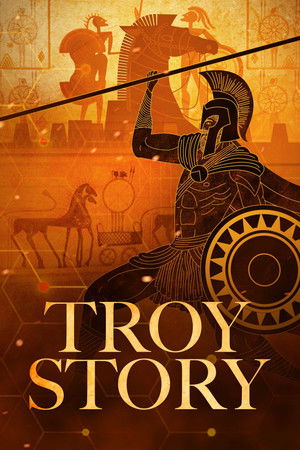
Family and colleagues remember the Doctor Who producer. In 1977, Birkenhead-born first-time producer Graham Williams took over one of the BBC’s most famous shows, Doctor Who. His turbulent three years in the role saw clashes with star Tom Baker, budgetary nightmares and catastrophic industrial action – but also the highest viewing figures the programme has ever achieved. Graham died in 1990, aged just 45, leaving behind a wife and three young children. In this intimate new film, Graham’s family, friends and colleagues look back on a life of darkness and light.
Set in the Mayan civilization, when a man's idyllic presence is brutally disrupted by a violent invading force, he is taken on a perilous journey to a world ruled by fear and oppression where a harrowing end awaits him. Through a twist of fate and spurred by the power of his love for his woman and his family he will make a desperate break to return home and to ultimately save his way of life.
What would your family reminiscences about dad sound like if he had been an early supporter of Hitler’s, a leader of the notorious SA and the Third Reich’s minister in charge of Slovakia, including its Final Solution? Executed as a war criminal in 1947, Hanns Ludin left behind a grieving widow and six young children, the youngest of whom became a filmmaker. It's a fascinating, maddening, sometimes even humorous look at what the director calls "a typical German story." (Film Forum)
At the risk of a 5-year prison term, Francesco Da Vinci struggles with his Virginia draft board to be recognized as a sincere conscientious objector to the Vietnam war.
In a candid and unflinching portrait of Palestinian prisoners, Shimon Dotan takes viewers inside the highest security prisons in Israel where thousands of Palestinians fill these detention facilities.
A couple of artists travels through the Mexico desert to present their puppet show.
Jackie Chan is a true icon of Asian and Chinese culture. Over a 45-year-long career, he has carved a niche for himself as an actor, stuntman, director, and screenwriter, but also singer and formidable businessman. After starring in almost 200 films, Jackie Chan has reconciled fans of genre film and Hollywood blockbusters, whilst bridging the gap between Asian and Western cinema. Through film excerpts, archive footage and images, and an offbeat approach inspired by the visual codes of the golden age of kung fu films, this documentary will take a look back at the creation of a popular hero who has come to be an icon for China, and for the entire Asian continent.
Since the enactment of the Anti-Boryokudan Act and Yakuza exclusion ordinances, the number of Yakuza members reduced to less than 60,000. In the past 3 years, about 20,000 members have left from Yakuza organizations. However, just numbers can’t tell you the reality. What are they thinking, how are they living now? The camera zooms in on the Yakuza world. Are there basic human rights for them?
Journey alongside a young tigress raising her cubs in the fabled forests of India.
On 20 October 1973, the Sydney Opera House was officially opened by Queen Elizabeth II. From conception to completion, it had taken more than 15 years and over $100 million dollars. In the years since its completion, the Sydney Opera House has become one of the most identifiable of Australia’s icons - ranking with the Sydney Harbour Bridge, Uluru, the koala and kangaroo - and is considered by many to be among the world's great architectural masterpieces.
Le roi Arthur, l'envers du mythe
In the first decades of the 20th century, when life was being transformed by scientific innovations, researchers made a thrilling new claim: they could tell whether someone was lying by using a machine. Popularly known as the “lie detector,” the device transformed police work, seized headlines and was extolled in movies, TV and comics as an infallible crime-fighting tool. Husbands and wives tested each other’s fidelity. Corporations routinely tested employees’ honesty and government workers were tested for loyalty and “morals.” But the promise of the polygraph turned dark, and the lie detector too often became an apparatus of fear and intimidation. Written and directed by Rob Rapley and executive produced by Cameo George, The Lie Detector is a tale of good intentions, twisted morals and unintended consequences.
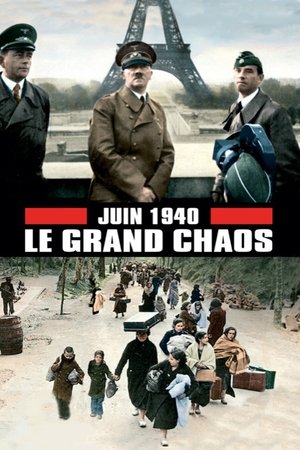
A montage of newscasts tracing the events of the "damned war" and the German invasion of 1940.
SOUND OF THE SOUL is a compelling portrait of an Arab country where Muslims, Christians, and Jews have lived together in relative peace for centuries. Beautifully photographed during the Fez Festival of World Sacred Music, the film presents unforgettable performances from groups from Morocco, Ireland, Russia, Afghanistan, Mauritania, the USA, Portugal and France, which carry viewers into what the film's Moroccan sufi guide calls "the hearing of the heart": the essential Oneness at the core of all religions and faiths.
How much can you trust your childhood memories? Director Sam Firth investigates, sweeping her parents into the experiment and on a journey into the past.
It was the first mass shooting in Louisville in nearly 40 years. This is the story of the tragedy at Old National Bank told directly by the survivors, the heroes and the loved ones of those who lost their lives in the most senseless way
In many countries, cannabis legislation is becoming more relaxed, whether for therapeutic reasons or to combat illegal trafficking. In France, the country with the highest number of cannabis users in Europe, this issue is still a subject of debate. To understand why some countries are legalizing it and how they regulate its use, Mathieu Kassovitz and Antoine Robin spent a year investigating ten different countries. This documentary explores the organization, successes, and failures of this legislation and questions the adaptability of these different models to France.
"The palm trees on the reverse are a delusion; so is the pink sand". This line, taken from a poem by Margaret Atwood, lights the path traced in "Postcard". As the years go by, landscapes transform, take on new meanings, and hold onto joys that will never be regained. The sea and the beach, once stages of happy summers, romances, and encounters, will turn into concentration camps or centers of detention and torture. This occurs across different times and places. In this piece, I embark on a journey through some of my works that explore the relationship between testimony, spaces, and time, engaging in dialogue with the beautiful film directed by Alejandro Segovia in 1972.
A feature-length retrospective documentary on the making of “What Lies Beneath.”
Forteresses maritimes