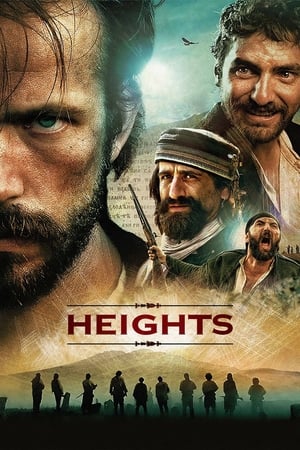
One of the most ambitious Bulgarian projects in recent years, Heights is an adaptation of Milen Ruskov's novel of the same name, published in 2011. The film explores the Bulgarian realities of the 1870s a few years before the war, that would liberate the country from the Ottoman occupation. Directed by Victor Bojinov and adapted by Neli Dimitrova, the story follows Gicho a young man in a revolutionary group led by Dimitar Obshti, a real-life revolutionary fighting against the Turks. After a successful train robbery Obshti entrust Gicho with a special mission: to deliver a letter to Vasil Levski, the country's most famous freedom fighter, now considered hero and dubbed The Apostle of Freedom.
Gudrun has modeled her amateur German terrorist group after the 1970s Red Army Faction (Baader-Meinhof Gang). She attempts to imitate her heroes by kidnapping the son of a wealthy industrialist and hopes to negotiate leftist demands from the father. When Gudrun’s not spouting leftist verses (including during a hilariously brilliant fuck session), she’s trying to convince her all-male gang to abandon their heterosexuality, which she believes is the result of mass delusion.
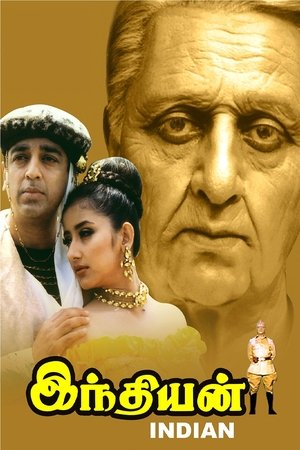
Senapathy, an ex-freedom fighter, is angry. He is angry against the rampant corruption at every level of the bureaucracy. He will clean it up at any cost.
Ravi, a critic, comes across the writings of K T N Kottoor. Highly inspired by what he reads, he travels to a village in Kerala in search of the author.
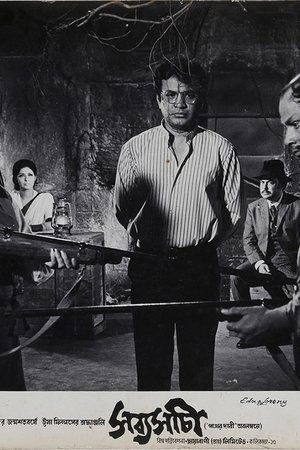
A biopic of Ananta Singha. Some calls him dacoit, some calls him a rebellion. This adaptation gives the viewer a chance to know him as a whole, a person and as a revolutionary communist leader.
Three war-torn strangers posing as a family flee Sri Lanka’s civil war to start over in a troubled Paris suburb, but their past traumas resurface as they struggle to survive in their new environment.
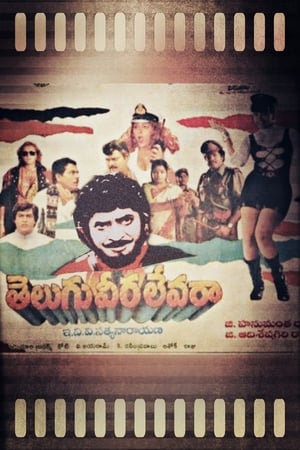
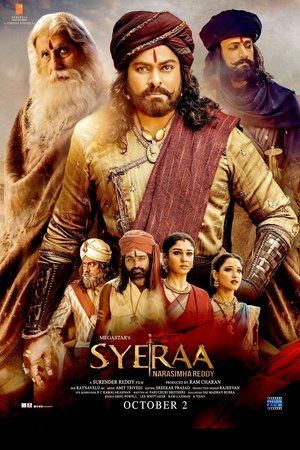
Gwalior Fort, during the Indian Rebellion of 1857. In a moment of despair, Lakshmibai, Rani of Jhansi, encourages her men by telling them the heroic story of Uyyalawada Narasimha Reddy, a brave Telugu chieftain who took up arms in 1846 to protest against the numerous arbitrariness and crimes perpetrated by the leaders and military forces of the East India Company.
A revolutionary militant is killed during the repression of May 1945. His son, who is unaware of the real circumstances of the murder, ends up being attached to the ideal for which his father died.
Portugal, 1944. In a country oppressed by a brutal dictatorship, there are those who resist and mobilize the people to fight for bread and freedom, even if it cost them prison, torture or their lives.
The strange friendship between two men of opposite social classes. Miguel is a senator. His childhood friend Jorge is a major drug-dealer. In the 1970s, they meet in prison: Miguel was there for political reasons, and Jorge, as a common criminal.
The film encompasses some of a lifetime span of the legend - "The Father of the Indian Unrest". Inspired by the ideologies of Bal Gangadhar Tilak, Makarand, a journalist, tries to incorporate his values in the changing political scenario in India.
Five defense workers on their way to the munitions factory tell their stories: a refugee from the French Resistance, a frustrated race car driver, a prison warden, a former Miss America, and an intellectual who dropped out of society and saw the country as a bum.
This Danish movie "Out of The Darkness" ( in Danish 'De Forbandede år 2' ) is a continuation of the popular WW II drama "Into The Darkness" ( in Danish 'De forbandede år' ) and it portraits the Danish Resistance movements fight. This movie takes place after 1943 where the official politic of 'corporation' comes to an end, and the Danish Resistance movement is gaining traction. The movie follows the Skov family from 1943 to the end of WWII. The growing opposition to the occupation and the increased brutality of the Germans have fatal consequences for the family.
A striking political activist and refugee from Paraguay escapes to Paris and falls in love with a rich law student changing their lives forever. The beauty of their love is challenged by a fervent devotion to fighting for a cause. "Two Autumns in Paris" has won more than 130 awards and was the most awarded Venezuelan film of 2020. A historic examination of class, refugees, and political rebellion that subtly speaks in parallel to the world today. Its turbulent romance set with the background of the 'City of Love'.
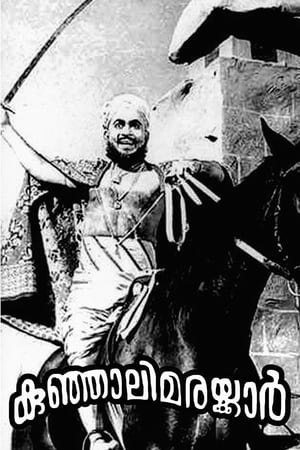
A young man who discovers his ancestral connection to a 16th century warrior who sought revenge against Portuguese explorer Vasco da Gama. Blending history and legend, the story traces a rebellion fueled by betrayal, courage, and the fight against colonial conquest.
The rustic girl left this world and went to heaven. Her Painful memories are what remains behind. The injustice exploitation is suffocating. These conflicts within the unfortunate soil of India have taken many lives. There’s cruelty amongst mankind. There’s injustice and exploitation everywhere. People struggle for their rights. There’s a storm raging in every heart and soul. The earth shivers and wreaks havoc. The raging waves clash on the shores. This enlightens the soul. We can hear the song of a great soul at a distance. It calls out. It calls out to us, to break free from the shackles. We can hear his call. Come Forward. Break free from the shackles. Fight back for freedom. Set yourself free. We’ve sacrificed our lives for the freedom of new India.
A fictional history of two legendary revolutionaries' journey away from home before they began fighting for their country in the 1920s.
A young Venezuelan freedom fighter seeks asylum in the United States, but his heart remains in the fight back home.
Harald Handfaste is a 15th century Swedish Robin Hood, who fights against foreign oppression. He becomes the leader of a band of highwaymen and they start dealing with the evil bailiff. However, the bailiff will stop at nothing to catch Handfaste and show the people who is in charge. He even attempts to marry Handfaste's beloved Karin, and when she refuses to subdue, the bailiff decides to execute both her, her father and a monk who has been helping them.
Jhunku, a 14-year-old youth in 1930s British Bangladesh, embarks on a journey to determine where he belongs.