Stone Street documents the life and experiences of a Trinidadian diaspora family and their enduring connection to the long standing family home in Port of Spain. Through the intersecting journeys of this extended and extensive family, the filmmaker explores themes of home, belonging and identity in a life defined by the fragmentary nature of a migratory Caribbean culture. This experimental documentary combines a lyrical first person voice with a family archive of home made audio visual artifacts, interviews and events. As the documentary explores the fragmentary nature of Caribbean identity, it simultaneously celebrates the fragments of domestic memorializing found in home movies, videos and photographs. Stone Street uses these various forms to evoke the experience of a complex and diverse Caribbean and Caribbean diaspora identity.
Notable for providing a bucolic, personal view of high-ranking Nazis. Eva Braun was the longtime romantic companion to Adolf Hitler, as well as a photographer and amateur filmmaker. Her 8mm Agfacolor-stock home movies, recorded at her leisure, were seized by the US Army in 1945. They were subsequently assembled into 8 reels, from 28 reels of original camera negatives. The US National Archives received this 8-reel film in 1947, and in 2012 began the digital restoration process.
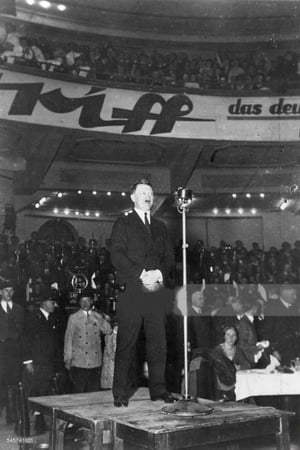
Comprised of video shot during the Nazi regime, including propaganda, newsreels, broadcasts and even some of Eva Braun's colorized personal home movies, we explore the way in which the Third Reich infiltrated the lives of the German population, from 1933 to 1945.
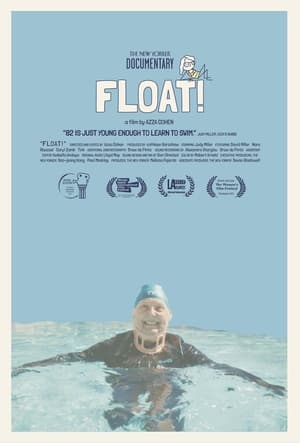
With depth, intimacy, and humor, FLOAT! captures filmmaker Azza Cohen's magnetic grandma’s life-affirming journey learning to swim at 82, inspiring audiences to defy societal expectations of aging and to boldly look forward at every stage.
The private Joan Crawford fought as hard to create a normal family life as she did to establish her career. She forged her own path and to that end became a single parent, eventually adopting and raising four children. Like many parents, she picked up a 16mm camera and began filming both the special and the ordinary events of her family’s life. These home movies (ca. 1940–42) present that which one rarely gets to see: a larger-than-life personality at home, unadorned, just being herself—and often in color, at a time when her feature films were black and white. Crawford filmed most of the home movies herself; when she is on camera, it is unclear who is behind it.
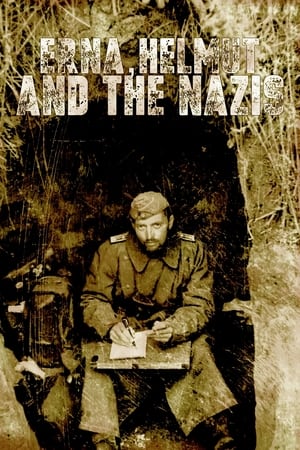
Germany, 1929. Helmut Machemer and Erna Schwalbe fall madly in love and marry in 1932. Everything indicates that a bright future awaits them; but then, in 1933, Adolf Hitler and the Nazi Party rise to power and their lives are suddenly put in danger because of Erna's Jewish ancestry.
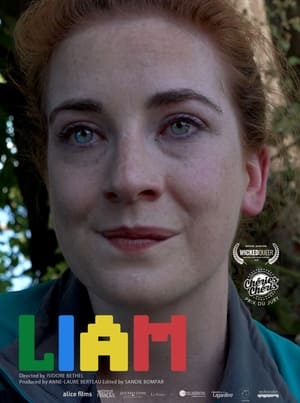
Just after Isidore moves to France to study filmmaking, his best friend dies back in the US. Through documentary, performance, and animation, a ghostly portrait emerges, prompting Isidore to question his relationships with his parents and his boyfriend in Paris.
When Melody was a young child, 20+ years away from coming out as transgender, she developed an obsession with movies. One of her biggest hobbies was acting out her favorite VHS tapes, FBI warnings and trailers included, in front of her parents' camcorder. Mom and dad realized this was an easy way to keep their child busy. Thus, the camera became a sort of babysitter, resulting in dozens of tapes featuring Melody performing in front of the (usually stationary) camera.
Memory is a collaboration with musician Noah Lennox (Panda Bear), exploring the relationship between a musician and filmmaker and their personal reflection on memories. From Super 8 home movies and entirely handmade, this film explores familiar memories, the present moment combined with past experiences and how it all seems to evade from our present memory.
Filmmaker Jan Oxenberg narrates her own home videos, commenting on how her views towards lesbianism and femininity have evolved over time.
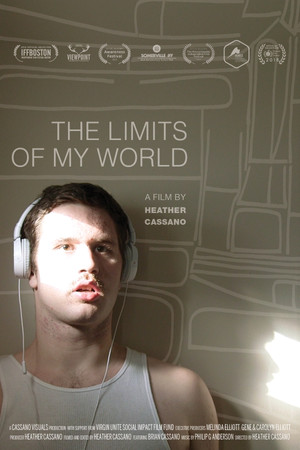
THE LIMITS OF MY WORLD follows a nonverbal young man’s transition from the school system into adulthood. Brian has autism and faces the daily challenges of adjusting to his new life. Filmed from the intimate perspective of his older sister Heather, this documentary seeks to understand Brian’s personality beneath his disability. THE LIMITS OF MY WORLD is an autistic coming of age story exploring what it means to be a nonverbal disabled person in today’s society.
After discovering more than 100 Super 8 reels in his great-aunt's basement, a young filmmaker reflects on the value of these movies and his family's legacy.
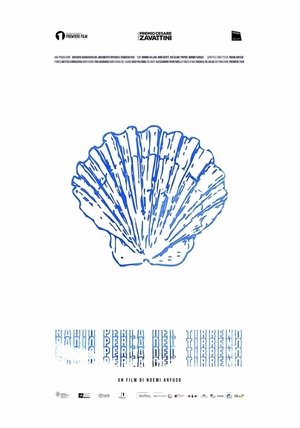
Mimmo Villari is 29 years old in 1975, lives in Calabria, has a dusty guitar in the attic and the sacred fire of music that once burned his stomach is now turning into embers. In that period the first experiences of pirate radio arose in Italy. Mimmo is thrilled by the rumors about it and wastes no time: he builds himself an FM transmitter and thus sets up Radio Perla del Tirreno, the first pirate radio station in Bagnara Calabra. The voices of the radio reflect on politics, philosophy, civic education, creating a discourse that is the portrait of a society and an era.
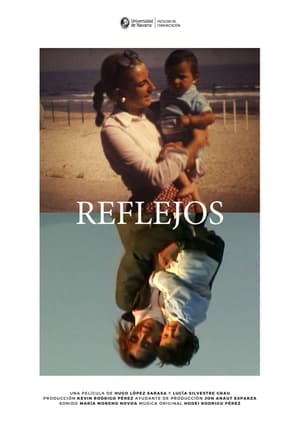
Two generations dialogue through the images they filmed of their children, a reflection of the emotional bond that arises from their involvement with what was shot.
A staged birthday celebration and a visit to the director’s father’s home. From the interplay of memory and imagination, the film explores how family archives shape fictions of the past.
Filmmaker Julie Buck explores her grandfather’s collection of Super 8 footage; the revelations behind the captured moments of joy reveal dark truths.
A film made with images found in the garbage. A memoryless country that tries to elaborate its past through letters without a named sender or receiver. Letters are made from desire, it doesn't matter if they will be read. Autofiction as a path to touch what lays in dormant state.
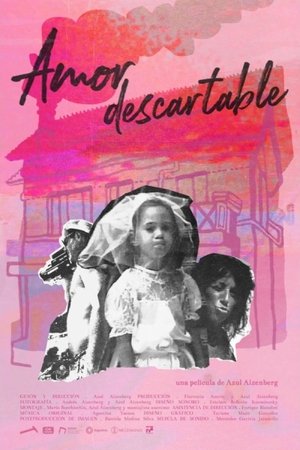
In home-movies shot in the ‘90s by her father, the filmmaker discovers in these inherited images powerful fictions of the Argentinian middle class and the country’s recent history.
A silent amateur 9.5mm reversal film presented without intertitles. Preserved by Fondazione Home Movies – Archivio Nazionale del Film di Famiglia, Bologna, the film documents a short cruise aboard the ocean liner Rex, departing Genoa on 17 April 1934 and arriving in Naples the following morning. Organised by Genoa’s Company Recreation Club, the voyage served as a preparatory run before the Rex’s transatlantic crossings. The footage includes scenes of the ship and its passengers, with Ludovico Maria Chierici and his son Enrico alternating use of the 9.5mm camera. As Paolo Simoni notes in the 2025 Pordenone Silent Film Festival catalogue, the Rex—a symbol of Fascist Italy and maritime ambition—was later immortalised in Fellini’s Amarcord, despite never having sailed the Adriatic.
A silent amateur film with a runtime of 1 minute and 20 seconds (DCP from 9.5mm reversal, 16 fps), presented without intertitles. Preserved by Fondazione Home Movies – Archivio Nazionale del Film di Famiglia, Bologna, the film captures scenes of rowing and diving during the summer of 1925 in Lavagna. It forms part of a larger collection of 9.5mm films discovered in 2006 in the cellar of Villa Rocca by Lavello’s grandson, Enrico Vassallo, and donated to the archive in 2007. Restored in 2025 using a 2K wet scanning process to mitigate damage from fungal mould, the footage reflects the technical limitations of manual camera operation, including occasional acceleration due to uneven crank rotation. As noted by Michele Manzolini, the film contributes to a broader visual record of informal leisure and early amateur cinematography in interwar Italy.