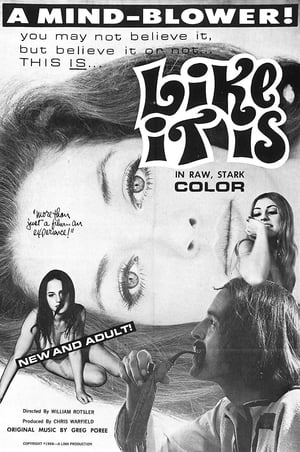
This documentary on the "youth movement" of the late 1960s focuses on the hippie pot smoking/free love culture in the San Francisco Bay area.
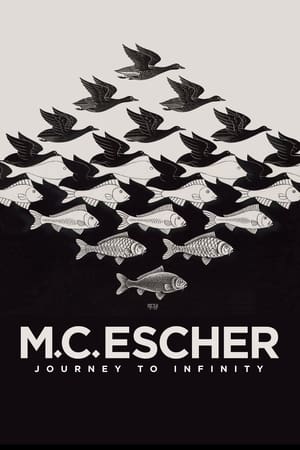
A portrait of the visionary Dutch artist M. C. Escher (1898-1972), according to his own words, taken from his diary, his correspondence and the texts of his lectures.
Life and art of Carlos Cruz-Diez.
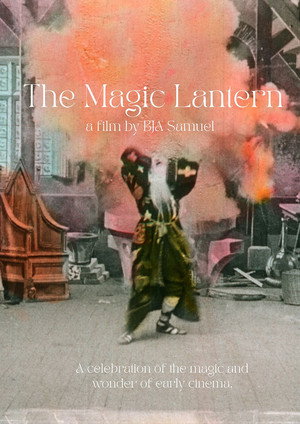
The Magic Lantern is a non-narrated celebration of early cinema and silent-film imagination, exploring the early work of pioneers such as Georges Méliès, Eadweard Muybridge, Segundo de Chomón, and Émile Cohl.
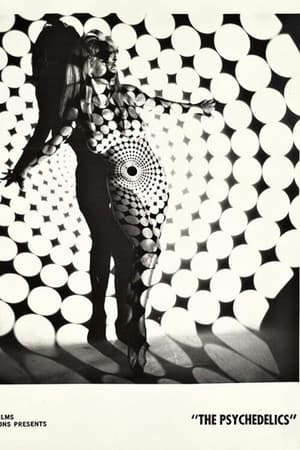
"...I was playing it at the Cinematheque, and it got a lot of word of mouth in town. Everybody liked it because we used this really neat trick to put these images on Pat Barrington’s body as she was doing a belly dance. It was just perfect, and it was an the height of the LSD period and all the hippies loved it." - Ed DePriest
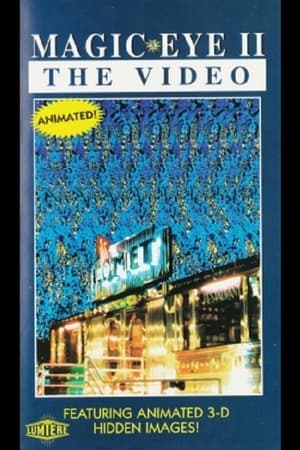
Magical enhanced 3D illusions never before seen on video! Set to captivating music recorded on Dolby surround.
Charlton Heston presents the Book of Genesis.
Nine diverse LGBTQ+ comics each perform a short set connected by a hostess with the mostest in an orgiastic one-night stand starring fresh comics to veteran comic Jason Stuart and the world's first intersex comic 7G.
"Izvan vremena" (eng. Out of Time) is a feature-length documentary film, which deals with the personality phenomenon of one of the most talented Balkan ethno-pop performers, Bilja Krstic, who achieved a meteoric career in the former Yugoslavia with her impressive talent, beauty and youth.
Documentary about the Chicago jazz scene.
A journey through a surreal airport where nature and untranslatable words unexpectedly reveal on the way.
A documentary which covers Splatterfest ’90, the notorious all-night horror festival held at London’s legendary Scala Cinema.
We Exist is a documentary series about LGBTQIA+ visibility in Japan. Mixing interviews with travel, We Exist shares stories of life as a queer person in Japan. Episode 1, titled: Be Yourself, starts in Tokyo and travels to Matsuyama in Ehime prefecture. Along the way, host Tiffany Rossdale interviews activists, professors, cabaret hostesses, Shikoku’s first transgender city councillor, bar owners, their patrons, as well as people on the street. Come along on a journey through Japan, hearing the voices of the LGBTQIA+ community, and, together, imagine a world where we all can exist.
Nico live in Koln, Luxor 12 nov, 1987.
An experimental documentary, developed and filmed with professional and amateur dancers. Shot in Belgrade and Berlin at the original locations where Marija Maga Magazinović worked, studied, and performed with her students in the early 20th century. The first female journalist in Serbia, feminist, activist, and pioneer of modern dance, Maga Magazinović (1882-1968) visited Berlin in 1909 - an event that forever changed her life and the history of modern dance in Serbia.
In the heartland of Switzerland and particularly in the Muota valley an old tradition is still alive. An old tradition that is under threat of being forgotten by the modern age of satellite pictures and computer generated weather predictions. It is the prophesying of the weather on the basis of in-depth observations of animals and plants, winds and clouds. This documentary accompanies seven weather prophets, from the Swiss interior, on their surveys of nature through the changes of the seasons. Landscapes, the music of the “Hujässler” and the unadulterated dialect of the locals, enables the viewer to experience a nearly forgotten, archaic world.
Silent Snow follows a young Greenlandic woman (Pipaluk Knudsen-Ostermann) on her journey all around the world to find the local causes of the contamination that is quietly poisoning her people. In three different continents she meets the people behind the sources of pollution and discovers the heartbreaking dilemmas that lie at the heart of it. For example in Africa, where some people are looking for alternatives for DDT, however its grey poisonous clouds are a cheap way of saving millions of lives in malaria prevention. The disastrous health issues that result on the long term are conveniently put aside. While the Inuit would rather deny the problem at hand, it has become her difficult task to convince them of its severity. And while the expedition members’ wellbeing is subject to the condition of their environment, it becomes increasingly clear that their lives are not the only ones at risk in the delicate entanglement of nature and mankind.
Amid the civil-military dictatorship implanted with the 1964 coup, Sergio Muniz had the idea of making a documentary about the action of the Death Squad. At the time, the press still had some freedom to disseminate the work of these death squads formed by police officers of various ranks, and that he acted on the outskirts of cities like Sao Paulo and Rio de Janeiro. The victims of police repression (as today) were men, poor and black, and this condition is supposed criminals.
The evolution of skateboarding culture in Ireland since the late 1980s.