A documentary like no other. Starting with the bizarre practices and fantasies of a group of filmmakers working under the label Experimental Film Society, it spins off into a manifesto of light and sound. This dazzling journey through a view of cinema as cosmic ritual and erotic delirium is also an idiosyncratic celebration of the medium itself. Rouzbeh Rashidi’s ornate visual style unleashes a parade of visionary scenes that redefine movie magic as a fevered hallucination.
Writes Ando, "Oh! My Mother was the first work I made using a newly bought 16mm camera I had purchased with the writer Shuji Terayama in Paris. This piece was selected for the Oberhausen International Film Festival. In 1969, there were, of course, no video cameras like ones we see now, and color TVs were only found at broadcast television studios. I had just been employed at the TBS (Tokyo Broadcasting System), and I often snuck into the studios after hours to experiment with the equipment. Oh! My Mother was made using the feedback effect, which is produced by infinitely expanding the image by looping the video."
After his mother's death, a young man edits the family's home videos to bring back her image. As he delves into the occult he begins to reveal the paradoxical magic of memories and cinema.
A dying man in his forties recalls his childhood, his mother, the war and personal moments that tell of and juxtapose pivotal moments in Soviet history with daily life.
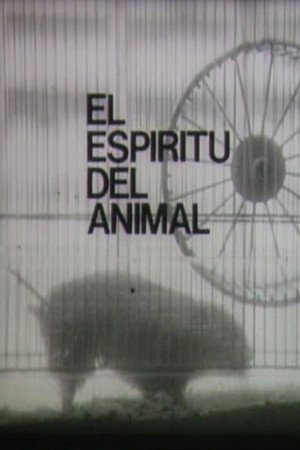
The ideal comfortability of a kitten is taken away by a man impersonating as such. Refusing to stop until the owner gives full surrender.
An exiled magician finds an opportunity for revenge against his enemies muted when his daughter and the son of his chief enemy fall in love in this uniquely structured retelling of the 'The Tempest'.
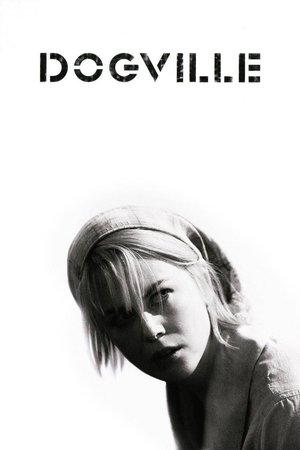
A woman on the run from the mob is reluctantly accepted in a small Colorado community in exchange for labor, but when a search visits the town, she learns that their support has a price.
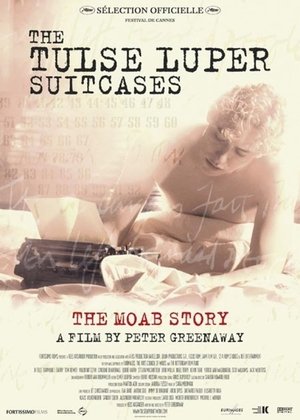
A comic study of 20th-century history, reconstructing the life of writer, creator and professional prisoner Tulse Luper. Born in 1911 Newport and last heard of in 1989, Luper’s life is pieced together from the evidence found in 92 suitcases scattered across the globe. In the first of three parts, we follow Luper through three distinct episodes: as a child during the First World War; as an explorer in Mormon Utah; and as a writer in Belgium during the rise of fascism.
In the final days of the American Civil War, an emigre Hungarian military officer attempts to map the situation of the enemy. Many veterans of the 1848 War of Independence in Hungary fought on the northern side. Experienced Fiala, Boldogh who struggles with homesickness and the reckless Vereczky all experience their enforced emigration in different ways and news of impending peace elicits different reactions from them all.
From afar, the suburban lifestyle may appear as a sort of utopia; but be sure to gaze beyond the veil, for dire horrors and troubled intimacies will arise in the most unpleasant of forms.
A man covers his head with several headscarfs, one by one... .
An unknown girl breaks out of her daily grind by undergoing an intense audio-visual trip.
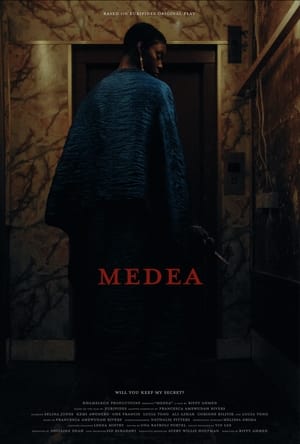
A young boy creates a make believe world to escape his truth, a world where, at the water's edge, beneath the shade of an ancient tree, a mother forms a perimeter to protect herself and her child from an unspeakable darkness.
Mockumentary experimental film, which shows one day in the life of a young man. The action takes place on the Day of Soviet Cosmonautics, April 12, one of the last years of the USSR. Outside the window, it is gradually getting warmer, the onset of spring is felt, promising hope for the possibility of changes in the country. The hero of the film is fond of space. The young man, who idolizes Gagarin, is engaged in reconstruction, making the uniform in which the cosmonaut walked in the prime of his glory. Our hero is also a film enthusiast. He makes films with stories of space flights and shows them to his friends. The film is stylized as amateur films of the 1980s and was shot on a 16-mm color film made by the company" Svema", made in the Soviet Union. The quality of this film allows the viewer to fully immerse themselves in the atmosphere of the time of the film, which is dedicated to Soviet cosmonautics and Edward D. Wood Jr.
Set over three generations and beginning with a sexually frustrated orderly during WWII who relieves his tensions in the most outlandish, gross ways. The result of his liaison is a glutton who grows up to be a champion speed eater. He produces a child who becomes obsessed with taxidermy.
A brass band member's hate comment in a public toilet triggers a chain reaction of diverse social expressions.
A man named Shiki has been sent to a company in Matsuyama. Since Shiki was famous as a baseball club member at a previous company, there is a story about baseball clubs in the company. Ken, who was a player in high school, participated without being reluctant, supported by his lover Michiko.
One night, a supernatural figure emerges from the darkness to find a human who is grieving the death of his mother. As the figure watches closely, it soon discovers the value of human love and its strength to bring people together.
A photographer girl enters a street to take street photographs as usual and takes a few photos that she thinks are normal. When she washes the photos and hangs them, she sees that she is actually in one of the photos and goes in search of that person.
A ritual of grids, reflections and chasms; a complete state of entropy; a space that devours itself; a vertigo that destroys the gravity of the Earth; a trap that captures us inside the voids of the screen of light: «That blank arena wherein converge at once the hundred spaces» (Hollis Frampton).