March 1944. Rome is under Nazi occupation. Elena and a group of young partisans decide to rebel.
Oswald's country is at war, like many other volunters he joins the army and finds himself soon in the trenches. A short battle leaves him wounded, but at least in the field hospital where his girlfriend is working.
The Driver is drafted by the UN to rescue a wounded war photographer named Harvey Jacobs from out of hostile territory. While they are leaving Jacobs tells the Driver about the horrors he saw as a photographer, but he regrets his inability to help war victims. Jacobs answers the driver curiosity about why he is a photographer by saying how his mother taught him to see. He gives the Driver the film needed for a New York Times story and also his dog tags to give to his mother. When they reach the border, they are confronted by a guard who begins to draw arms as Jacobs begins taking pictures, trying to get himself killed. The Driver drives through a hail of gunfire to the border, but finds Jacobs killed by a bullet through the seat. The Driver arrives in America to visit Jacobs' mother and share the news of him winning the Pulitzer prize and hand over the dog tags, only to discover that she is blind.
A beat-up camper approaches a snow-covered mountain military check point. A pale sun is rising as a prelude to a chilly morning. The passengers are two old people who are trying to avoid the national draft of their grandson. They hide the kid in a coffin, pretending he's dead. But the commander discovers the young deserter.
The story revolves around 3 soldiers who are on the outskirts of a war torn city. They are patrolling an area when a bomb is accidentally set off and they have to wait for help.
Fallen Art presents the story of General A, a self-proclaimed artist. His art, however, consists of a deranged method of stop motion photography, where the individual frames of the movie are created by photographs made by Dr. Johann Friedrich, depicting the bodies of dead soldiers, pushed down by Sergeant Al from a giant springboard onto a slab of concrete.
Le Temps des assassins
On a winter morning, a mother goes to waken her son Heinrich; his bed is empty. She leaves her flat to find him. The neighbors' door, with a Star of David painted on it, is ajar, the furnishings in disarray, the family gone. She asks passersby, runs to the police then on to the rail yard. Flashbacks show that Heinrich and the neighbors' son Paul are six years old and best friends. Paul's family's deportation is expected soon; Heinrich's mother tells her son that they're going to Toyland. Heinrich wants to go with them, has a bag packed, and listens for their departure. His mother realizes he's joined them, and her resolve becomes more urgent. Will she arrive in time to save Heinrich?
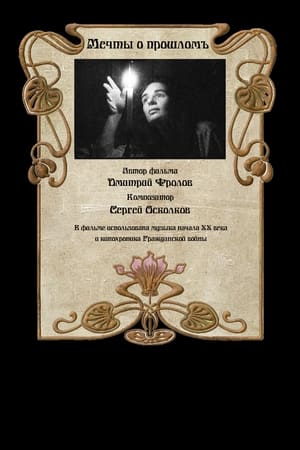
1918 - A woman imagines her lover has returned from the horrors of war in France, remembering moments shared together. A tale of love and loss told through classical ballet.
A comedy short Directed by Castleton Knight,
Based on an excerpt from the novel by L.N.Tolstoy "War and Peace." The war of 1812. The defeated Napoleonic army is retreating. Three Russian soldiers settled in a snowy forest near a fire: a young (Zaletayev), an elderly and a middle-aged one. Zaletayev fantasizes — as if he had captured Napoleon. The soldiers laugh good-naturedly at him. After dinner, they fall asleep... Two Frenchmen go to the clearing — an officer and a soldier. Russian soldiers wake up and, seeing that the officer is barely standing on his feet from cold and hunger, take him to the colonel. The French soldier sits down to the fire. The Russians give him porridge and vodka. The soldier, encouraged, sings a french song. Zaletayev echoes him. A tired Frenchman falls asleep on Zaletayev’s shoulder. The soldiers carefully shelter him. “Also people,” an elderly soldier says with a sigh.
In 1962, a group of young men, stationed at a remote Air Force base, band together to undergo a dangerous mission to retrieve mail lost in the frozen landscape of Greenland.
Viet Flakes was composed from an obsessive collection of Vietnam atrocity images, compiled over five years, from foreign magazines and newspapers. Schneemann uses the 8mm camera to “travel” within the photographs, producing a volatile animation.
Four Australian soldiers become compromised when they capture a young Afghani boy spying on their reconnaissance position.
This documentary presents the Vietnam War as seen from within Vietnam, focusing on civilian life, industrial and agricultural labor, and organized resistance under sustained aerial bombardment. Introduced by Bertrand Russell, the film situates the conflict within a broader history of anti-occupation struggles, drawing parallels to World War II resistance movements. Footage includes interviews with Vietnamese leaders, scenes of air defense, and mass political mobilization.
A grandfather recalls how he and his wife met and fell in love during the Second Italian War of Independence.
This 1964 documentary returns to the battlefields where over 100,000 Canadian soldiers lost their lives in the First and Second World Wars. The film also visits cemeteries where servicemen are buried. Filmed from Hong Kong to Sicily, this documentary is designed to show Canadians places they have reason to know but may not be able to visit. Produced for the Canadian Department of Veteran Affairs by the renowned documentary filmmaker Donald Brittain. (NFB)
UNKNOWN REDUX is a short movie by Anssi Määttä and Antti Tuominen, where events depicted happen in a fictitious Finland and it's alternative history.
A day in the life of a devoted father and serving RAF drone pilot - juggling the normality of his domestic life with the warped reality of firing Hellfire missiles 4000 miles away in Afghanistan - and how one fateful decision shatters his conviction.
The true story of Bosco, a young musician orphaned and blinded by the 1993 Burundian genocide, is taken in by a member of the tribe he believes is responsible for the death of his mother. Bosco is forced to choose between hatred and hope.