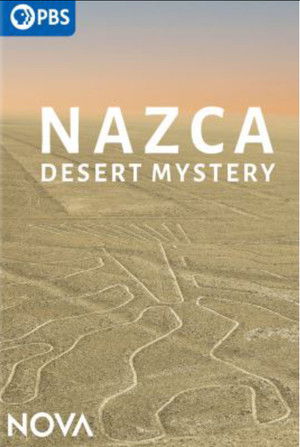
Join a team of archaeologists and the Discovery Channel in an investigation into the mysterious lines of the Nazca region in Peru. Created by the Nazcas, these huge sculptures are only visible from the sky and depict people, animal, geometric forms, and strange creatures. See a premier exhibition of pottery and textiles, musical instruments, and mummies from this long-forgotten, pre-Columbian civilization and visit Cahuachi, a buried city of pyramids and ceremonial buildings which may have once been the religious capital of the Nazca people
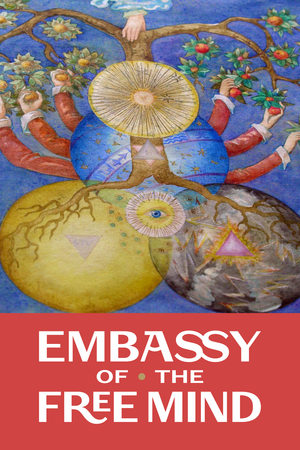
UNESCO Memory of the World: Explore the Bibliotheca Philosophica Hermetica’s new home with 25,000+ rare books on alchemy, hermetica & mysticism at the Embassy of the Free Mind museum, set in Amsterdam’s historic canal mansion, the House with the Heads.
Using film footage shot by the Genevese film director, Fernand Reymond, in Bangladesh in 1972, this documentary film describes the cyclone prevention programme drawn up by the governmental authorities and the League of Red Cross Societies. It particularly depicts the cyclone warning system set up to protect the population. (League Film Library Catalogue Supplement No. 2, p. 39)
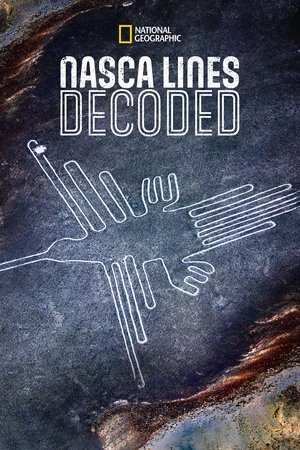
They are striking works of art by any standard: but what purpose did they serve? Some of the theories put forward suggest that the lines were ancient running tracks, runways for aliens, and even a giant astronomical calculator. But after decades of misunderstanding, modern archaeology may finally have an answer to the puzzle of the Nasca lines.
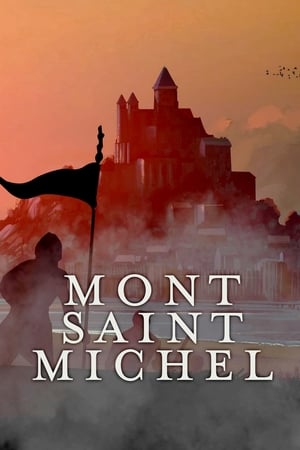
Over the centuries, Mont Saint-Michel, an extraordinary island located in the delta of the Couesnon River, in Normandy, France, a place floating between the sea and the sky, has been a sanctuary, an abbey, a fortress and a prison. But how was this architectural wonder built?
One of the world’s greatest ancient enigmas, the Nazca lines are a dense network of criss-crossing lines, geometric shapes, and animal figures etched across 200 square miles of Peruvian desert. Who created them and why? Ever since they were discovered in the 1920s, scholars and enthusiasts have raised countless theories about their purpose. Now, archaeologists have discovered hundreds of long-hidden lines and figures as well as evidence of ancient rituals, offering new clues to the origins and motivations behind the giant desert symbols.
Versailles, une révolution au jardin
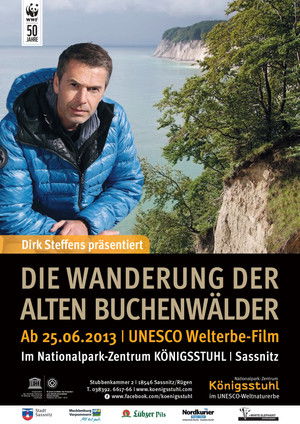
Where the old beech forests are almost untouched by human hands, the Jasmund National Park on the island of Rügen is home to a unique piece of untouched nature. It is of such outstanding importance that UNESCO declared it a World Heritage Site. Exclusively shown at Nationalpark-Zentrum KÖNIGSSTUHL on the island of Rügen, Germany
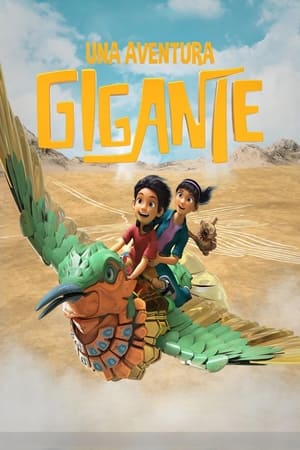
A Giant Adventure tells the story of Sebastian, Sophia and little Wawa, who will embark on an unexpected and extraordinary journey that will take them to an unknown world inspired by the Nazca culture.
Short animated film about the clima crisis from CUC Anima and Gobelins
Mont-Saint-Michel Les défis d'une mégastructure unique au monde
A documentary about the Topaz War Relocation Center, a Japanese internment camp during WWII.
Colosseum: A Gladiator's Story
Featuring extensive interviews, this documentary takes a critical look at the gender inequality in Spain as the feminist movement aims to shift reality.
A mother and her daughter explore together the trajectory of four generations of women from their family, an Egyptian family from the Levant where life and cinema have been intimately linked and still are. A cross look between family archives where the real and the fiction and the autobiographical films of Youssef Chahine mingle. From Alexandria to Cairo, passing through Paris and Havana, an intimate and visceral narrative where mother and daughter cross space and time to trace destinies and question their emotions
Gabriel's father Isa was shot by the "Laser Man" killer, and director Babak met the family for the first time in 1998. Fourteen years have passed. What has happened to the scared five-year-old who once talked about revenge?
Billed as a North Korean "Titanic". On August 15, 1945, Japanese Imperialists were defeated and there echoed in Japan, too, shouts of victory of thousands of Korean people who had been drafted to Japan. They formed a repatriation autonomy to return to their dear homeland. The Japs plot to blow up their ship on the way which is overloaded with thousands of Koreans who requested repatriation; whose number in fact is twice as many as the ship's fixed capacity. Cha Myong Jin and other Koreans who are ignorant of this fact set out with great joy and hope, talking and laughing. Cha Myong Jin meets his fiance on the ship and whispers their future life. But they dream breaks out. The Japs turn the ship to the Maizuru Port under the pretext of refilling the drinking water and drive the Koreans below deck while preparing to blow up the ship.
No one in history has ever been so universally adored as Diana, Princess of Wales. In her short life she captivated the world with her beauty, charm and limitless compassion. She challenged the century old tradition of stoic Royal silence and brought a Queen and her people closer than ever before. The legacy of the people’s princess still lives on two decades after her tragic and sudden death. It was her love of life, of people, of those less fortunate and of her children that saw her lead a quiet but powerful revolution that changed the British royal family, forever.
Sir Elton John is one of the most successful musicians of the past century. His career spans over four decades resulting in him selling more than 300 million albums worldwide. In 2004, Rolling Stone ranked him number 49 on list of 100 influential musicians of the rock and roll era, and in 2008 Billboard ranked him the most successful male solo artist on 'The Billboard Hot 100 top all-time artists. He's the winner of six grammy awards, five Brit awards, and Academy Awards and Global Globe Award. He's had countless number 1 hits and platinum albums. This is the story of one of the worlds greatest ever musicians... Elton John.