This sweet and inspiring documentary explores the highs, lows and daily realities of running a dog rescue. It tells the story of Diana England, a retired nail-stylist, who started her own animal rescue in Las Vegas, A Home 4 Spot.
Everyone loves their Cats and people love their Dogs. But which do they love most? This heartfelt documentary, hits the streets of London and Los Angeles to get to the bottom of this age-old debate. Which is better, Cats or Dogs?
Japanese gardens have long captivated people around the world. This program follows the master gardeners chasing perfection at the Adachi Museum of Art and the Katsura Imperial Villa.
Once Upon A Time
朱黃
In Mahdia, Tunisia, Maram embarks on an intimate journey through the ancestral customs that have shaped her life, exploring matrimonial traditions, and highlighting the Henna, where the bewitching songs of the Machtat resound. Tracing her childhood memories, guided by Latifa and Habiba, two prominent Machtat, she uncovers the maternal essence of tradition, where the bond between mother and bride is at the heart of these intimate celebrations.
After losing part of her memory in an accident, Leila, a young French woman of Iraqi origin, reconstructs her story by reconnecting with her family and exploring her roots. Through music and cinema, she brings her exiled father's poems to lite, dis-covers the reality of the Middle East, and embarks on a personal quest to understand her identity and find her voice.
Three men from the past cross into the present to reveal the invisible marks of Brazilian history. Between memory, fantasy, and poetry, The Secret Life of My Three Men proposes a reckoning with the violence that shaped us and the possibility of another future.
Every summer on Palermo's Mondello beach, over 1,000 cabins are built in preparation of the Ferragosto holiday. Centered around a family who goes into debt, three women holding onto the feeling of youth, and a politician seeking votes -- a vanity fair of beachgoers hiding behind the memory of a social status that the economic crisis of recent years has compromised.
Seas the Day: The Sailing Movie is a genre-defying documentary that blends real-world adventure with deeply human storytelling. It transcends typical sailing documentaries by blending docu-fiction with a narrative inspired by Joseph Campbell’s classic The Hero's Journey. Directed by Ryan Luskin, an anthropologist and teacher, the film follows his family's quest across sixteen countries, learning life skills from diverse cultures.
A love letter told through still photographs
Between 1968 and 1970, J M Goodger, a lecturer at the University of Salford, made a film record of the living conditions in the slums of Ordsall, Salford, which were then in the process of being demolished. Under the title 'The Changing face of Salford', the film was in two parts: 'Life in the slums' and 'Bloody slums'.
The film follows morning events at Bacvice beach. At dawn, before sunrise, the beach becomes a place of an unusual clash. From nearby clubs and cafes, numerous groups of young people cross the beach on their way home. At the same time, older people start coming. They walk, come, pass by and go.
4 hectares of ground are the gardens that surround the Calouste Gulbenkian Foundation in Lisbon. Throughout one year João Vladimiro’s camera follows the work of landscape architect Gonçalo Ribeiro Telles, commissioned by the Calouste Gulbenkian Foundation. “I know that the trees don’t have eyes, that the water doesn’t have a mouth, and that stones don’t have ears. Still, we communicate. In this particular garden, long mute talks take place, like the two elders that, through their sheer presence, talk to each other about calmness, comfort and sadness.”, says director Vladimiro, whose patient camera eye pays attention to the smallest events.
What's it like to "make a family" when you're not part of the traditional hetero couple? Can two best buddies living on the same floor become a family? Océan and his best friend Sophie-Marie Larrouy will question their friendship, their desire for children and their ability to commit to each other, going to meet people who have made families "differently" to draw inspiration from them and invent their own model.
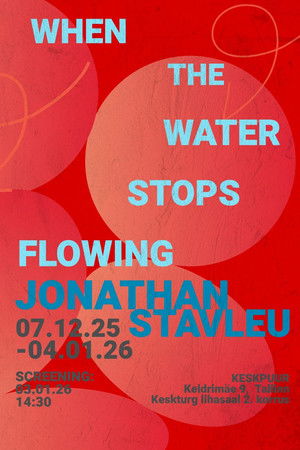
Jonathan Stavleu explores, in a stream-of-consciousness video essay, the relationship people have with water and what happens when access to it is taken away. For this work, he examines anecdotal histories he has heard from Estonians, as well as stories from his own family history in the Netherlands, weaving them together into a journal-like narrative.
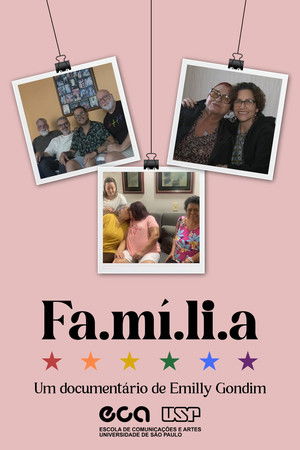
Four families recount how they met and formed their families at a time when marriage and civil unions were denied to LGBT+ people. The film demonstrates what homophobia seeks to attack: love and family.
Vicky is fisherman by day and bar owner at night. When she was a little boy her dream was to be a radio soap opera star, nowadays she dreams of falling in love again. How is it possible that a small, barren place in the third world has managed to achieve this special form of freedom and tolerance?
Faced with the reality that her only child will flee the nest for college, film-funder turned filmmaker Lyda Kuth gets anxious not only about how her daughter will fare in today’s world of love and romance, but also about her relationship with her husband of 20 years. What will life be like after her daughter leaves? What is the real meaning of love, marriage, long-term commitment? She queries non-experts and experts alike, such as indie filmmaker Josh Safdie, playwright and musician Kyle Jarrow, author and scholar Stephanie Coontz, about their successes and failures of the heart. "Love and Other Anxieties," a midlife story, is both personal and poetic. With the help of editor/co-writer Lucia Small (filmmaker of "My Father, the Genius" and "The Axe in the Attic"), Kuth has crafted a meditative documentary that is poignantly intimate yet surprisingly universal.
The Kurdish Iraqi poet and actor Zeravan Khalil travels with his dog through an Alpine gorge after fleeing from IS war and genocide. As he remembers the abomination, he writes a poem with the title “You drive me mad” in Kurmanji Kurdish. In his home country, Yazidic Kurds are forbidden to work in his profession. Then he eats his apple and wanders through Europe’s middle with more hope.