Bellisha is a good Jewish boy. He is a 27-year-old curly-haired, weak and nonchalant young man who struggles to become an adult. He still lives with his mother, Giselle, in a poor neighborhood. After the closing of the last synagogue, it is the turn of the last kosher grocery store to close its doors. That's it, they are the last Jewish family in the area. But much to Giselle's dismay, Bellisha doesn't particularly want to leave. He feels comfortable and positive, despite the tensions in the community and his mother's rapidly deteriorating health.
Moscow, January 1948. In the bitter cold, a large crowd attends the State Funeral of the Yiddish actor and director Solomon Mikhoels. An official proclamation mourns the death of "a great People's Artist of the Soviet Union." What people are really mourning is the death of the most popular Jewish theater in the Soviet Union, and the man who kept it alive against all odds for over 20 years. No doubt many suspected the truth: he had just been assassinated by Stalin's secret police.
A teenager's search for his absent father through basketball collides with his reality and he must decide what legacy means and how it defines him.
A Jewish woman named Jettel Redlich flees Nazi Germany with her daughter Regina, to join her husband, Walter, on a farm in Kenya. At first, Jettel refuses to adjust to her new circumstances, bringing with her a set of china dishes and an evening gown. While Regina adapts readily to this new world, forming a strong bond with her father's cook, an African named Owuor.
In 1415, in the midst of the Hundred Years' War, the young King Henry V of England embarks on the conquest of France.
Ceschi and Stamm's documentary tells the incredible story of Monika Krause, a former East German citizen, who became Fidel Castro's Sexual Education Minister. After 20 years in Cuba, Krause set the Cuban sexual revolution in motion: in favor of a woman's right to sexual fulfillment and legal abortion, and against exclusion of homosexuals, she acquired the title "Queen of Condoms". A film about potent female agitators, staunch macho men and Caribbean love lives.
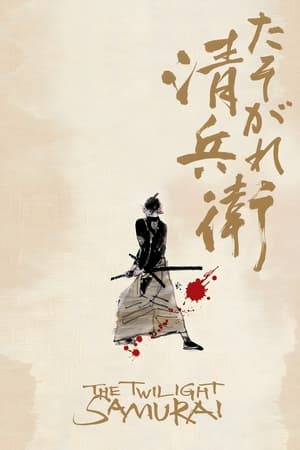
In a maelstrom of evil, can a new magistrate, samurai Mochizuki Koheita, with a reputation like an alley cat, bring order to the town of Horisoto, or is he, too a corrupt villain looking to gain wealth from the oppressed people? From the pen of famed samurai author Yamamoto Shugoro, this exciting tale turns the tables on the standard samurai story with a unique lead character previously portrayed in Ichikawa Kon’s “Dora Heita.”
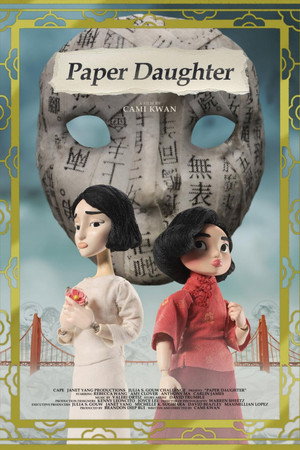
A short animated documentary featuring archival recordings of the filmmaker's Volga-German Great-Great-Grandmother, Mary Frank Lind, in which she recalls key memories of childhood—her father's windmill, warm rains, wolf sightings, bone trading, and her passion for carpentry, which broke gender norms but was supported by her father.
Working men and women leave through the main gate of the Lumière factory in Lyon, France. Filmed on 22 March 1895, it is often referred to as the first real motion picture ever made, although Louis Le Prince's 1888 Roundhay Garden Scene pre-dated it by seven years. Three separate versions of this film exist, which differ from one another in numerous ways. The first version features a carriage drawn by one horse, while in the second version the carriage is drawn by two horses, and there is no carriage at all in the third version. The clothing style is also different between the three versions, demonstrating the different seasons in which each was filmed. This film was made in the 35 mm format with an aspect ratio of 1.33:1, and at a speed of 16 frames per second. At that rate, the 17 meters of film length provided a duration of 46 seconds, holding a total of 800 frames.
Adam remains a consistent favorite among fans who are comforted that they will always have a good time. Get the inside story on this fascinating actor, comedian, screenwriter, producer, husband, father, and forever FUNNY GUY.
University of Washington professor Noam Pianko and his students collaborated with Citizen Film, the Pacific Northwest Jewish Archive and Seattle’s Jewish Community Federation to unpack and digitize archival photos and documents, then turn them into shareable digital content.
A year after losing her mother, a young girl learns that she must journey across Japan to the annual gathering of gods in the sacred land of Izumo.
Under Their Skin: Tattoos of Memory and Resilience is a character-driven film featuring grandchildren of survivors (3Gs) who have made the controversial decision to tattoo their grandparents’ concentration camp numbers on their own bodies. The film follows subjects as they navigate personal relationships and public interactions that alternately celebrate and challenge their decision—and raise questions about the reenactment of trauma, and the act of transforming that trauma into healing. In interweaving storylines, we will meet 3Gs whose stories reveal that historical remembrance is an essential part of engaging with social issues and the rise of hate and intolerance today.
Being educated and knowing how drink, A-Ni is seen as the town's madwoman. Yulu is entranced by her.
A perfumer and a little tyrant... these two women learn together what courage and justice is.
A servant-turned-assassin/bodyguard and a dispossessed heiress seize control of the latter's freedom (and if at first you don't succeed, try again in your next life).
What happened after Einstein fled Nazi Germany? Using archival footage and his own words, this docudrama dives into the mind of a tortured genius.
In the latter years of the Korean Empire, Lee In Hwa, disguises herself as a man so she can join a group of young men determined to overthrow the colonial government. They fight together with young national activists presided by Hwal Min and supported by Daewon-gun, the Prince Regent, against Min Gyeom Ho and his peers. But Min and his team perform a surprise attack on Hwal Min and his peers.
Documentary film, without commentary, looking at events in Sheffield on 5th September 1973. Steelworkers retire, babies are born, there are fashion shows and council meetings, crashed lorries and policemen on the beat.
In Pompeii in the year 79, Lycias and Helen fall in love. Helen's guardian, the high priest of Isis, wants to separate them. To do so, he tries to make Lycias drink a love potion, but a young slave threatens to reveal everything. The high priest, unable to silence her, kills her and arranges to have Lycias accused...