A young Catholic filmmaker narrates a past heartbreak which he's leaving behind through images from late 2024, during Christmas and New Year's Holidays.
An inspiring 75min DIY documentary film on new art and the young artists behind it. It was all filmed on the heat of live action of the first NOVA Contemporary Culture Festival, July and August 2010 in São Paulo, Brazil.
Cormac McCarthy has spent the last 25 years writing his novels at the mountain top retreat of the Santa Fe Institute (SFI) in New Mexico. An institute dedicated to the formal analysis of complex systems. In this documentary filmed at the library at SFI (and in the desert), Cormac in conversation with his colleague David Krakauer, reflects on isolation, mathematics, character, and the nature of the unconscious
A concert film documenting a performance from the Houston artist Orpheus Von Doom.
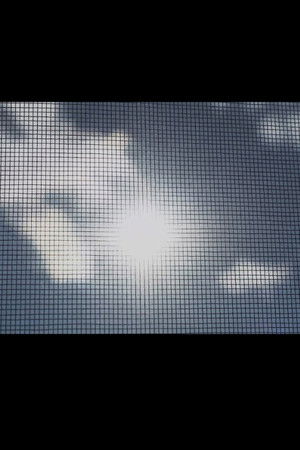
Clouds 1969 by the British filmmaker Peter Gidal is a film comprised of ten minutes of looped footage of the sky, shot with a handheld camera using a zoom to achieve close-up images. Aside from the amorphous shapes of the clouds, the only forms to appear in the film are an aeroplane flying overhead and the side of a building, and these only as fleeting glimpses. The formless image of the sky and the repetition of the footage on a loop prevent any clear narrative development within the film. The minimal soundtrack consists of a sustained oscillating sine wave, consistently audible throughout the film without progression or climax. The work is shown as a projection and was not produced in an edition. The subject of the film can be said to be the material qualities of film itself: the grain, the light, the shadow and inconsistencies in the print.
Pedro is Mallorcan, born to a mother from Burgos and a father from Mallorca. Due to his distant relationship with his father, Pedro doesn't fully master Mallorcan as a language. He turns to the works of Damià Huguet to remember his father, as only his poems can fill the void left by his death. The poet's words transport Pedro to his childhood and his roots, even though many of the words are unknown to him, despite them belonging to his language. This becomes the driving force behind the protagonist's search for his own identity, his origins, what it means to be a man, father-son relationships, collective identity, and "mallorquinness". Pedro constantly questions the emotions stirred by Huguet's poetry, and, most importantly, who he is and where he belongs.
This free-form film is a self-portrait, which revisits more than 40 years of the author’s filmography and questions the major stations of his life, while capturing the political tremors of the time.
A frenetic found-footage documentary made entirely from “lost” unlabeled media on YouTube - weaving together nearly a thousand raw videos, each mistakenly or mindlessly uploaded under a generic filename (e.g., IMG 1326, IMG 5493…).
How Montreal is transformed from winter to spring. Inspired by Berlin: Symphony of a great city, Printemps Now! is a cinematographic poem, an audiovisual symphony of the city of Montreal transitioning from winter to spring.
A young man narrated the details of his dream from last night to his father about the celebration of demonstration, anger, and graduation.
A being from the beyond returns to Chile in 2019, embodied in a worker who dreams of social upheaval. Viral videos intertwine with fiction to narrate the experiences of a polarized country that wanders between drama and absurdity, illusion and failure.
An enigmatic glimpse of life through precarious vignettes, propelling a narrative through a nebulous and opaque structure that sutures the filmmaker's home movie footage to archival material—from Hollywood narrative films to political selfie videos. A handmade impression of a time suspended between past and present and the ghosts and places occupying it, contemplating the nature and meaning of vision, memory and image making.
The horses in Denys Colomb Daunant’s dream poem are the white beasts of the marshlands of the Camargue in South West France. Daunant was haunted by these creatures. His obsession was first visualized when he wrote the autobiographical script for Albert Lamorisse’s award-winning 1953 film White Mane. In this short the beauty of the horses is captured with a variety of film techniques and by Jacques Lasry’s beautiful electronic score.
He's hungry, and chances are you're also hungry, so tag along. Who knows, you might learn a thing or two.
A young adult's first-hand account of "accidentally becoming human again" after, and with, trauma induced depression. Lo-fi, vulnerable, and uniquely youthful, "The Afterlife" is a melancholic affirmation of life after death.
The sequel to Lumière! L'aventure commence (Lumière! The Adventure Begins) reveals another hundred Lumière films, all immaculately restored, and aims above all to explore more deeply the history of the invention and affirmation of cinema in the world. This new feature-length film, following the great success and worldwide release of its predecessor, will confirm to audiences everywhere that the roots of the greatest and most beautiful works in the history of cinema lie in its origins, which are both profoundly French and truly international.
A hearse cruises the streets of Medellín, while a young director tells his story in this city marked by conflicts, violence and paradoxes. He remembers his childhood and the discovery of his sexuality.
In Manhattan's Central Park, a film crew directed by William Greaves is shooting a screen test with various pairs of actors. It's a confrontation between a couple: he demands to know what's wrong, she challenges his sexual orientation. Cameras shoot the exchange, and another camera records Greaves and his crew. Sometimes we watch the crew discussing this scene, its language, and the process of making a movie. Is there such a thing as natural language? Are all things related to sex? The camera records distractions - a woman rides horseback past them; a garrulous homeless vet who sleeps in the park chats them up. What's the nature of making a movie?
A ritual of grids, reflections and chasms; a complete state of entropy; a space that devours itself; a vertigo that destroys the gravity of the Earth; a trap that captures us inside the voids of the screen of light: «That blank arena wherein converge at once the hundred spaces» (Hollis Frampton).
Fragments from Brussels, about the flow of the city, A cinema, A body, A film, and a wind that blows through the town. The film is a Schizomentry experience that blends real stories and fiction. After all, where is the border?