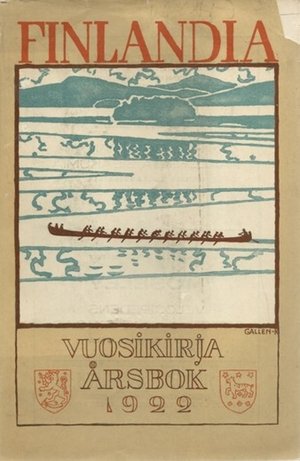
A documentary from Erkki Karu, one of the earliest pioneers of Finnish cinema: This government-produced propaganda film introduces the nature, sports, military, agriculture and capital of Finland.
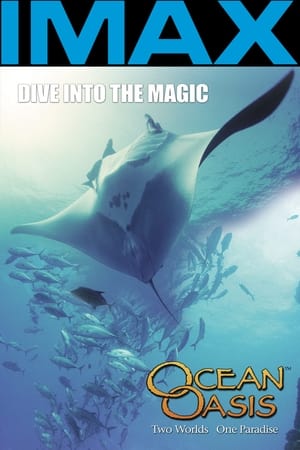
Ocean Oasis is a fascinating journey into the bountiful seas and pristine deserts of two remarkably different, but inextricably linked worlds — Mexico's Sea of Cortés and the Baja California desert.
Filmed in IMAX, a young girl questions her grandfather about the alleged curse of King Tutankhamen. His response takes us up to the source of the nourishing river Nile, to the Great Pyramids of Giza, to the Valley of the Kings.
Film historians, and survivors from the nearly 30-year struggle to bring sound to motion pictures take the audience from the early failed attempts by scientists and inventors, to the triumph of the talkies.
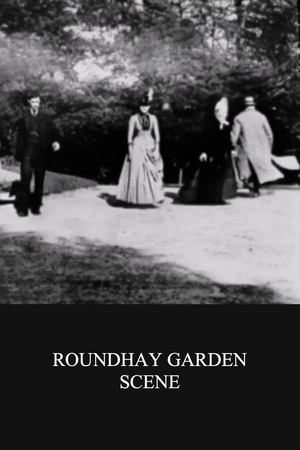
The earliest surviving motion-picture film, and believed to be one of the very first moving images ever created, was shot by Louis Aimé Augustin Le Prince using the LPCCP Type-1 MkII single-lens camera. It was taken on paper-based photographic film in the garden of Oakwood Grange, the Whitley family house in Roundhay, Leeds, West Riding of Yorkshire (UK), on 14 October 1888. The film shows Adolphe Le Prince (Le Prince’s son), Mrs. Sarah Whitley (Le Prince’s mother-in-law), Joseph Whitley, and Miss Harriet Hartley walking around in circles, laughing to themselves, and staying within the area framed by the camera. Roundhay Garden Scene is often associated with a recording speed of around 12 frames per second and runs for about 2 to 3 seconds.
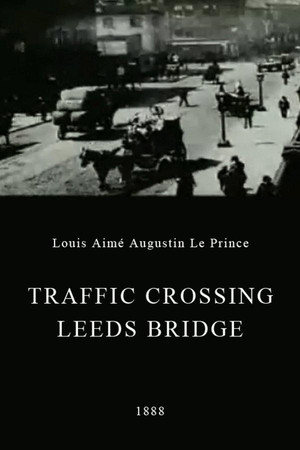
A film by Louis Aimé Augustin Le Prince, shot in late October 1888, showing pedestrians and carriages crossing Leeds Bridge.
Explore the extraordinary hidden world of insects, where a leaf weighs more than a car, rain drops feel like exploding hand grenades and a blade of grass soars like a skyscraper. Shot on location in the Borneo rainforest, Bugs! brings the beautiful and dangerous universe of its tiny stars up close and personal with cutting-edge technology that magnifies them up to 250,000 times their normal size.
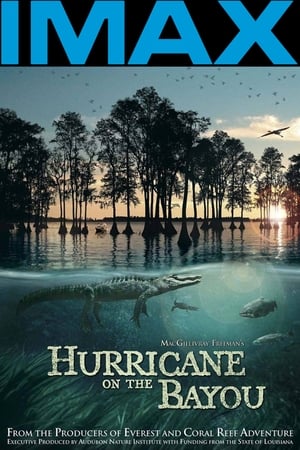
The film "Hurricane on the Bayou" is about the wetlands of Louisiana before and after Hurricane Katrina.
The first woman to appear in front of an Edison motion picture camera and possibly the first woman to appear in a motion picture within the United States. In the film, Carmencita is recorded going through a routine she had been performing at Koster & Bial's in New York since February 1890.
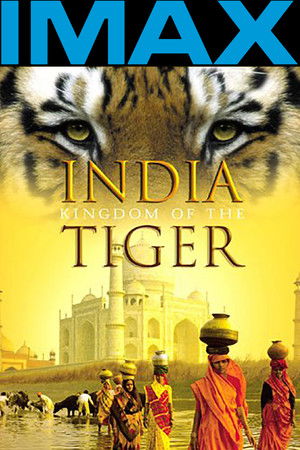
Journey across India, a breath taking land shaped by a myriad of cultures, customs and traditions. Come face to face with the Bengal Tiger and explore the work of this majestic creature with stunning clarity. Soar over blue-hazed Himalayan peaks and sweep down towards the thundering Indian Ocean as we celebrate the power and beauty of India's greatest ambassador - the mighty Bengal Tiger.
"Africa Light" - as white local citizens call Namibia. The name suggests romance, the beauty of nature and promises a life without any problems in a country where the difference between rich and poor could hardly be greater. Namibia does not give that impression of it. If you look at its surface it seems like Africa in its most innocent and civilized form. It is a country that is so inviting to dream by its spectacular landscape, stunning scenery and fascinating wildlife. It has a very strong tourism structure and the government gets a lot of money with its magical attraction. But despite its grandiose splendor it is an endless gray zone as well. It oscillates between tradition and modernity, between the cattle in the country and the slums in the city. It shuttles from colonial times, land property reform to minimum wage for everyone. It fluctuates between socialism and cold calculated market economy.
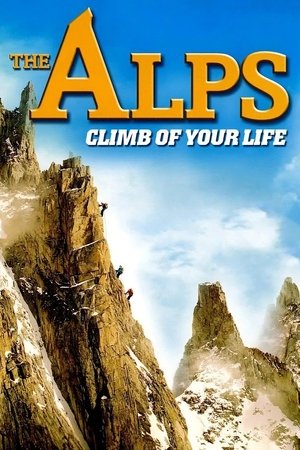
In 1966, John Harlin II died while attempting Europe's most difficult climb, the North Face of the Eiger in Switzerland. 40 years later, his son John Harlin III, an expert mountaineer and the editor of the American Alpine Journal, returns to attempt the same climb.
A 13-minute documentary film depicting life in Prague.
A day in the city of Berlin, which experienced an industrial boom in the 1920s, and still provides an insight into the living and working conditions at that time. Germany had just recovered a little from the worst consequences of the First World War, the great economic crisis was still a few years away and Hitler was not yet an issue at the time.
Warsaw's Central Railway Station. 'Someone has fallen asleep, someone's waiting for somebody else. Maybe they'll come, maybe they won't. The film is about people looking for something.
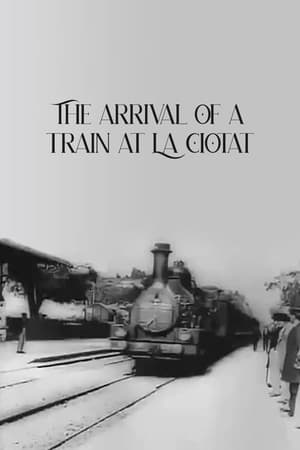
A group of people are standing along the platform of a railway station in La Ciotat, waiting for a train. One is seen coming, at some distance, and eventually stops at the platform. Doors of the railway-cars open and attendants help passengers off and on. Popular legend has it that, when this film was shown, the first-night audience fled the café in terror, fearing being run over by the "approaching" train. This legend has since been identified as promotional embellishment, though there is evidence to suggest that people were astounded at the capabilities of the Lumières' cinématographe.
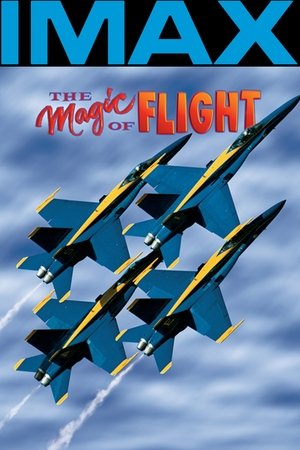
Take a technological thrill ride The Magic of Flight takes you on a technological thrill ride faster, higher and wider than modern science or even your imagination! Relive the first flight of the Wright Brothers, then soar with the Blue Angels as they defy the laws of gravity. Narrated by Tom Selleck.
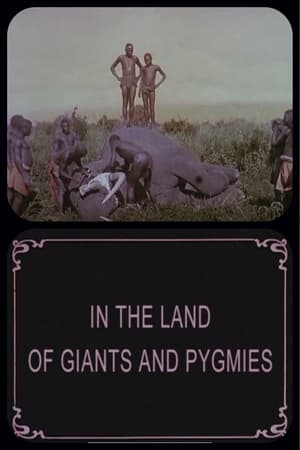
IN THE LAND OF GIANT PYGMIES, a diary of Aurelio Rossi's 1925 trek into the immense Belgian Congo, preserves a long-gone-Colonial-era wonder at natural resources, "primitive" tribes, customs and costumes in Europe's cast African possessions, and implies that the "dark continent" could benefit from the "civilizing" influences of home.
Clouds 1969 by the British filmmaker Peter Gidal is a film comprised of ten minutes of looped footage of the sky, shot with a handheld camera using a zoom to achieve close-up images. Aside from the amorphous shapes of the clouds, the only forms to appear in the film are an aeroplane flying overhead and the side of a building, and these only as fleeting glimpses. The formless image of the sky and the repetition of the footage on a loop prevent any clear narrative development within the film. The minimal soundtrack consists of a sustained oscillating sine wave, consistently audible throughout the film without progression or climax. The work is shown as a projection and was not produced in an edition. The subject of the film can be said to be the material qualities of film itself: the grain, the light, the shadow and inconsistencies in the print.
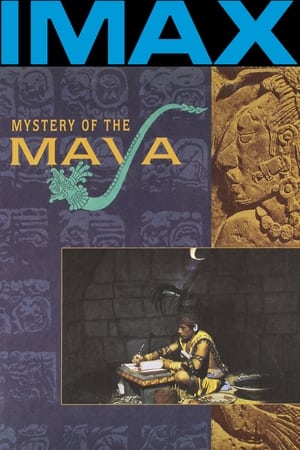
Filmed in IMAX, a young Mayan boy who lives close to the ruins becomes acquainted with an archaeologist (Guerra) and asks her to tell him about his ancestors. The crew travelled to over 15 locations in Mexico and Guatemala, including Tulum and Chichén Itzá.