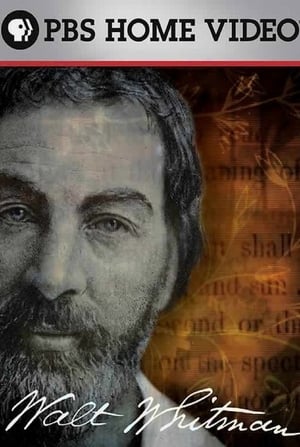
This American Experience tells Whitman's life story, from his working-class childhood in Long Island, to his years as a newspaper reporter in Brooklyn when he struggled to support his impoverished family, then to his reckless pursuit of the attention and affection he craved for his work, to his death in 1892.
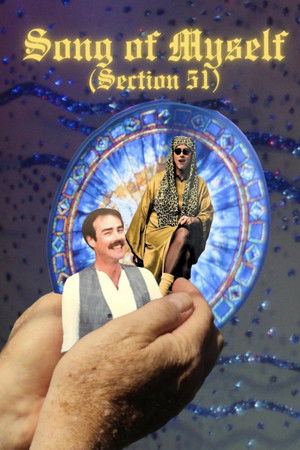
In Song of Myself (Section 51) we meet Thomas Michael Smith- a retired social worker, sign language interpreter, openly gay deacon in the Catholic church, and part time drag queen. Over a tour of his space, he shares what life containing multitudes looks like for him.
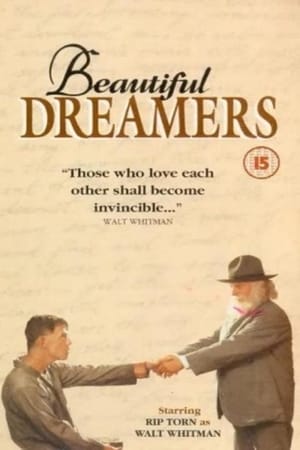
When the superintendent of the Canadian insane asylum, Dr. Maurice Bucke, meets poet Walt Whitman, his life and that of his wife and patients is radically changed. Like Dr. Bucke, Whitman has avant-garde ideas on the subject of mental illness. "Dreamers" is based on true events. Dr. Bucke became an important biographer of Walt Whitman.
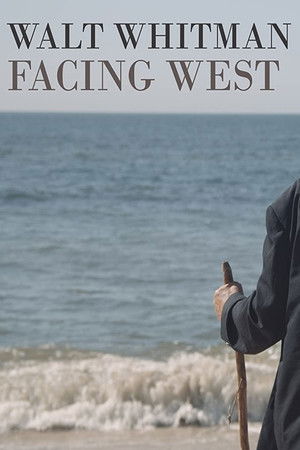
A cinematic setting of poems by Walt Whitman that span his whole life's work, commemorating his bicentennial year. Features the poet's Long Island native "personator" Darrel Blaine Ford, manifesting and reciting "Song of Myself," "There Was a Child Went Forth," "Give Me the Splendid Silent Sun" and "Facing West From California's Shores." Filmed at the poet's birthplace, the Long Island shore, Manhattan, and where West meets East.
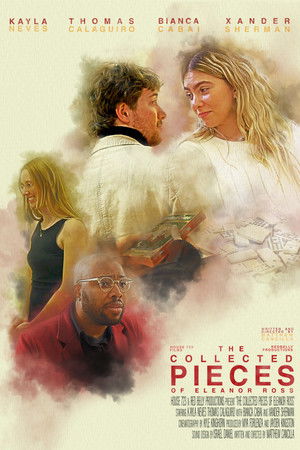
Unsatisfied with her prospects following graduation, struggling artist Eleanor "Nell" Ross reflects on her life with her boyfriend over a game of dominoes.
A behind-the-scenes look with the cast and crew, featuring thrilling locations, deadly new dinosaurs and the next evolution of the iconic franchise.
"Ceija Stojka" is a portrait of 64-year-old Austrian Rom Ceija Stojka, who, after a nomadic childhood, settled in Vienna many years ago. In the recent past, Ceija Stojka’s fame as an author, painter and singer has spread outside Austria. She represents the opening of Rom and Sinti society to the world of the "gadje." This process and all the difficulties it involves is unique in the history of the Rom in Central Europe. The central theme of this documentary is the fusion of two extremely different worlds in this fascinating woman. Beginning with Ceija Stojka’s present life, her biography is reconstructed in this film portrait. At the same time, a critical chronology of images portrays the common associations with the "gypsy," examples of which pervade Ceija Stojka’s life. A comprehensive consideration of the gypsy’s image, from romanticized projections to images of exclusion, discrimination and destruction, and finally the present ambivalent relationship between Rom and non-Rom.
The story of one family's fight and struggle to survive the Syrian Civil War. Having lost her husband, the mother makes the heart achingly painful decision to leave her homeland, in search of safety and a brighter future for her children. Filmed over three years, the film chronicles the family's journey from the front-line in Aleppo, to a little town in Germany. Escaping the chaos and terror of their war torn homeland becomes a catalyst for a different kind of struggle; the struggle to understand your past and accept your present, to adapt to a new life, to hold on to hope, and the idea of belonging to a homeland.
A 1997 documentary by Micronesian scholar, Vicente M. Diaz, that follows a new generation of traditional outrigger canoe builders and navigators from Polowat, Central Carolines, Federated States of Micronesia, and Guam in their respective efforts to continue and resuscitate an ancient tradition of outrigger canoe carving and sailing in the late twentieth century. Like the motif of water that flows through the documentary and blurs lines between surface and depth, and between water, land and air, an indefatigable tradition and aesthetic of seafaring is shown to also challenge pat and problematic distinctions between past and present, tradition and modernity, indigenous and Christian religiosity and spirituality, that prevail in conventional understandings of Micronesian culture and history.
Miriam Margolyes is one of Britain’s best loved and most provocative actresses. Across her eclectic career, she has played scene-stealing turns in Blackadder, voiced some of our most well-known adverts and found fame internationally as Professor Sprout in the Harry Potter films.
Diary Films I - V
Shot over a 10-year period by Corinne Day's boyfriend, Mark Szaszy, this fascinating biographical film explores the life and work of one of Britain's most controversial photographers.
Film produced by William K. Dickson’s British Mutoscope and Biograph Company.
Filmmaker Alain Resnais documents the atrocities behind the walls of Hitler's concentration camps.
For four centuries cod has been fished off the coast of Newfoundland. This film shows the exacting work of splitting, salting, drying and grading the fish, as well as the more recent methods of quick-freezing.
The Birth of New Right
A special feature on Black Lava entertainment's release of Black Metal Veins.
Live coverage of the opening ceremony of the 1996 Summer Olympics which took place in the evening on Friday 19 July in the Centennial Olympic Stadium, Atlanta, United States.
A study of the physical and economic geography of Canada on the basis of six natural divisions: the Pacific Coast region, the Great Plains, the Laurentian Shield, the St. Lawrence Lowlands, the Atlantic region and the Arctic Islands. In each region the film interprets the relationship of topography, climate and natural resources to the industries or occupations of its inhabitants.
follows the behind the scenes of the film The Royal Tenenbaums by Wes Anderson.