During the multi-party period in Turkey, no party could achieve the success that the Democrat Party achieved in the 1954 elections. Since those days, no party has been able to repeat the 56 percent of the DP's votes in that election. Now, 93 out of every 100 deputies in the parliament were from the DP. The DP power had reached a heavy and overwhelming majority... Menderes was at the peak of his power and prestige. But as in everything else, the highest point reached in politics was also the point where the descent would begin.
The film deals with the process of globalization based on the thought of geographer Milton Santos, who through his ideas and practices, inspires the debate about Brazilian society and the construction of a new world. Santos discusses his views on the importance of respecting difference and his belief that an alternative globalisation model could wholly enfranchise all citizens of the world. An illustrious presence in 20th century social sciences, the man dubbed as ‘geography’s philosopher’ eloquently elucidates a developing world perspective on the global age.
A newly ordained minister accepts a summer job with a dynamic TV evangelist only to find deep conflicts between the latter's conventional activities servicing his community's spiritual needs and his power wielded as a TV celebrity.
Filmmakers Laura Mulvey and Mark Lewis use rare archival footage and interviews with artists, art historians, and museum directors to examine the fate of Soviet-era monuments during successive political regimes, from the Russian Revolution through the collapse of communism. Mulvey and Lewis highlight both the social relevance of these relics and the cyclical nature of history. Broadcast on Channel Four as part of the 'Global Image' series (1992-1994).
"Politics for Austria," "Fairness," "We provide security"-election slogans that promise a return to bygone morals, adorn the city of Vienna before the Austrian national parliamentary elections in 2017. The mistrust with regard to supposed political elites, coupled with promises made by the right wing populist parties, polarize Austrian society. INLAND offers intimate insight into the lives of its protagonists and thereby draws a genre picture of their fears and hopes in complex times.
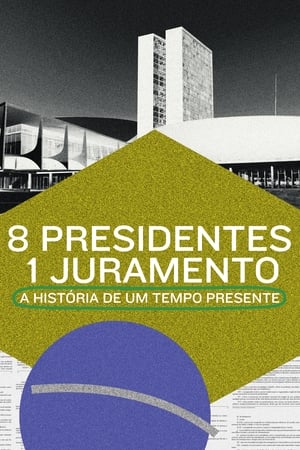
We came to the end of the road. We told you the story of the establishment of a democracy throughout 9 episodes... We witnessed the collapse of a one-party regime. We witnessed the disappearance of the national chiefdom. Together we experienced the holding of the first free general elections and the raising of democracy in pain. And finally, we told you about the birth, rise and fall of a new power. Where we ended up was a military intervention. Whatever the reasons, the storm of revolution had blown once. Now the task of the officers who seized power on the morning of May 27 was to contain that storm. But it didn't. After a while, the storm started to drag the revolutionaries in front of it. The historical scenario was repeated. The Revolution ate some of their children. The revolution was now speaking its own language...
A true animated film about invented islands. About an imaginary, linguistic, political territory. About a real or dreamed country, or something in between. Archipelago is a film of drawings and speeches, that tells and dreams a place and its inhabitants, to tell and dream a little of our world and times.
Hollande, DSK, etc ...
"Was it the President who ordered the rivers to be six meters deep?" In 2008, under President Lee Myung-bak's administration, South Korea's Four Major Rivers Restoration Project turned the country's beautiful rivers into scenes of devastation. What were once pristine first-grade waters became lifeless rivers, choked with toxic green algae emitting foul odors. Crops irrigated with this contaminated water are now served on the table of Korean people. The government disguised a grand canal project as river restoration, and the media turned a blind eye — together enabling one of the greatest environmental destructions in Korean history. The consequences of this deception will be borne by future generations. To ensure that future generations can once again run freely along the rivers, we must act—now. We must make Korea's rivers flow again.
The ideology of Catholic nationalism inspired and justified State terrorism in Argentina, through the association between the Catholic Church and the military. Leopoldo Nacht, an 84-year-old man, who lived through the persecution and disappearance of his friends in the 1976 dictatorship, investigates unpublished files to prevent fragments of this ideology from being reinstated in the new generations. It is his legacy. Assim, rediscovers throughout the history of the 20th century in Argentina, the main crimes and concepts of the nationalist ultra-right, mainly: anti-communist, anti-democratic and xenophobic.
David Olusoga opens secret government files to show how the Windrush scandal and the ‘hostile environment’ for black British immigrants has been 70 years in the making.
The night of July 15, 2016 changed the history of Turkey. On that day there were coordinated attacks by parts of the Turkish army, among others in Istanbul. The aim of the military: a coup against the government. The decisive confrontation occurred on the Bosporus Bridge. While President Erdogan was still on vacation, live at TV he called on the people who were devoted to him to stand against the military. As an enemy for the masses, he presented his adversary Fethullah Gülen, whom he branded as the coup leader. He also urged the imams of the country's mosques to condition the population to resist. And so it happens that at night thousands of agitated people take to the streets to oppose the armed insurgents. The death toll was high. 352 people died across Turkey during the attempted coup. The consequences are even more serious: Erdogan used this gift, as he called it himself, to undermine democracy, to arrange mass arrests of dissidents and to transform Turkey into a dictatorship.
Traces the lives of the Hartings, a blind Montreal family of three who make their living singing in the city's subway stations. The Hartings lost their only sighted child Hassan in a tragic drowning accident, and have since turned to the teachings of Russian mystic Grigori Grabovoi, hoping to resurrect their son. Resurrecting Hassan is an exploration of this family's legacy of grief, tragedy and abuse; the film will follow them on their path to redemption.
This film analyzes the economic interests underpinning the conflict between Palestinians and Israelis, with a particular focus on the influence of international oil interests in the region. The analysis found here is inspired by the writings of the Palestinian writer and journalist Ghassan Kanafani.
The film presents many clips taken from the television and theatrical shows of the Tuscan comedian who makes fun of the habits of the Italians and of the governing politics of the eighties.
Two politically-opposed young women fight to shape their lives along with the political future of Tunisia, the sole country to emerge from the Arab Spring uprisings as a functional democracy.
A historic three-day race riot erupted in two African American neighborhoods in the northern, mid-sized city of Rochester, New York. On the night of July 24, 1964, frustration and resentment brought on by institutional racism, overcrowding, lack of job opportunity and police dog attacks exploded in racial violence that brought Rochester to its knees. Combines historic archival footage, news reports, and interviews with witnesses and participants to dig deeply into the causes and effects of the historic disturbance.
An hour long interview with Slovenian philosopher Slavoj Žižek made by Russia Today for his 70th birthday. In this documentary Žižek answers questions from the public in regards to politics and ideology, gender and sex, philosophy and psychoanalysis, hardcore pornography and sexual liberation in the West, in his usual style of polemics and comedy.
Darol Kubacz is unstoppable. A U.S. Army veteran without the use of his legs, this leader and Freedom For Life Non-Profit Founder is determined to be the first disabled human to summit Mount Kilimanjaro, Africa's tallest peak, without being pushed, pulled or carried.
This 1978 documentary classic is an inside look at the old-style Chicago Machine politics of the Richard J. Daley era, where Alderman Vito Marzullo ran his West Side 25th Ward virtually unchallenged from 1953-1985.