Je ne sais pas si c'est tout le monde
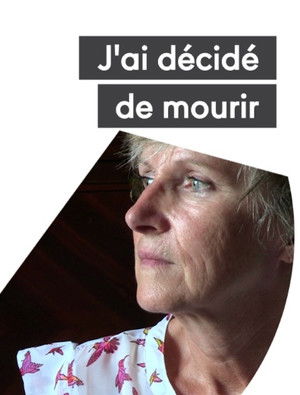
Marina Carrère d'Encausse lifts the veil on the intimate questions that preoccupy her as well as society at large: those related to the end of life. The doctor-journalist introduces Antoine, her partner, who is suffering from Charcot's disease, an incurable illness, and who wishes to choose how he ends his life. Is the current law in France sufficient? Should it simply be better enforced, allowing better access to palliative care? Should assisted suicide and euthanasia be legalized? Marina meets with patients concerned about the end of life, caregivers, and politicians in France, as well as in Belgium, Switzerland, and Canada, countries where euthanasia and assisted suicide are legal.
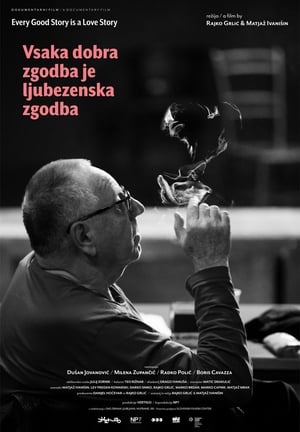
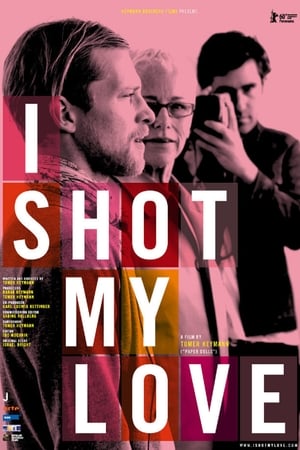
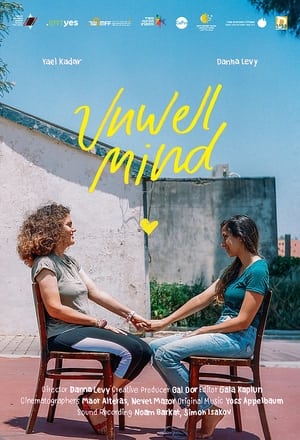
Asta and Søren are not a couple. They're not friends with benefits either, and they’re definitely not pen pals with benefits. So, at the end of the day, what are they? With a single camera setup, the viewer is given access to a private space.
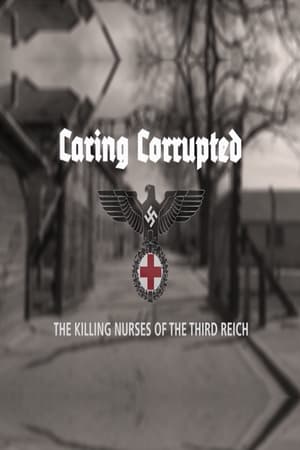
About the nurses who used their professional skills to murder the handicapped, mentally ill and infirm at the behest of the Third Reich and directly participated in genocide.
When the cheerful, crazy, fun, and sweet Milou is confronted with multiple traumatic experiences in her early teens, she develops severe flashbacks and serious psychological problems. Everything is tried, but no one can silence the monster in her head. Milou is seventeen when she dies in her mother's arms. Weary, completely exhausted, she is finally allowed to go. Milou is the first minor in the Netherlands to die by euthanasia due to hopeless psychological suffering.
Are eligible Indigenous bachelors an endangered demographic in the 21st century? That’s the question cheekily posed by Tracey Rigney’s debut documentary short, which invites First Nations individuals to confide what they desire, what holds them back, and their hopes and worries about whether they’ll ever find The One. Endangered first screened at the Melbourne International Film Festival in 2005.
Damian, grieving his girlfriend's death, travels through Mexico seeking solace. Along the way, he connects with strangers and witnesses their coping rituals, finding a path through his own memories and regrets.
The Faces of Parkinson shows the people who suffer from Parkinson's disease and the impact it made on their life and people around and close to them. As it also asks the question how one continues to stay positive with such a destructive disease.
Brian Hall has been living with Parkinson's since he was 14. He is now in his 60s. How do you fill the well of optimism when it's been drained progressively and constantly for well over 40 years?
Capturar (Las 1001 novias)
Ricardo, Natalia's father, suffers from Parkinson's disease; in that condition he stopped producing Dopamine. Surviving a very strong family crisis, Natalia told them her sexual orientation. She does not understand why after being left-wing militants and fighting for equality and freedom, they could not accept her choice.
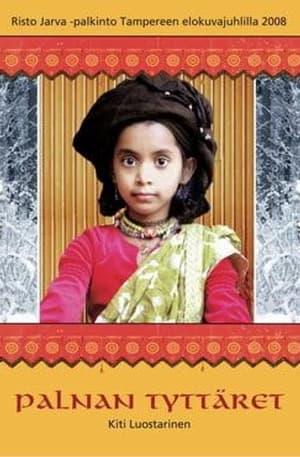
A film about memory, identity and the overwhelming power of love. One-year-old Devi was found starving at a railway station in Delhi. The police took her to Palna, an orphanage, where she lived for a year. When Devi learned to talk she often wanted to talk about Amma, her first mother. In the film, the 6-year-old Devi journeys to her own past, as her family adopts another daughter from Palna, a baby sister for Devi.
An intimate portrait of Mariano "Cronopio" Gedwillo, an Argentinian clown in Riga, as he transforms ordinary life into wonder through the magic of the circus — and teaches others to do the same, all while battling his own loneliness.
Angdu is no ordinary boy. Indeed, in a past life he was a venerated Buddhist master. His village already treats him like a saint as a result. The village doctor, who has taken the boy under his wing, prepares him to be able to pass on his wisdom. Alas, Tibet, Angdu’s former homeland and the centre of his faith, lies far away from his current home in the highlands of Northern India. On top of that, the conflict between China and Tibet makes the prospect of a trip there even more daunting. Undeterred by these harsh facts, the duo set off for their destination on foot, accompanied by questions of friendship and the nature of life. With its narrative approach steeped in a serene sense of concentration, this documentary film, composed over a period of eight years, stands as a fundamental experience in its own right.
Filmmaker Jonathan Caouette's documentary on growing up with his schizophrenic mother -- a mixture of snapshots, Super-8, answering machine messages, video diaries, early short films, and more -- culled from 19 years of his life.
Award-winning French writer Christine Angot goes on a business trip to Strasbourg where her father lived before dying several years ago. It is the city where she met him for the first time at the age of 13, and where he sexually abused her over the following years. His wife and children still live there. Angot takes a camera and knocks on the doors of her family to push them to clarify their attitudes to her father’s crime that stretched over so many years. A cinematographic journey that challenges social norms and family perspectives in dealing with incest.
In the midst of the chaos of México City, a group of eight bachelor millennials who call themselves ´The Hermits´, open the doors to their tiny apartments in the historic Ermita Building, in the yet-to-be gentrified neighborhood of Tacubaya, and share their life experiences in a time when precarity changes the way in which we love, feel and relate to each other. As we explore the homes of these eight neighbors, we also witness their personalities intersect in a Whatsapp chat, a virtual space that functions as a supporting system that helps them face the adversities that living alone in this city brings.
Victim of a terrible plot, Captain Dreyfus was sentenced in December 1894 to deportation for high treason. His wife Lucie made a pact with him: to live, whatever the cost, while awaiting rehabilitation. During five years, the Dreyfus spouses exchanged hundreds of letters. They became a weapon of survival for Alfred. This film is the story of the correspondence of a man and a woman who unwittingly became the unsung heroes of the case that bears their name.
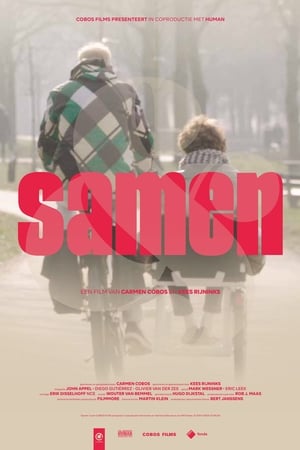
When producer Kees Rijninks, the husband of filmmaker Carmen Cobos, is diagnosed with Parkinson's disease, their world is falling apart. Yet after months of sadness, anger and denial, it appears that they have sufficient resilience to find a new balance in their lives. In TOGETHER they follow for a year a group of incurably ill patients, their partners and their neurologist to find an answer to the question how people deal with the knowledge that they are incurably ill. Do they find the resilience to give their lives a positive meaning in hopeless circumstances?
Jack is a vegan activist. His father is a slaughterhouse worker. After years of avoiding the subject, Jack sets out to confront the unspoken tension between them.