Poet Emily Dickinson, pigeonholed as the strange recluse since her death, takes you on a journey through the seasons of her life amid 1800s New England.
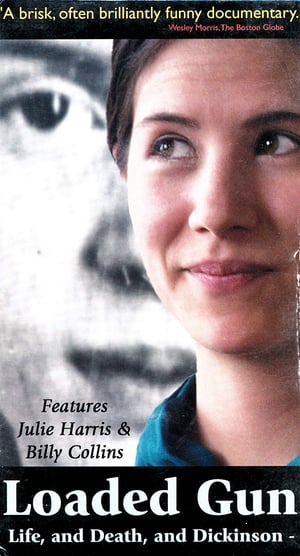
Hundreds of scholars and biographers have tried to explain the life and work of Emily Dickinson, but the famously reclusive poet remains an enigma. In LOADED GUN: Life, and Death, and Dickinson, stumped filmmaker Jim Wolpaw uses a decidedly unorthodox approach to create a documentary about the writer whose beautiful, haunting and cryptic poetry has never quite squared with her reputation as a sensitive spinster. Wolpaw's efforts to illuminate this ethereal subject - more than 150 years after her death - yield some hilariously frustrating results.
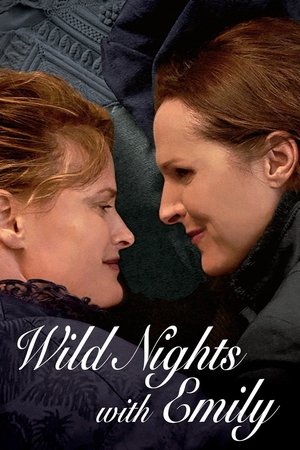
Explore Emily Dickinson's vivacious, irreverent side that was covered up for years — most notably her lifelong romantic relationship with another woman.
A journey through Emily Dickinson's tortured life of psycho sexual frenzy or a satire of short films
The story of American poet Emily Dickinson from her early days as a young schoolgirl to her later years as a reclusive, unrecognized artist.
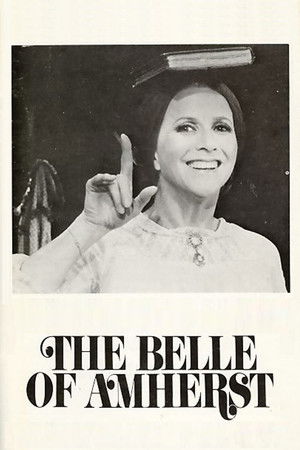
Portrait of 19th century American poet Emily Dickinson based on her poems, letters and notes. This is a taped broadcast of a live one-woman performance.
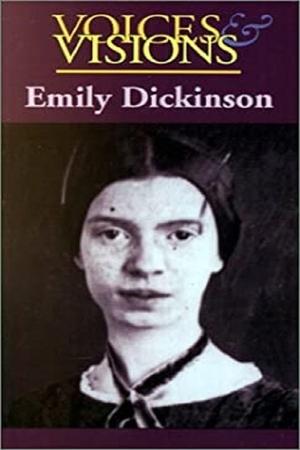
This installment of the Great Women Writers series celebrates American poet Emily Dickinson's works by reciting passages against the backdrop of rare archival photographs and authentic period imagery. Though she wrote more than 2,500 poems during her lifetime -- verses that reveal singular talent and complexity -- Dickinson (1830-1886) chose to publish only seven, making her one of the most reclusive American writers of all time.
Shot in Emily Dickinson’s bedroom, “Emily & Sue” explores Emily Dickinson’s isolation and feelings for her sister-in-law, Susan Huntington Gilbert Dickinson.
Though Emily Dickinson spent almost all her life in Amherst, Massachusetts, her poems represent a broad range of imaginative experience. They are rich in feeling, wide in their knowledge of nature, books, and geography, and expansive in their vision. Dickinson’s training in science suggests a source for her skill in accurate observation, whether of plants and animals or the workings of her own mind. The greatest effect of her scientific studies, though, is in her experimental attitude about life’s great issues.
This pioneering documentary film depicts the lives of the indigenous Inuit people of Canada's northern Quebec region. Although the production contains some fictional elements, it vividly shows how its resourceful subjects survive in such a harsh climate, revealing how they construct their igloo homes and find food by hunting and fishing. The film also captures the beautiful, if unforgiving, frozen landscape of the Great White North, far removed from conventional civilization.
Abondance
Le monde en face - Chine - États-Unis, la nouvelle guerre froide
Starting with a long and lyrical overture, evoking the origins of the Olympic Games in ancient Greece, Riefenstahl covers twenty-one athletic events in the first half of this two-part love letter to the human body and spirit, culminating with the marathon, where Jesse Owens became the first track and field athlete to win four gold medals in a single Olympics.
Part two of Leni Riefenstahl's monumental examination of the 1938 Olympic Games, the cameras leave the main stadium and venture into the many halls and fields deployed for such sports as fencing, polo, cycling, and the modern pentathlon, which was won by American Glenn Morris.
Working men and women leave through the main gate of the Lumière factory in Lyon, France. Filmed on 22 March 1895, it is often referred to as the first real motion picture ever made, although Louis Le Prince's 1888 Roundhay Garden Scene pre-dated it by seven years. Three separate versions of this film exist, which differ from one another in numerous ways. The first version features a carriage drawn by one horse, while in the second version the carriage is drawn by two horses, and there is no carriage at all in the third version. The clothing style is also different between the three versions, demonstrating the different seasons in which each was filmed. This film was made in the 35 mm format with an aspect ratio of 1.33:1, and at a speed of 16 frames per second. At that rate, the 17 meters of film length provided a duration of 46 seconds, holding a total of 800 frames.
As the most dammed, dibbed, and diverted river in the world struggles to support thirty million people and the peace-keeping agreement known as the Colorado River Pact reaches its limits, WATERSHED introduces hope. Can we meet the needs of a growing population in the face of rising temperatures and lower rainfall in an already arid land? Can we find harmony amongst the competing interests of cities, agriculture, industry, recreation, wildlife, and indigenous communities with rights to the water? Sweeping through seven U.S. and two Mexican states, the Colorado River is a lifeline to expanding populations and booming urban centers that demand water for drinking, sanitation and energy generation. And with 70% of the rivers’ water supporting agriculture, the river already runs dry before it reaches its natural end at the Gulf of California. Unless action is taken, the river will continue its retreat – a potentially catastrophic scenario for the millions who depend on it.
John and Yoko in the presidential suite at the Hilton Amsterdam, which they had decorated with hand-drawn signs above their bed reading "Bed Peace." They invited the global press into their room to discuss peace for 12 hours every day.
A Directv and Guitar Center documentary highlighting the iconic rock guitarist, Slash. Featuring interviews with Dave Grohl, Joe Perry, Alice Cooper, Duff Mckagan, Nikki Sixx, and many more...
A film biography of Dr. Norman Bethune, the Canadian doctor who served with the loyalists during the Spanish Civil War and with the North Chinese Army during the Sino-Japanese War. In Spain he pioneered the world's first mobile blood-transfusion service; in China his work behind battle lines to save the wounded has made him a legendary figure. This hour-long documentary film pieces together his remarkable career.
Beginning on the eve of her thirtieth birthday, “Brave Enough,” documents violinist Lindsey Stirling over the past year as she comes to terms with the most challenging & traumatic events of her life. Through her art, she seeks to share a message of hope and courage and yet she must ask herself the question, “Am I Brave Enough?” Capturing her personal obstacles and breakthrough moments during the “Brave Enough,” tour, the film presents an intimate look at this one-of- a-kind artist and her spectacular live performances inspired by real-life heartbreak, joy, and love.