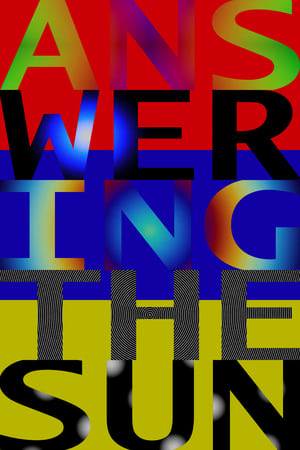
Rainer Kohlberger is prepared to go far when it comes to the physical experiences he evokes with his work. Answering the Sun demands the utmost from its audience. The invitation is to squint our eyes and allow the most amazing trips to unfold – just like when we were children letting the sun come in. However, the work is simultaneously a 60-minute bombardment of coloured fields and a wall of sound, followed by a hallucinatory, silent inky-black sequence.
An experimental and video art film in which an ox is butchered by a butcher.
A young person records a quiet walk through the woods. What begins as a casual video slowly reveals something harder to say.
A silent evocation of perception and memory; an attempt to navigate the flotsam of elliptical impressions, earthly phenomena and dreamed images that linger and interpenetrate on the surface of thought.
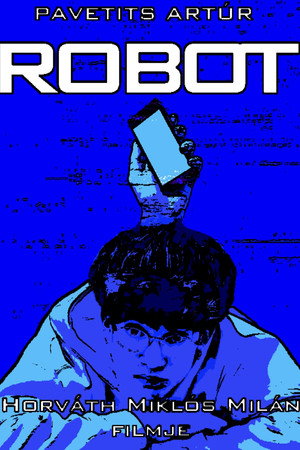
From its creation to its destruction, we follow a humanoid robot whose task is to take care of a Hungarian high-school. Every day is a new kind of torture in this weird, anti-comedic experimental short film.
A gradual immersion into Greece and its stories.
machina is not a technology movie. It is about the breakdown of a faith and power structure we are already living in.
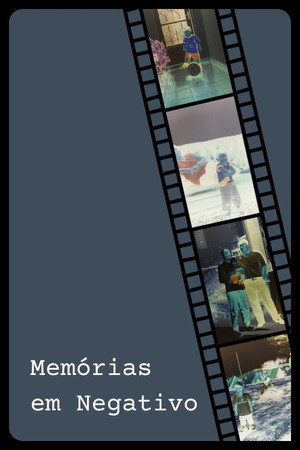
Memórias em negativo
Using footage from socialist era Mongolia, Nomadtitude deals with the transition of the traditionally nomadic people to a lifestyle of urbanization. A changing of roads throughout the years and the movement of people from all across the country to the cities. A timeline of changing physical and spiritual paths. Primary instincts of the nomads, such as having a deep respect for natural surroundings, were forcefully replaced by socialist dogma and, later, capitalist machinations. This work presents the roads taken and not taken by the Mongolian nomads up until now. (Zulaa Urchuud)
In a world where freedom is constantly under threat, democratic societies are always on the lookout to ensure that the hard-won conquests of the historically recent past are not rolled back, but rather evolve towards individual and collective freedoms of expression and coexistence. (Khalil Charif)
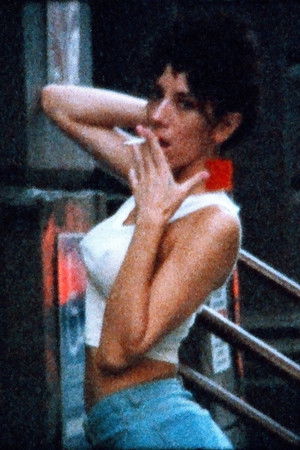
Bounded Intimacy (part of the trilogy of Super 8mm shorts It’s Just Business, Baby) examines the histories of various forms of body labor across the Chelsea and Tribeca districts, renowned as a sites for sex work, sex clubs and illicit sexual activity. Bounded Intimacy explores the seduction of a nameless woman and the camera. The relationship between the two remains unknown and ambivalent as to whether or not the encounter is “authentic.” The nature of their relationship is irrelevant as the camera captures the authenticity of the desire in the encounter between the two. (Ayanna Dozier)
It’s Just Business, Baby is also part of the trilogy of the same name. The film captures an encounter between a client and a working girl where the lines of care are blurred following a session. The film repeats this encounter with the same actors switching parts to trouble the relationship of power that exists between that dynamic. (Ayanna Dozier)
The diver plunges into the sea (death), but also into life (eternity), where he will rediscover the primordial waters of life. This quote from Pierre Lévêque about the illustrations in Tomb of the Diver resonated when I watched the viral video of a young man who was executed in Iran in 2020. A few days after his death, the grainy mobile video of him was released. He ran in slow motion and dove into a pool. Like an act of preservation, I filmed the video with a super 8 camera. The camera became a tool of magnifying and grieving. Three years later, men and women still chanted his name in protests. Like the waves after a dive, injustice has a ripple effect. (Niyaz Saghari)
A director attempting to create an unconditionally truthful film becomes obsessed with the topic of death. In an intrusive way he relentlessly pushes dark scenarios of death aimed at his portraitures, creating a tension ridden and emotional set, blurring the lines of experimental docu-fiction drama.
This vignette draws inspiration from the playful human representations of hybrid and imaginary plants depicted in the margins of medieval manuscripts. The piece gains its name from the vine-like flourishes that sinuously organize these pages of human supposition which imbricate scientific knowledge and mysticism. (Janelle VanderKelen)
Three women engage with the medical system to confront strange dreams that may not belong to them. Early one morning, I regained consciousness in a hospital bed as the sun was coming up. I was sixteen. First thing I heard was the news: Princess Diana had died in a car accident. Two hours earlier, I was hitchhiking home from a party with friends. We were picked up by a Toyota hatchback; the driver was drunk, but we were desperate. At the bottom of the twisted mountain road we crashed into the wall surrounding my town’s cemetery. As I watched updates on Diana from my hospital bed, images of her smashed-up car crept into my mind and imprinted as my own. (Yuula Benivolski)
Traits is inspired by artist Cécile Franceus’ work. In her drawings, produced from thousands of lines and loops, hardly any of the surface remains uncovered; she plays with the resistance and vulnerability of the paper. Building up, tearing apart, sticking on, in order to renew again. (Adina Ionescu-Muscel)
Looking at the foliage of trees, with its perpetually shimmering backlit leaves, the breeze stirred, like a mass of flickering signs, he felt the rustle amplify and decline as an unfamiliar language. A breach opens, the light passes through and the world unfolds. (Adina Ionescu-Muscel)
The limits of the landscape are always the same, because they do not understand political borders, but geographical features. A line that separates the sea from the sky, mountainous waves that cut across the sky. Regardless of where you are, these limits follow the same pattern. This film proposes as a starting point the use of these limits to create a sort of landscape collage, to reconstruct the image of the landscape by combining space and time from the capture of the image; from the present, and not from the subsequent construction in post-production, hence the key role of the analogue image. (Laura Moreno Bueno)