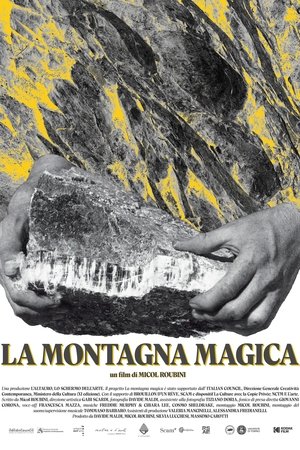
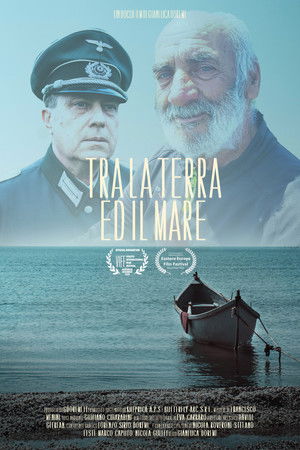
A quiet boy, full of thoughts, leaves his house holding a toy airplane. He boards a bus and, while playing with the model, arrives at Parco Perotti in Bari, where the memorial stele for Tuninter Flight 1153 stands — a flight that took off from Bari and ditched off the coast of Sicily near Capo Gallo on August 6, 2005 — air disaster that claimed 16 lives and deeply affected the 23 survivors.
Ali is not a citizen. He drives a taxi using another man’s license and relies on the GPS to negotiate his way around a city he doesn’t know. His passenger, Esther is an old woman who can’t remember where she is going. She is angry because she has been stripped of everything that is familiar to her and she doesn't recognise the world anymore. They travel through the night in search of a vague destination while surveillance cameras mark their journey, coldly omitting the human element, defining who belongs and who does not, who is safe and who is not. What they have in common is their damage – she can’t remember and he can’t forget.
La montagna magica
Living as listening: For DJs, life revolves around records. Around sounds. Every life is a story, every DJ is a narrator. Every stack of records is an endless collection of stories, of myths, of memories. Can we know someone’s life through their records? For some, we can even know their impact. These records changed Ali Coleman’s life. This is Ali’s Story.
Filmed immediately after the end of the civil war in Angola, Há Sempre Alguém Que Te Ama records the return of Pocas Pascoal to the country where she was born, in an attempt to reconstruct the episode that, in 1975, led to the capture of the director along with her mother and sisters. An intimate documentary about memory and self-(re)construction.
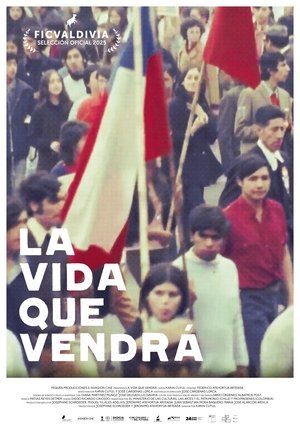
This documentary, made entirely of archival footage shot mainly by amateurs, revisits 50 years of Chilean history. A fascinating lesson in memory, this personal montage adopts a popular, even fringe, perspective to help write a more complete national memory. As the filmmaker asserts in her narration, there’s the history we’re told, the history we live, and the history we tell ourselves. Between the coup d’état of September 11, 1973, and the recent double failure of the new constitution project, this film shows that the people of Chile have long oscillated between excitement and disappointment, accumulating shattered hopes. Rejecting the pessimism that would trap us in collective immobility, Karin Cuyul instead draws on the past to ask how we can continue to dream of the necessary social and political changes.
Avelino Chillarón was 12 or 13 years old when he realized that his surnames and those of his cousins didn't match, so he decided to ask his uncle. This is how he learned that, although his father and aunt were siblings, they didn't have the same father, so he and his cousins didn't share the same grandfather. In this way, Avelino realized that there was a part of his family he didn't know. The protagonist of this story feels partially mutilated from a part of his family history, a part that was taken away from him by a regime that established, over the years, a long period of widespread social amnesia about a series of corpses and missing persons throughout the spanish geography.
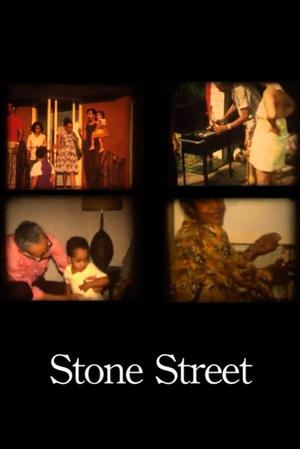
Stone Street documents the life and experiences of a Trinidadian diaspora family and their enduring connection to the long standing family home in Port of Spain. Through the intersecting journeys of this extended and extensive family, the filmmaker explores themes of home, belonging and identity in a life defined by the fragmentary nature of a migratory Caribbean culture. This experimental documentary combines a lyrical first person voice with a family archive of home made audio visual artifacts, interviews and events. As the documentary explores the fragmentary nature of Caribbean identity, it simultaneously celebrates the fragments of domestic memorializing found in home movies, videos and photographs. Stone Street uses these various forms to evoke the experience of a complex and diverse Caribbean and Caribbean diaspora identity.
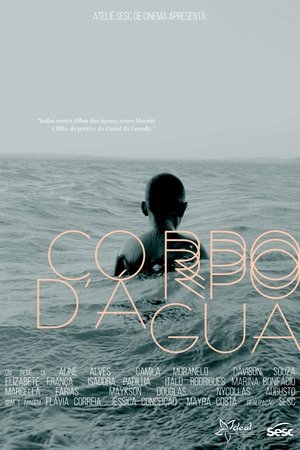
Corpo d'Água
Inspired by the words of a random beauty, Slava quits his job as a freight forwarder and his wife Masha, who does not understand him, for the sake of a dream of becoming a professional psychic. The scope of his abilities is dowsing. And now he scans passers-by in the passages, selflessly looking for the sources of water in the gardens and lives with the guard in the booth.
Four close friends cram into a car in the middle of the night and drive deep into the forest. They arrive at the spot where their lost friend Annie died, under the same tree. Camille, Flora, Lucie and Marion hold a ritual to ensure that Annie's spirit appears to them.
A husband and wife have been wanting a baby for a long time so they perform a ritual that is believed to bring good things.
Questa notte parlami dell'Africa
Last Order
The film tells about Davit Guramishvili's short period of activity during the rule of Vakhtang VI