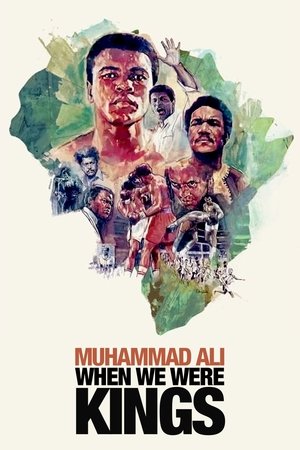
It's 1974. Muhammad Ali is 32 and thought by many to be past his prime. George Foreman is ten years younger and the heavyweight champion of the world. Promoter Don King wants to make a name for himself and offers both fighters five million dollars apiece to fight one another, and when they accept, King has only to come up with the money. He finds a willing backer in Mobutu Sese Suko, the dictator of Zaire, and the "Rumble in the Jungle" is set, including a musical festival featuring some of America's top black performers, like James Brown and B.B. King.
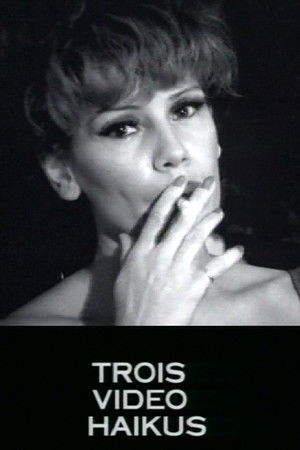
A collection of three short “video haikus” by Chris Marker. Yanka / Tchaika observes the Seine beneath a bridge; Owl Gets in Your Eyes features Catherine Belkhodja with an owl superimposed in flight; and Petite Ceinture pays homage to the Lumière brothers by filming empty train tracks along Paris’s disused railway.
In response to the Detroit riots of 1967, where racial tensions in the city reached a breaking point, the city decided that the way to resolve these tensions would be to put more resources into employing Black people. Namely, chronically unemployed Black men who they refer to as "the hardcore." And predominantly, employing them on the line in auto assembly plants. But in the words of Lloyd Love, a young Detroiter interviewed in the film, this PBS documentary poses the question, "Do you think a job is the answer?" The film explores this question in 1968, by speaking with workers, unemployed people, union activists, students, people who implement city-run employment programs, members of DRUM (Dodge Revolutionary Union Movement), and the Detroit Industrial Mission.
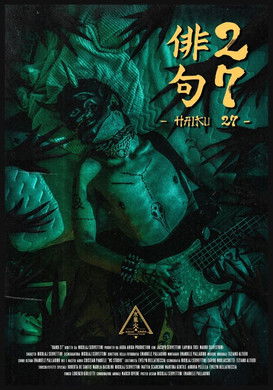
A poet and a spirit have an ongoing deal: Haiku for life.
As his vision fades, a man known only as The Fool journeys inward-through nature, memory, and haiku-to find not just solace in what is slipping away, but meaning in the quiet beauty of being.
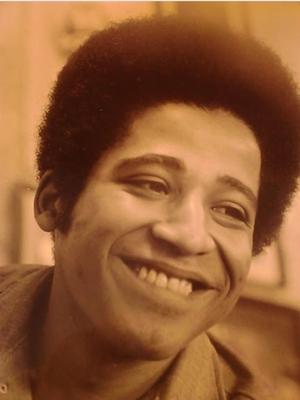
Courtesy of The Freedom Archives 1972, 28 min. This extraordinary video is from a 16mm film “work print” made in 1971–1972, and includes interviews with George Jackson, Georgia Jackson (George and Jonathan Jackson’s mother) and Angela Davis, while she was still in the Marin County Courthouse Jail, before her acquittal. We have not been able to identify the other prisoners. As you will see, the film has no titles or other credits. The discovery of such amazing, previously unknown historic materials always leaves us thrilled and in awe, deepening our understanding of those times and affirming the mission of the Freedom Archives.
On the threshold of her old age, Dolores faces a wall full of memories.
Twelve shots, four sequences. Each of them will try to evoke a feeling, a sensation, an idea, a landscape… just like the iconic and transcendental Japanese poems known as “Haiku”.
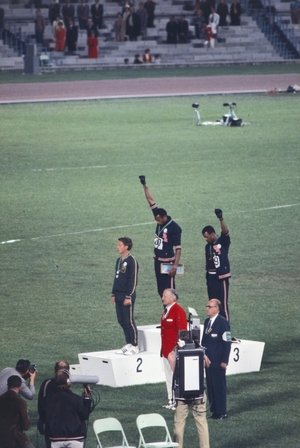
A film about one of the most iconic images of the 20th century, the moment when the radical spirit of the 1960s upstaged the greatest sporting event in the world. Two men made a courageous gesture that reverberated around the world, and changed their lives forever. This film is about Tommie Smith and John Carlos' protest at the 1968 Olympics.
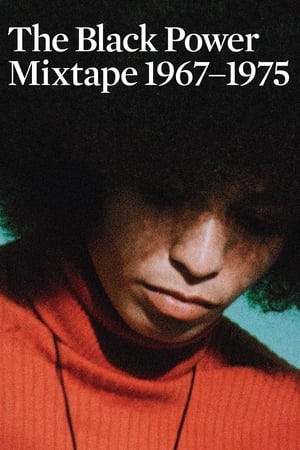
Examines the evolution of the Black Power Movement in US society from 1967 to 1975. It features footage of the movement shot by Swedish journalists in the United States during that period and includes the appearances of Angela Davis, Bobby Seale, Huey P. Newton, Eldridge Cleaver, and other activists, artists, and leaders central to the movement.
An animated film based on one of the renku (collaborative linked poems) in the 1684 collection of the same name by the 17th-century Japanese poet Bashō. The creation of the film followed the traditional collaborative nature of the source material – the visuals for each of the 36 stanzas were independently created by 35 different animators. As well as many Japanese animators, Kawamoto assembled leading names in animation from across the world. Each animator was asked to contribute at least 30 seconds to illustrate their stanza, and most of the sequences are under a minute (Yuriy Norshteyn's, though, is nearly two minutes long).
Haiku 27
FALL
a haiku films, a poem by Nha Thuyen
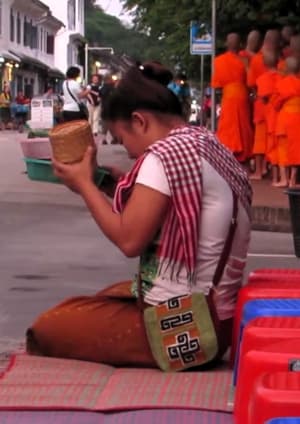
A haiku film poem. the early morning waiting for the monks. the voices. the fire. the wat drum.
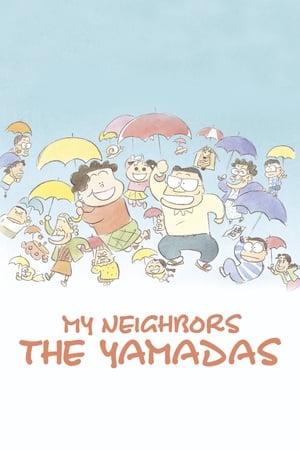
The Yamadas are a typical middle class Japanese family in urban Tokyo and this film shows us a variety of episodes of their lives. With tales that range from the humorous to the heartbreaking, we see this family cope with life's little conflicts, problems, and joys in their own way.
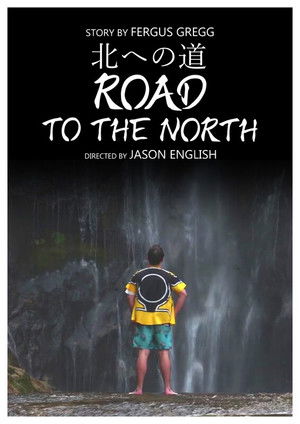
After nearly three years living in Japan, Fergus Gregg finds himself struggling to bid farewell to this beautiful country. On a journey tracing the path of his hero, the poet Matsuo Basho, Fergus decides to trek the northern landscapes of Tohoku. As he travels, he encounters more than he bargained for - facing setbacks, meetings with traditional hunter-gathers, and dances at northern Japan's largest Summer festival. Join Fergus Gregg on his 'Road to the North'.
Silvia needs to get rid of a rat that has invaded the kitchen where she works while dealing with the growing abuses of her boss Suzana.
"he gasps for a breath entwined, then on their back rests, eyes gaze at the sky".
An animated satire on the question of self-image for African American women living in a society where beautiful hair is viewed as hair that blows in the wind and lets you be free. Lively tunes and witty narration accompany a quick-paced inventory of relaxers, gels, and curlers. This short film has become essential for discussions of racism, African American cinema, and empowerment.