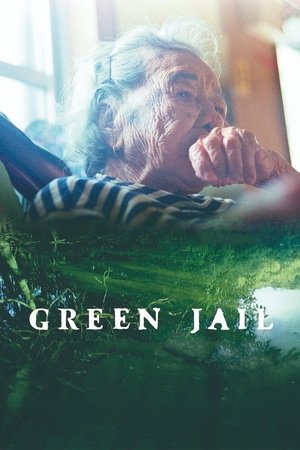
The film follows the last 4 years life of Grandma Hashima, the last existent from colonial Taiwan, who knows the secrets of "Green Jail," the notorious coal mine before World War II on Iriomote Island, Okinawa, Japan.
Acclaimed documentarian John Walker catches the legendary Cape Breton Miner’s singing group The Men of the Deeps just as the last mines on the island are shut down. Featuring ravishing cinematography of Cape Breton, and plenty of music, Men of the Deeps is a deeply touching portrait of a culture that still survives despite the ultimate end of an industry, and a tribute to the men and the songs that kept things moving on the Island for almost two hundred years.
Departing from peripheral details of some paintings of the Bilbao Fine Arts Museum, a female narrator unravels several stories related to the economic, social and psychological conditions of past and current artists.
Henri Storck and Joris Ivens’ landmark of social documentary, blending staged scenes with locals and on-the-spot reportage to depict the 1932 miners’ strike in Belgium’s Borinage—evictions, hunger, and police repression—transforming outrage into a call for solidarity.
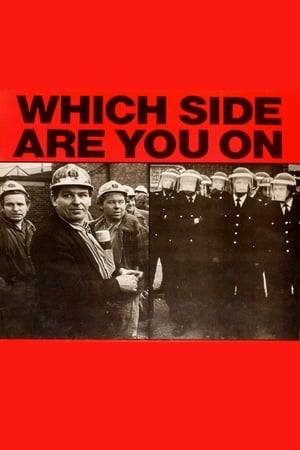
The documentary features the British miners and their family experiences told through songs, poems, pictures and words.
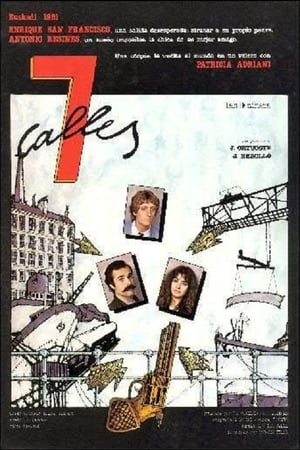
Documentary that presents the urban problems of Bilbao.
Ninety minutes in the Cathedral worth to live a historic moment. The temple quintessential Spanish football said goodbye in July 2013 to make way for the new stadium of the Athletic Club of Bilbao, but the essence, the color, the claw and the history of San Mames remain in the memories of their members, their supporters, of whom feel inside Atletico colors and those players who played on their turf to the sound of aupas, irrintzis, eups and alirones of the athleticzale fans. Documentary directed by journalist Unai Larrea to honor the centenary of the legendary stadium Bilbao, blend the images of the parties lived in the Cathedral interviews with over 80 people involved in the club's history, Bilbao and stage, as players the club itself Julen Guerrero, Joseba Etxeberria, 'Txopo' Iribar, Andoni Zubizarreta or Red Txetxu, Iker Casillas, Xavi Hernandez, Johann Cruyff or Juanlu-last player to score in San Mames, and coaches like Jorge Valdano, Vicente del Bosque and Luis Fernandez.
Coal miners are dying from the resurgence of an epidemic that could have been prevented. FRONTLINE and NPR’s joint investigation revealed the biggest disease clusters ever documented, and how the industry and the government failed to protect miners.
Black lung is a debilitating, incurable, and often fatal lung disease caused by exposure to coal dust. Great Britain recognized it as an occupational disease by the turn of the 20th century, but the American medical community still denied any relationship between exposure to coal dust and disabling lung disease until the late 1960s, when a movement of Appalachian coal miners, their families, and a few maverick doctors and politicians forced the nation to confront the issue of occupational disease and disability.
The state police try to break up racketeering in a coal mining town.
A crew of coal miners becomes trapped 600 feet below ground after a disastrous collapse. As the air grows more toxic and time runs out, they slowly descend into madness and begin to turn on one another. Inspired by true events.
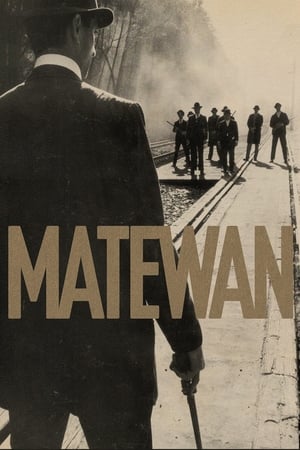
Filmed in the coal country of West Virginia, "Matewan" celebrates labor organizing in the context of a 1920s work stoppage. Union organizer, Joe Kenehan, a scab named "Few Clothes" Johnson and a sympathetic mayor and police chief heroically fight the power represented by a coal company and Matewan's vested interests so that justice and workers' rights need not take a back seat to squalid working conditions, exploitation and the bottom line.
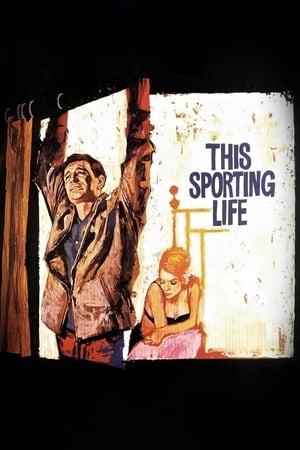
In Northern England in the early 1960s, Frank Machin is mean, tough and ambitious enough to become an immediate star in the rugby league team run by local employer Weaver.
Begoña, a waitress at an elegant club in Bilbao, manages to get shipowner Javier Uriarte to hire her father, Patxi Barrenechea, as captain of the merchant ship Urkia. Begoña meets Esteban, the leader of a gang of ship thieves operating in the estuary, who is also traveling on the Urkia. The voyage turns out to be very different from what they expected, as the ship is transporting weapons to an African country.
Schuylkill County, Pennsylvania, 1876. A secret society of Irish coal miners, bond by a sacred oath, put pressure on the greedy and ruthless company they work for by sabotaging mining facilities in the hope of improving their working conditions and the lives of their families.
Huw Morgan, the academically inclined youngest son in a proud family of Welsh coal miners, witnesses the tumultuous events of his young life during a period of rapid social change. At the dawn of the 20th-century, a miners' strike divides the Morgans: the sons demand improvements, and the father doesn't want to rock the boat.
7 calles
In the depths of the underground coal mines, where danger awaits and darkness prevails, Nam and Việt, both young miners, cherish fleeting moments, knowing that one of them will soon leave for a new life across the sea.
Twenty years after a Valentine's Day tragedy claimed the lives of five miners, Harry Warden returns for a vengeful massacre among teen sweethearts gearing up for another party.
“Laura” is based on a true story about a dramatic search and rescue mission at Halemba coal mine that gripped Poland in February of 2006. A miner was trapped underground, and by the fourth day when everyone was beginning to lose hope of his safe return, the rescue team heard a faint knocking on the pipeline. After a nearly a week long search, the miner was rescued. Those who followed the story closely called it a miracle. But the miner claimed that what saved him was stronger than a miracle – his love for his daughter Laura, and his wife Marlena.