A film essay contrasting the modern metropolis with its "golden age" from 1830-1930, with the participation of some of New York's leading political and cultural figures. Made at a time when the city was experiencing unprecedented real estate development on the one hand and unforeseen displacement of population and deterioration on the other. Empire City is the story of two New Yorks. The film explores the precarious coexistence of the service-based midtown Manhattan corporate headquarters with the peripheral New York of undereducated minorities living in increasing alienation.
This video, The Road to Mass Incarceration, by Greenhouse Media summarizes criminal justice policy decisions dating back to the 1960s. Although the effects often took decades to manifest, each of these policy shifts increased the rate of incarceration in the U.S. The video ends with many of the architects of these changes, Democrats and Republicans alike, admitting the failure of these policies and suggesting that it is time for real change.
This documentary tells of the extraordinary rise of Jair Bolsonaro, from relative obscurity to the ultimate seat of South American power. Told through intimate interviews with some of those closest to him including his eldest son Flávio, former government ministers, as well as his opponents, explore Bolsonaro’s brilliant yet ruthless journey to the presidency, with high-stakes drama, guns and God.
In 1937, after seeing a photo depicting the lynching of a black man in the south, Bronx-born high school teacher Abel Meeropol wrote a poem entitled "Strange Fruit" that begins with the words: "Southern trees bear a strange fruit / Blood on the leaves and blood at the root." He set the poem to music and a few years later convinced Billy holiday to record it in a legendary heartbreaking performance. Intertwining jazz genealogy, biography, performance footage, and the history of lynching, director Joel Katz fashions a fascinating discovery of the lost story behind a true American classic. Written by Excerpted from Coolidge Corner Theatre Program Update
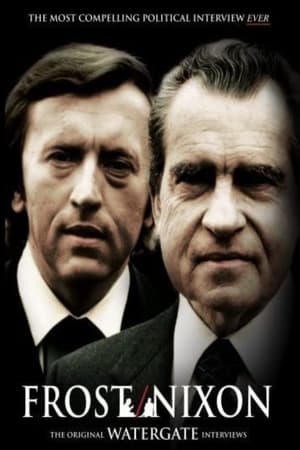
The Watergate case was the original game changer of America politics. How has Watergate changed the Presidency? What effect has the scandal had on our political leaders? And has hope and optimism forever been replaced in our national dialogue by doubt and cynicism? In 1973, Watergate's most pivotal year, reporters Bob Woodward and Carl Bernstein doggedly investigated the scandal exposing the long, twisted trail of cover-ups and lies.
The portrait of Eldridge Cleaver, the "Minister of Information" for the Black Panthers movement, in exile in Algiers.
Documentary that explores the lives of 14 female U.S. senators and the uniquely feminine challenges they face, including the sometimes difficult balance between their roles as public servants and wives and mothers.
On their way back from the Cannes Film Festival in 1971, filmmakers Wakamatsu Koji and Adachi Masao visited Lebanon to meet Japan's Red Army faction and the Popular Front for the Liberation of Palestine to shoot a newsreel film promoting the Palestinian resistance. Conceived as a ‘declaration of world war’ that implicates us all, the directors capture the everyday banality of military training and preparation exercises for imminent battle.
In the eyes of a foreigner practically any street of Mexico City’s Centro Histórico holds potential for a film. Life on the street deserves more than just the natural condition of observer anyone could have, it demands an extra attention. In a 100-meter radius, the sociological exuberance of the events going on is simply impossible to ignore. The street is a mise en scène in itself.
A portrait of the personal journey of Cuauhtémoc Cárdenas Solórzano during his third presidential campaign. It is a moment in contemporary history told from the experiences of the defeated opposing political group. A fundamental piece of the history of Mexico that usually does not reach the public, for it is not written by the victorious; it’s akin to being invited backstage at an unimaginable performance. This story lacks scandal or corruption. It shows how politics takes place in the highest levels in Mexico and shows the human side of a popular leader.
James Baldwin and Dick Gregory discuss the Civil Rights Movement in 1960s Great Britain.
Somewhere in Myanmar is a forest rich in amber and controlled by the Kachin Independence Army (KIA). Most of its inhabitants work in a mine, digging the earth night and days in the hope of finding the precious ore that will get them out of poverty. But on top of the excruciating hardship of the work, they also have to fear an attack from the army.
Habouman's Promise
The film exposes the links between Agrifood and politics. With a pool of international experts it analyses the many problems related to factory farming: water pollution, migrants exploitation, biodiversity loss and antibiotic resistance.
Since the enactment of the Anti-Boryokudan Act and Yakuza exclusion ordinances, the number of Yakuza members reduced to less than 60,000. In the past 3 years, about 20,000 members have left from Yakuza organizations. However, just numbers can’t tell you the reality. What are they thinking, how are they living now? The camera zooms in on the Yakuza world. Are there basic human rights for them?
A documentary about the hearings of President Nixon's Commission on Obscenity, featuring adult-film producer David F. Friedman (one of the producers of this film) testifying before Congress, and involved in the production of one of his films, "Trader Hornee."
At the peak of Perestroika, in 1987, in the village of Gorki, where Lenin spent his last years, after a long construction, the last and most grandiose museum of the Leader was opened. Soon after the opening, the ideology changed, and the flow of pilgrims gradually dried up. Despite this, the museum still works and the management is looking for ways to attract visitors. Faithful to the Lenin keepers of the museum as they can resist the onset of commercialization. The film tells about the modern life of this amazing museum-reserve and its employees.
Filmmaker Steve York explores the controversial 2004 Ukrainian presidential election, during which candidate Viktor Yushchenko suffered a near-fatal poisoning and his unpopular opponent, Viktor Yanukovych, was declared the winner. In the aftermath, more than a million people -- including the ailing Yushchenko -- took to the streets of Kiev, protesting the results that contradicted exit polls showing Yushchenko with an impressive lead.
Who is Kim Yo-jong? In a context of maximum tensions between North Korea and the United States, Pierre Haski paints an unprecedented portrait of the little sister of Kim Jong-un, whose influence in Pyongyang is growing stronger day by day.
The documentary Felipe González approaches some of the most important facets and stages of the Andalusian politician's life, before becoming President of the Government of Spain: his early years, his high school studies at the school of the Claretian Fathers in Seville, his years in the Catholic Action University Youth and the Catholic Workers' Youth, his entry into the Spanish Socialist Workers' Party (PSOE).