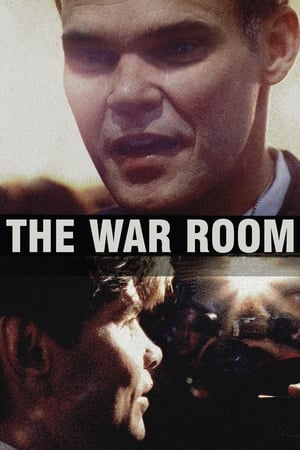
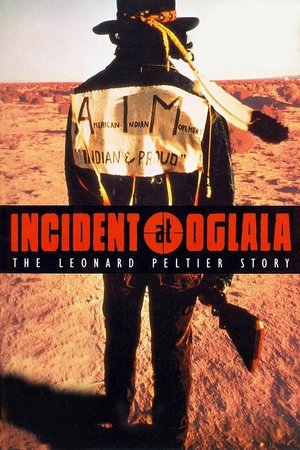
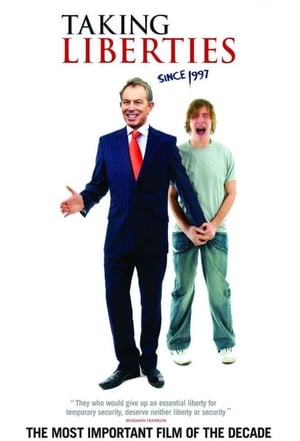
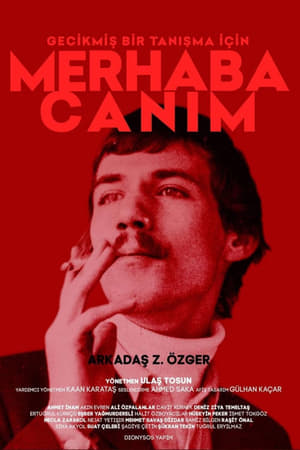
Rio de Janeiro, April 18, 1945. Brazil's foreign policy aligns closely with that of the United States and opens a brief period of democratic rule after the end of World War 2. For years, hundreds of people were arrested and tortured by the Vargas regime. But with the external pressure, several political prisoners gain freedom.
The French Revolution, 1794. The Marquis de Lafayette asks Charles D'Aubigny to infiltrate the Jacobin Party to overthrow Maximilian Robespierre, who, after gaining supreme power and establishing a reign of terror ruled by death, now intends to become the dictator of France.
In 1840s New York, the uneventful and boring days of the daughter of a wealthy doctor come to an end when she meets a dashing poorer man — who may or may not be after her inheritance.
In the spring of 1974, a camera team from Studio H&S succeeded against the explicit orders of the Junta’s Chancellery, entered into two large concentration camps in the north of the country - Chacabuco and Pisagua - leaving with filmed sequences and sound recordings.
A candid, fly-on-the-wall BBC television documentary portrait of Russian Nationalist politician, Vladimir Zhirinovsky. The film shows the leader on a cruise surrounded by two hundred supporters getting plenty of media attention in New York. We are left with the nagging question: to what extent is Zhirinovsky really dangerous? To take that further, to what extent are populist politicians truly dangerous?
This documentary follows the 2002 mayoral campaign in Newark, New Jersey, in which a City Councilman, Cory Booker, attempted to unseat longtime mayor Sharpe James.
Why did Dorothy follow the yellow brick road? Film maker Joel Gilbert journeys across America to find out what's at the end of the Progressive rainbow - Utopia or something far worse? From the ruins of Detroit to the slums of Chicago's South Side, and from Denver's illegal immigration invasion to Newark's urban removal project, Gilbert pulls back the curtain. He confronts Progressives on his quest, and takes us deep into their political fantasy of paradise on earth. There's No Place Like Utopia is a humorous and horrifying exploration of Progressivism, amnesty for illegals, race relations, Islam in America, political correctness, and Barack Obama himself, who promises to "remake the world as it should be." But is Utopia a real destination for America? Or, does the true path to happiness still remain faith, family, and hard work - back home in Kansas?
Capturing Americans in communities across the country as they wrestle with the legacy of the coal industry and what its future should be under the Trump Administration. From Appalachia to the West’s Powder River Basin, the film goes beyond the rhetoric of the “war on coal” to present compelling and often heartbreaking stories about what’s at stake for our economy, health, and climate.
Diving deep into the true causes of the Great Recession, the financial crisis of the 2010s, renowned economists, investors and business leaders explain what America is facing if we don't learn from our past mistakes. Is the economy really improving or are we just blowing up another Bubble?
Masao Adachi, the author and director of experimental works and pinku-eiga in the 1960s, was a member of the Japanese New Left that shifted from being a filmmaker to a guerrilla fighter. In 1974, he joined the Japanese Red Army in Lebanon, which worked closely with the Popular Front for the Liberation of Palestine. Filmmaker Lutz Dammbeck met Adachi in Tokyo in 2018 and talked with him about a wide range of topics, including art, revolution, the influence of western avant-garde art and American underground; the Japanese Red Army; collaboration with secret services; the role of the Left after 1968; and the reasons for failures of leftist ideas and strategies.
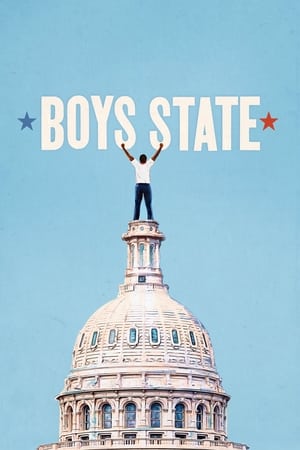
A documentary film exploring what it takes to build a new, hopeful vision for democracy against enormous odds. It’s an underdog story, told through the lives of candidates and organizers during the statewide 2022 election who tell an unexpected story of persistence, community, and progress in an unlikely place.
True story of Norman Bethune, a medical doctor who fought for justice in China during Mao's rise to power.
La révolution selon François
In America women can go to jail for their husbands’ crimes, men are allowed to marry ten-year-olds, and abortions in some states are illegal, even in cases of rape. Documentary filmmaker Brice Lambert journeys through the American South and meets women who are at the receiving end of the attack on women’s rights since Donald Trump’s return to power.
Mexico, March 2015. Carmen Aristegui, incorruptible journalist, has been fired from the radio station where she has worked for years. Supported by more than 18 million listeners, Carmen continues her fight. Her goal: raising awareness and fighting against misinformation. The film tells the story of this quest: difficult and dangerous, but essential to the health of democracy. A story in which resistance becomes a form of survival.
A young refugee travels from Russia to America in search of her lost father and falls in love with a gypsy horseman.
This documentary takes the viewer on a deeply personal journey into the everyday lives of families struggling to fight Goliath. From a family business owner in the Midwest to a preacher in California, from workers in Florida to a poet in Mexico, dozens of film crews on three continents bring the intensely personal stories of an assault on families and American values.
Is the solution to Switzerland's future to integrate Germany into the confederation? After all, like Michael Ringier, CEO of the Ringier media group, says, blithely ignoring all minorities, we're very close in culture and language. Oskar Freysinger takes out his guitar and sings his answer. Politicians from French-speaking Switzerland and Ticino think expanding will help the country survive. The former German foreign minister thinks the two countries' traditions are too different. The banker Oswald Grübel is worried about Germany's debts, although he'd be prepared to take over its assets. With serious interviews interspersed with gags (boat people on Lake Constance, the last Habsburger as a peasant), Giaccobbo gathers off-the-cuff reactions which reveal a lot about the different mentalities. The movie laughs at preconceived notions, redefines neutrality and reflects on what designates a nation. Switzerland, which loves to teach the world a lesson, will soon helvetize the planet, oder?
The film is a controversy on democracy. Is our society really democratic? Can everyone be part of it? Or is the act of being part in democracy dependent to the access on technology, progression or any resources of information, as philosophers like Paul Virilio or Jean Baudrillard already claimed?
"Africa Light" - as white local citizens call Namibia. The name suggests romance, the beauty of nature and promises a life without any problems in a country where the difference between rich and poor could hardly be greater. Namibia does not give that impression of it. If you look at its surface it seems like Africa in its most innocent and civilized form. It is a country that is so inviting to dream by its spectacular landscape, stunning scenery and fascinating wildlife. It has a very strong tourism structure and the government gets a lot of money with its magical attraction. But despite its grandiose splendor it is an endless gray zone as well. It oscillates between tradition and modernity, between the cattle in the country and the slums in the city. It shuttles from colonial times, land property reform to minimum wage for everyone. It fluctuates between socialism and cold calculated market economy.