Incident at Restigouche is a 1984 documentary film by Alanis Obomsawin, chronicling a series of two raids on the Listuguj Mi'gmaq First Nation (Restigouche) by the Sûreté du Québec in 1981, as part of the efforts of the Quebec government to impose new restrictions on Native salmon fishermen. Incident at Restigouche delves into the history behind the Quebec Provincial Police (QPP) raids on the Restigouche Reserve on June 11 and 20, 1981. The Quebec government had decided to restrict fishing, resulting in anger among the Micmac Indians as salmon was traditionally an important source of food and income. Using a combination of documents, news clips, photographs and interviews, this powerful film provides an in-depth investigation into the history-making raids that put justice on trial.
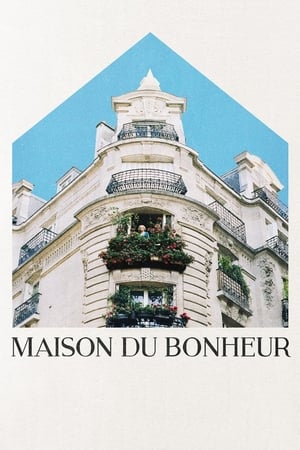
An urban train link, the RER B, crosses Paris and its outskirts from north to south. A journey within indistinct spaces known as inner cities and suburbs. Several portraits, all individual pieces that form a whole. We.
Throughout the Islamic world, each year hundreds of women are shot, stabbed, strangled or burned to death by male relatives because they are thought to have “dishonoured” their families. They may have lost their virginity, refused an arranged marriage or left an abusive husband. Even if a woman is raped or merely the victim of gossip, she must pay the price. Crimes of Honour documents the terrible reality of femicide – the belief that a girl’s body is the property of the family, and any suggestion of sexual impropriety must be cleansed with her blood. We meet women in hiding from their families, a brother who describes his reasons for killing the sister he loved, and a handful of women who have committed themselves to the protection of young women in danger of losing their lives.
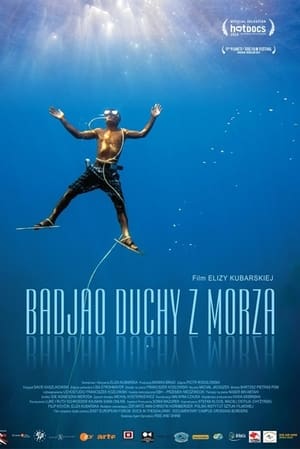
On Yonaguni Island, the westernmost island of Japan, there is a language in danger of disappearing. How far can we take the language, culture and history that are being quietly forgotten at the edge of Japan? A semi-documentary fantasy full of life force.
Four years after a military coup overthrew the Brazilian government in 1964, all civil rights were suspended and torture became a systematic practice. Using a mix of fiction and documentary this extraordinary film is a searing record of personal memory, political repression and the will to survive. Interviews with eight women who were political prisoners during the military dictatorship are framed by the fantasies and imaginings of an anonymous character, portrayed by actress Irene Ravache.
Short about the daily life of the Apaches, including their ceremonies.
After casting painter and video artist Mania Akbari as the central figure of his groundbreaking Ten (2002), and then witnessing her outstanding debut as a feature film director in 20 Fingers (2004), Abbas Kiarostami urged her to direct a sequel to the film. In Dah be alaveh Chahar (10 + 4), though, circumstances are different: Mania is fighting cancer. She has undergone surgery; she has lost her hair following chemotherapy and no longer wears the compulsory headscarf; and sometimes she is too weak to drive. So the camera follows her to record conversations with friends and family in different spaces, from the gondola she had famously used in her first feature to a hospital bed.
Tan Pin Pin employs a strictly external perspective for this portrait of her hometown, the tropical economic powerhouse of Singapore, interviewing political exiles in London, Thailand and Malaysia, who are to this day unable to return home.
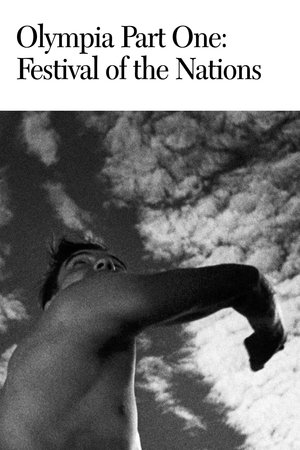
Starting with a long and lyrical overture, evoking the origins of the Olympic Games in ancient Greece, Riefenstahl covers twenty-one athletic events in the first half of this two-part love letter to the human body and spirit, culminating with the marathon, where Jesse Owens became the first track and field athlete to win four gold medals in a single Olympics.
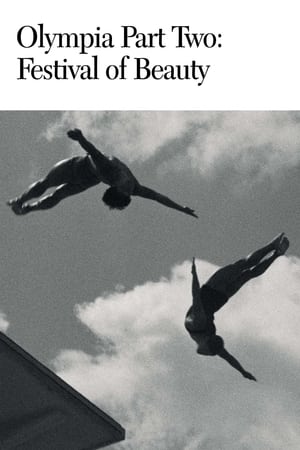
Part two of Leni Riefenstahl's monumental examination of the 1938 Olympic Games, the cameras leave the main stadium and venture into the many halls and fields deployed for such sports as fencing, polo, cycling, and the modern pentathlon, which was won by American Glenn Morris.
After giving birth, Joyce attempts to regain her position as a filmmaker while also caring for her new baby. The changes to both her and her husband’s professional lives are remarkable and frustrating. The new parents love the baby but must recognize the limitations she puts on their careers.
Adult content creator Bonnie Blue announced that she’d slept with 1057 men in 12 hours. Exploring the polarising debate around Bonnie and the pornification of our society, the film follows her over the most eye-opening six months of her life.
The compelling story of an extraordinary woman's journey from her birth in a paper thin shack in the cotton fields of Georgia to her recognition as a key writer of the twentieth Century.Walker made history as the first black woman to win a Pulitzer Prize for her groundbreaking novel, The Color Purple.
Filmmakers Alan and Susan Raymond spent three months in 1976 riding along with patrol officers in the 44th Precinct of the South Bronx, which had the highest crime rate in New York City at that time.
This documentary film is about one of Georgia's regions - Racha. The title of the film is taken from the name of one of Racha's high mountain villages. It tells about the poorest in society living in the mountains and the rise of the SSSR. The product of a remarkable collaboration between the first Georgian female filmmaker and the leading Georgian avant-garde artist David Kakabadze.
Both during and after pregnancy, yoga is a perfect way to firm your body, build strength, and gain flexibility. These two yoga practices, filmed in a serene garden overlooking the Pacific Ocean, are also a wonderful way to maintain emotional balance and reduce stress during the exciting and often hectic times surrounding the birth of a child. In the prenatal sequence you'll practice safe and simple movements intended to strengthen and tone your body at any stage of pregnancy, while providing relaxation that will help create a luminous space in which your baby will thrive. The postnatal sequence is designed to redefine your body, restore your energy, and help you reconnect to yourself and your own wellness.
Jakub presents an extensive ethnographical-sociological study of the life of the Ruthenians, filmed in the Maramuresh mountains in the north of Romania and in the former Sudetenland in Western Bohemia. The film was made over a period of five years during the time of both totalitarian regimes and was completed in 1992 after the revolution.
"Conakry" is a homage to the Guinean-Bissauan and Cape Verdean anti-colonial leader Amílcar Cabral. This poetic film is a single shot 16mm film staged at the Haus der Kulturen der Welt in Berlin and based on the archival images. The film-maker Filipa César, invited the Portuguese writer and artist Grada Kilomba and the American radio activist Diana McCarty to reflect on the images and their history, questioning what these film archive mean in a post-African liberation world.
Pulitzer Prize-winning conflict photojournalist Lynsey Addario reflects on a career working in some of the world's most dangerous war zones, including the Russian invasion of Ukraine.
For decades, American touring ice shows dominated family entertainment with their dazzling production and variety acts. This documentary honors them through interviews and archival footage, and depicts one skater's quest to keep this history alive.