A documentary following the civil rights movement and how the media, in particular the burgeoning TV, was used to fight for equality in the 1960s. From Selma to Charlottesville, we also see how modern activists use today's technology to continue fighting injustice today.
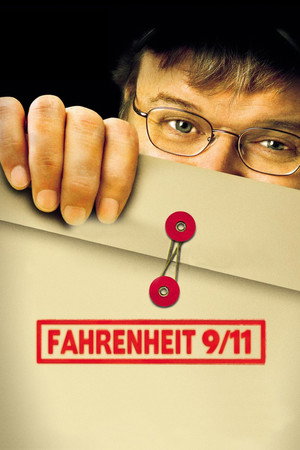
Michael Moore's view on how the Bush administration allegedly used the tragic events on 9/11 to push forward its agenda for unjust wars in Afghanistan and Iraq.
A documentary on Al Gore's campaign to make the issue of global warming a recognized problem worldwide.
While global attention focuses on Ukraine, the Middle East, and Trump’s trade policies, the situation in East Asia is shifting rapidly. Former wartime enemies Japan and South Korea are drawing closer and aligning themselves with Taiwan. An emerging alliance is forming—one that, together with the U.S., positions itself against China. But does this strengthen peace, or turn East Asia into a powder keg?
An enlightening investigative report on Rosatom, Russia's powerful atomic energy agency and Vladimir Putin's formidable geopolitical tool for increasing his influence around the world.
The detailed timeline of events surrounding the deadly siege of the U.S. Capitol and violence in Washington, D.C. on January 6, 2021.
This film is a comment on a current political scenario, where history is in Flux. In a documentary disguise, this film tries to revive faded memories of bygone public figures like Kartar Singh Thatte and other right-wing hardliners... and through the collective memoir, draws a trajectory of a political narrative to understand the 'paradox of tolerance'.
Dare to Dream was directed by Marianne Jenkins, a film student from Goldsmiths' College, University of London, in 1990. It looks at the history of anarchism in the UK and beyond, as well as the state of the movement in the tumultuous year the poll tax uprising finally led to the resignation of Thatcher. Among the anarchist heavyweights interviewed are Albert Meltzer, Vernon Richards, Vi Subversa, Philip Sansom, Clifford Harper and Nicholas Walter, as well as a host of lesser known but equally committed dissidents. The film also features the miners strike and class struggle, squatting and social centres such as Bradford's 1in12 club, animal rights and feminism.
When the Chinese Communist Party backtracks on its promise of autonomy to Hong Kong, teenager Joshua Wong decides to save his city. Rallying thousands of kids to skip school and occupy the streets, Joshua becomes an unlikely leader in Hong Kong and one of China’s most notorious dissidents.
With the help of Steve Bannon and Cambridge Analytica, Trump was groomed to appeal to those who have lost faith in media and politics. Bannon has admitted that he modeled his campaign on the one crafted for Hitler, who was a puppet of dark forces. Through meticulous investigation, John Hankey explores this, and how the media circus following Trump is a strategy for dividing a "United" States.
The murder of Dutch filmmaker Theo van Gogh by an Islamic extremist in 2004, followed by the publishing of twelve satirical cartoons depicting the prophet Mohammed that was commissioned for the Danish newspaper Jyllands-Posten, provides the incendiary framework for Daniel Leconte's provocative documentary, It's Hard Being Loved by Jerks.
Guy Debord's analysis of a consumer society.
FRONTLINE tells the story of how crisis and tragedy prepared Joe Biden to become America’s next president. Those who know him best describe the searing moments that shaped President-elect Biden and what those challenges reveal about how he will govern.
Despite their children's reluctance, Radi and Mounira, a 65-year-old puppeteer couple, set off on tour between Israel and Palestine in their outdated van. They are exhausted from having to set up and take down the stage, from performing three shows in a row in front of hundreds of wild children under a burning sky. Lost in Jericho, frightened by the bombs falling near Majd Al Shams, destabilized by the Bedouin children of the Negev unable to determine their own identity, they no longer know if their mission is still relevant. Safeguarding the identity of their people through their shows, but at what cost? A quest for Palestinian identity.
In 2019, the multi-awarded filmmaker Nahid Persson Sarvestani (My Stolen Revolution, Prostitution Behind the Veil) filmed the Iranian journalist based in France Roholla Zam, who exposed the Iranian regime money laundering. Months later, Rohollah was lured by moles to Iraq and kidnapped to Iran. After 14 months in prison, he was executed.
This documentary follows the 2002 mayoral campaign in Newark, New Jersey, in which a City Councilman, Cory Booker, attempted to unseat longtime mayor Sharpe James.
The 2021 Duma elections made Mikhail Lobanov a recognizable Moscow politician. The 37-year-old mathematician, lecturer at the Moscow State University, has long been involved in social activities: ten years ago he opposed political agitation at the university, participated in the creation of an independent association of university employees to protect their rights, and was almost fired for his activism. In 2021 elections, Lobanov ran for the Communist Party (he is not a member of the party, calls himself a democratic socialist) and waged a powerful grassroots campaign against the pro-government candidate, TV presenter Yevgeny Popov.
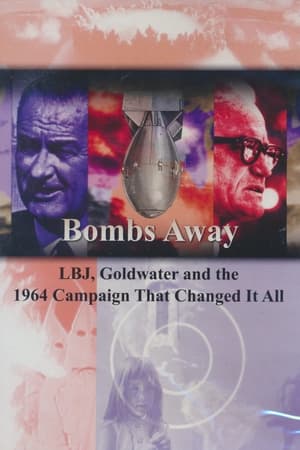
The political ad "Peace Little Girl" aired during the 1964 presidential campaign ushered in a new era of the television attack ad. The campaign also reshaped the American political landscape in other significant ways ultimately ending up with the establishment of the contemporary geopolitical map of red and blue states. Includes interviews with historians and participants in the campaign.
Turkey's history has been shaped by two major political figures: Mustafa Kemal (1881-1934), known as Atatürk, the Father of the Turks, founder of the modern state, and the current president Recep Tayyıp Erdoğan, who apparently wants Turkey to regain the political and military pre-eminence it had as an empire under the Ottoman dynasty.
Personal accounts from the Alta actions in the years 1979 to 1981. Large police forces were deployed against the demonstrators. The dispute over the Alta river began as an environmental issue, but became a major turning point for the Sámi people's struggle for equal rights in Norway.