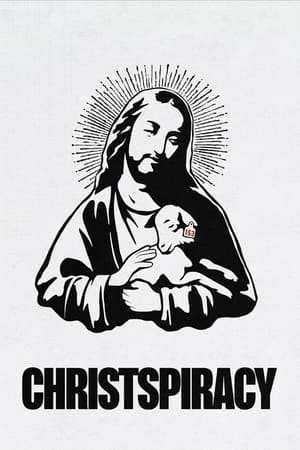
Examines the implications of Christian Nationalism, how it distorts not only our constitutional republic, but Christianity itself, and asks the question: What happens when a faith built on love, sacrifice, and forgiveness grows political tentacles, conflating power, money, and belief into hyper-nationalism?
An account of the revolutionary years of the legendary American journalist John Reed, who shared his adventurous professional life with his radical commitment to the socialist revolution in Russia, his dream of spreading its principles among the members of the American working class, and his troubled romantic relationship with the writer Louise Bryant.
A former police colonel robbed a bank. He believes that this is the only way to prevent the illegal export of gold, which goes through a channel controlled by the mafia.
Bombs tear through Bombay in 1993, wreaking havoc and polarising the citizens. With perpetrators at large, the state launches a massive man-hunt to unmask the perpetrators behind these events.
This fiction-documentary hybrid uses a sensational real-life event—the arrest of a young man on charges that he fraudulently impersonated the well-known filmmaker Mohsen Makhmalbaf—as the basis for a stunning, multilayered investigation into movies, identity, artistic creation, and existence, in which the real people from the case play themselves.
A middle-aged Tehranian man, Mr. Badii is intent on killing himself and seeks someone to bury him after his demise. Driving around the city, the seemingly well-to-do Badii meets with numerous people, including a Muslim student, asking them to take on the job, but initially he has little luck. Eventually, Badii finds a man who is up for the task because he needs the money, but his new associate soon tries to talk him out of committing suicide.
In 150 years, twice marked by total destruction —a terrible earthquake in 1923 and incendiary bombings in 1945— followed by a spectacular rebirth, Tokyo, the old city of Edo, has become the largest and most futuristic capital in the world in a transformation process fueled by the exceptional resilience of its inhabitants, and nourished by a unique phenomenon of cultural hybridization.
Tucumán, Argentina, 1965. Three years before George A. Romero's Night of the Living Dead was released, director Ofelio Linares Montt shot Zombies in the Sugar Cane Field, which turned out to be both a horror film and a political statement. It was a success in the US, but could not be shown in Argentina due to Juan Carlos Onganía's dictatorship, and was eventually lost. Writer and researcher Luciano Saracino embarks on the search for the origins of this cursed work.
Pizza man Hussein is a daily witnesses to the unjust distribution of wealth in his native Iran. One day, he finds a purse filled with shockingly expensive receipts from an upscale jewelry store. He attempts to bring the purse back to the store, but because of his working-class attire, he's not allowed inside. Then, during a delivery, a rich man invites Hussein into his extravagant mansion – an event that spurs Hussein to make a desperate bid for wealth.
Momies d'Égypte, en quête d'immortalité
Four female convicts break out of prison, and during their escape they take hostage a bus full of young female tennis players. They drive the bus to the house of the judge who originally sent them to prison, where--since this is after all a women-in-prison picture--the hostages undergo various forms of physical and sexual abuse in various degrees of nudity.
Tradição e Herança Ancestral - A história dos Mestres de Folias de Reis de Nova Iguaçu
After a heroic job of successfully landing his storm-damaged aircraft in a war zone, a fearless pilot finds himself between the agendas of multiple militias planning to take the plane and its passengers hostage.
Since the invention of the automobile, women have distinguished themselves by their daring: the history of women in motor sport.
Cruelty, psychological and sexual violence, humiliations: reality television seems to have gone mad. His debut in the early 2000s inaugurated a new era in the history of the audio-visual. Fifty years of archives trace the evolution of entertainment: how the staging of intimacy during the 80s opened new territories, how the privatization of the biggest channels has changed the relationship with the spectator. With the contribution of specialists, including philosopher Bernard Stiegler, this documentary demonstrates how emotion has made way for the exacerbation of the most destructive impulses.
By decoding ancient hieroglyphic texts, Jean-François Champollion gave voice to an enigmatic civilization, but behind his legendary feat is a mysterious brother who made it possible. The recent discovery of correspondence between Jean-François Champollion and his brother Jacques-Joseph now allows us to fully understand how a young, self-taught genius was able to make one of the most important discoveries of the 19th century. Without the ingenuity and unfailing support of his older brother, Jean-François would never have succeeded in solving this enigma, which had international repercussions. With animated sequences of their private correspondence, and with the help of archives and expert analysis, this film revisits this unique scientific, human and intellectual adventure to celebrate the bicentenary of the decoding of hieroglyphics.
Oliver Stone's second documentary on/interview with Fidel Castro specifically addresses his country's recent crackdown on Cuban dissidents; namely, the execution of three men who hijacked a ferry to the United States.
Through testimonies and images, the crude reality of human rights in Argentina in democracy is portrayed and the role of the hegemonic means of communication to make causes and protests invisible ...
Grotte Chauvet - Dans les pas des artistes de la Préhistoire
Kadhafi, la folie d'un dictateur