Tensions rise when the trailblazing Mother of the Blues and her band gather at a Chicago recording studio in 1927. Adapted from August Wilson's play.
In this special documentary that inspired a two-season television series, scientists and other experts speculate about what the Earth, animal life, and plant life might be like if, suddenly, humanity no longer existed, as well as the effect humanity's disappearance might have on the artificial aspects of civilization.
Saxophone player Charlie ‘Bird’ Parker comes to New York in 1940 and is quickly noticed for his remarkable way of playing. He becomes a drug addict but his loving wife Chan tries to help him.
"What would the world be like without Beethoven?" That’s the provocative question posed by this music documentary from Deutsche Welle. To answer it, the film explores how Ludwig van Beethoven's innovations continue to have an impact far beyond the boundaries of classical music, 250 years after his birth.
The story of Catholic iconoclast Michael Pfleger who made it his mission to transform the drug ravaged south side Chicago community surrounding his parish. In so doing, Father Mike has run directly into conflict with the local Catholic hierarchy. The film explores issues of racism, the power of the media, and the tension between Pfleger's 'gospel of the streets' versus traditional Church theology.
The true story of Vera Brandes, teenage patron saint of the 1970s Cologne music scene, who risked everything to organize the greatest solo concert in music history: Keith Jarrett’s legendary Köln Concert.
An egotistical saxophone player and a young singer meet on V-J Day and embark upon a strained and rocky romance, even as their careers begin a long uphill climb.
Toronto is regarded as the third largest jazz centre in North America. This film features a cross-section of jazz bands of that city: the Lenny Breau Trio, the Don Thompson Quintet and the Alf Jones Quartet. Their styles show creative self-expression, hard work, and improvisation.
Filmmaker Judith Helfand's searing investigation into the politics of “disaster” – by way of the deadly 1995 Chicago heat wave, in which 739 residents perished (mostly Black and living in the city’s poorest neighborhoods).
Starting from the determination and great desire to create a music concert to embrace peace in Ambon City, Glenn ultimately gave up all his income to hold the concert.
During a decade rife with paranoia, in the middle of the McCarthy era, Music Inn was a bold experiment. Halfway between the Second World War and The Civil Rights Movement, Phil and Stephanie Barber created an oasis in the Berkshire Hills in Western Massachusetts where aspiring musicians came to learn from the very best. Students and faculty, young and old, rich and poor, white, black, and brown convened together and learned from each other. Defying the surrounding environment, Music Inn harbored a racial and cultural harmony where music was all that mattered.
The history of American popular music runs parallel with the history of a Russian Jewish immigrant family, with each male descendant possessing different musical abilities.
A struggling band find themselves attached to a fugitive and drawn into a series of old feuds and love affairs, as they try to stay together and find musical success.
30 years in the making, the film Jan Terri: No Rules tells the story of an irrepressible, and often delightfully perplexing personality. As a child, Jan would dance and sing for anyone who would listen. As a teenager, she began writing and performing her own songs. After earning her BA in Arts and Entertainment Management, she continued making music while working full-time as a limo driver. The income from that job allowed her to hire a studio as well as a videographer to help her make her unorthodox DIY music videos and distributing them on VHS tape. Without her knowledge, her videos made their way to the nascent YouTube. The fact that her most popular YouTube video was given the title “Worst Music Video Ever” didn’t dampen her spirit. Her fanbase grew to include such luminaries as Marilyn Manson and Cynthia Plaster Caster. Over the years, Jan’s independent spirit attracted many collaborators who’ve helped bring her vision to life.
In the Swedish city of Lethe, people from different walks of life take part in a series of short, deadpan vignettes that rush past. Some are just seconds long, none longer than a couple of minutes. A young woman remembers a fantasy honeymoon with a rock guitarist. A man awakes from a dream about bomber planes. A businessman boasts about success while being robbed by a pickpocket, and so on. The absurdist collection is accompanied by Dixieland jazz and similar music.
The story of sex, violence, race and rock and roll in 1950s Chicago, and the exciting but turbulent lives of some of America's musical legends, including Muddy Waters, Leonard Chess, Little Walter, Howlin' Wolf, Etta James and Chuck Berry.
Every school day, African-American teenagers William Gates and Arthur Agee travel 90 minutes each way from inner-city Chicago to St. Joseph High School in Westchester, Illinois, a predominately white suburban school well-known for the excellence of its basketball program. Gates and Agee dream of NBA stardom, and with the support of their close-knit families, they battle the social and physical obstacles that stand in their way. This acclaimed documentary was shot over the course of five years.
Bassist and composer Kyle Eastwood reunites his quintet with the Orchestre National de Lyon to pay tribute to the career of his father, legendary actor and filmmaker Clint Eastwood, in a concert combining jazz, classical music and cinema, held at the auditorium of the Orchestre National de Lyon on October 19, 2022.
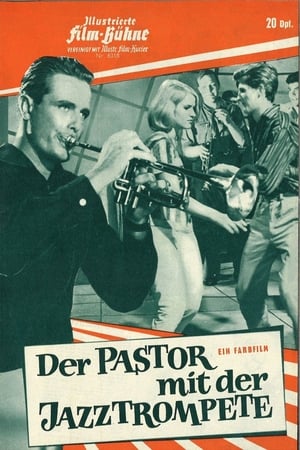
When the Lutheran pastor Roland retires, the young priest Roll shall replace him. He plays the trumpet, loves Jazz and his methods are unconventional: From the first day on he offends the village's notables, but he doesn't care so much since he especially targets the youths, wants them to get back to the church again. However the mayor agitates against him, manages to endanger Roll's success. The conflict leads to vandalism and open violence against Roll.
The Tuaregs of Tinariwen are the kings of North African blues. All it takes are a few notes to transport the audience at the Nuits de Fourvière to the heart of the Sahara.