Primary is a documentary film about the primary elections between John F. Kennedy and Hubert Humphrey in 1960. Primary is the first documentary to use light equipment in order to follow their subjects in a more intimate filmmaking style. This unconventional way of filming created a new look for documentary films where the camera’s lens was right in the middle of what ever drama was occurring. Preserved by the Academy Film Archive in partnership with The Film Foundation in 1998.
The Conspiracy - Assasination in Beirut
In the early 1830s Texas was about to explode. Although ruled by Mexico, the region was home to more than 20,000 U.S. settlers agitated by what they saw as restrictive Mexican policies. Mexican officials, concerned with illegal trading and immigration, were prepared to fight hard to keep the province under their control. Caught in the middle were the area's 4,000 Mexican Texans or Tejanos. With war on the horizon, the Tejanos had to pick a side. Many chose to fight with their Anglo neighbors against an army sent by Mexico City. The conflict pitted brother against brother and devastated the community. The Tejano gamble for a more prosperous future in an independent Texas proved tragic. Following the revolution, the Tejanos were overwhelmed by a surge of Anglo immigration -- leaving them foreigners in a land they had fought to defend.
A year in the life of an underdog competitive high school mariachi band in the Texas borderlands.
Documentary on the assassination of John F. Kennedy
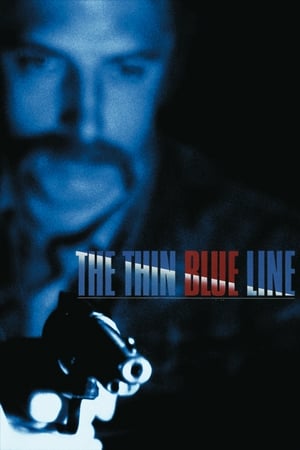
This unique documentary dramatically re-enacts the crime scene and investigation of a police officer's murder in Dallas.
Images of Argentinian companies and factories in the first light of day, seen from the inside of a car, while the director reads out documents in voiceover that reveals the collusion of the same concerns in the military dictatorship’s terror.
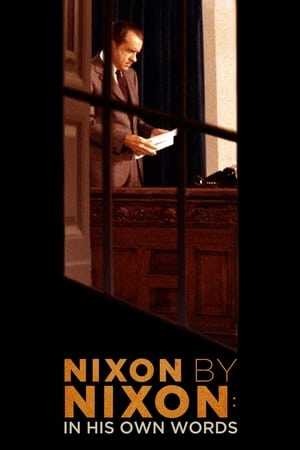
From 1971 to 1973, Richard Nixon secretly recorded his private conversations in the White House. This film chronicles the content of those tapes, which include Nixon's conversations on the war in Vietnam, the Pentagon Papers leak, his Supreme Court appointments, and more--while also exposing shocking statements he made about women, people of color, Jews, and the media.
This U.S. Chemical Safety Board (CSB) video uses expert testimony and computer-animated reenactments to describe and discuss its detailed investigation into the March 23 2005 explosion of the ISOM (isomerization) unit at the BP (British Petroleum) refinery at Texas City, Texas. The explosion killed 15 workers, injured 180 others, and cost BP billions of dollars.
Using two separate filmmaking teams (an all-white crew filming white residents and an all-black camera crew filming black residents), TWO TOWNS OF JASPER captures very different racial views by townsfolk in Jasper, Texas, the location for a racially motivated murder of an African American man in 1998.
Satellites in Texas is a feature documentary following musician Boome as he copes with his brothers sudden death. It follows his humble beginnings as he climbs the ladder of the music industry. Raised by a single immigrant mother Boome defies the odds and starts to scratch the surface of success. Faced by hard decisions to continue to pursue his dream, Boome takes us on the road.
Filmmaker S.R. Bindler profiles Texas contestants trying to win a truck by keeping one hand on it longer than everyone else.
Filmmaker Jonathan Caouette's documentary on growing up with his schizophrenic mother -- a mixture of snapshots, Super-8, answering machine messages, video diaries, early short films, and more -- culled from 19 years of his life.
A fascinating account of the presidency of Andrew Jackson, who was both one of America's great presidents and a borderline tyrant. The seventh president shook up the glossy world of Washington, DC with his "common-man" methods and ideals, but also oversaw one of the most controversial events in American history: the forced removal of Indian tribes, including the Cherokees, from their homes.
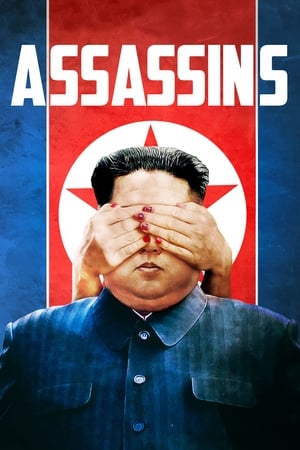
The assassination of Kim Jong-nam occurred on 13 February 2017 when two women attacked him with VX nerve agent, a lethal chemical weapon, at Kuala Lumpur International Airport in Malaysia. Kim was the eldest son of deceased North Korean leader Kim Jong-il and the half-brother of current North Korean leader Kim Jong-un. North Korean diplomats objected to any form of autopsy being conducted on Kim's body, but the autopsy proceeded as the they did not submit a formal protest. Following Malaysia's refusal to release the body immediately, North Korea's ambassador Kang Chol accused Malaysia of collaborating with the country's enemies over the assassination of Kim Jong-nam.
For the last half century, the little town of Luling, Texas has held an annual Watermelon Thump Festival – and its own world championship watermelon seed spitting competition. This short documentary is about both the contest and the chief seed spitting judge, Phil, an underemployed, over-stimulated, former expatriate, who’s come home after years abroad in Europe.
Shut Up and Sing is a documentary about the country band from Texas called the Dixie Chicks and how one tiny comment against President Bush dropped their number one hit off the charts and caused fans to hate them, destroy their CD’s, and protest at their concerts. A film about freedom of speech gone out of control and the three girls lives that were forever changed by a small anti-Bush comment
True crime meets global spy thriller in this gripping account of the assassination of Kim Jong-nam, the half brother of the North Korean leader. The film follows the trial of the two female assassins, probing the question: were the women trained killers or innocent pawns of North Korea?
Michael Moore's view on how the Bush administration allegedly used the tragic events on 9/11 to push forward its agenda for unjust wars in Afghanistan and Iraq.
Black Box BRD steps back into German history, showing the Federal Republic of Germany of the 70s and 80s. The country is polarized due to the power struggle of the German state and the "Red Army Faction". Society is torn, the fronts are irreconcilable. The life stories of both Wolfgang Grams and Alfred Herrhausen are tragically linked to this era. Grams is the one who takes up arms for moral rigor; Herrhausen however seizes power and dies when powerful.