An ethnographic documentary following four Ju/’hoansi (!Kung) men during a multi-day giraffe hunt in the Kalahari Desert, filmed during the Smithsonian–Harvard Peabody expedition of 1952–53.
Filmmaker Karim Aïnouz decides to take a boat, cross the Mediterranean, and embark on his first journey to Algeria. Accompanied by the memory of his mother, Iracema, and his camera, Aïnouz gives a detailed account of the journey to his father’s homeland, interweaving present, past, and future.
Every year, on the steppes of the Serengeti, the most spectacular migration of animals on our planet: Around two million wildebeest, Burchell's zebra and Thomson's gazelles begin their tour of nearly 2,000 miles across the almost treeless savannah. For the first time, a documentary captures stunning footage in the midst of this demanding journey. The documentary starts at the beginning of the year, when more than two million animals gather in the shadow of the volcanoes on the southern edge of the Serengeti in order to birth their offspring. In just two weeks, the animal herd's population has increased by one third, and after only two days, the calves can already run as fast as the adults The young wildebeest in this phase of their life are the most vulnerable to attacks by lions, cheetahs, leopards or hyenas. The film then follows the survivors of these attacks through the next three months on their incredible journey, a trip so long that 200,000 wildebeest will not reach the end.
Imagine the prison of Alcatraz, only 10 times worse, built on tropical, hellish and deadly islands, lost to the rest of the world. Three tiny castaway islands rise away from the coast of French Guyana, in South America: The Devil's Islands. Now buried under an impenetrable jungle, lay the lost remains of what had been for a hundred years the most storied convict prison in history. There, while most of the prisoners faded into oblivion, a few became legends. Some because they were innocent, as in the scandalous Dreyfus Affair, some because they somehow escaped the islands of nightmare, as did the "butterfly", Henry Charrière, immortalized by Steve McQueen in Papillon. Now 50 years after the prison doors slammed shut for the last time, we explore what's left of the Devil's Islands' unbelievably dark and oppressive realm.
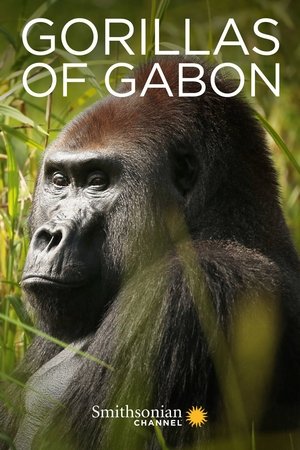
This fascinating film tells the story of one man's struggle to protect a small population of gorillas on the slopes of Mount Kahuzi in Zaire and of his incredible relationship with Kasimir, the great silver-backed male, and his family.
These are the first images shot in the ALN maquis, camera in hand, at the end of 1956 and in 1957. These war images taken in the Aurès-Nementchas are intended to be the basis of a dialogue between French and Algerians for peace in Algeria, by demonstrating the existence of an armed organization close to the people. Three versions of Algeria in Flames are produced: French, German and Arabic. From the end of the editing, the film circulates without any cuts throughout the world, except in France where the first screening takes place in the occupied Sorbonne in 1968. Certain images of the film have circulated and are found in films, in particular Algerian films. Because of the excitement caused by this film, he was forced to go into hiding for 25 months. After the declaration of independence, he founded the first Algerian Audiovisual Center.
The explorers Bruce Parry and Mark Anstice climb the remote and little known mountain Puncak Mandala in the Indonesian part of New Guinea. They have to cross remote jungles, climb icy cliffs and navigate the curiosity and fear of indigenous peoples in order to get to the top.
Le Goût de la savane : Herbivores et carnivores, festins croisés
This film speaks of archaic peoples, their customs and mores, in an attempt to make the last snapshots of their traditional lifestyles before they are gone for good.
Drawing from never-before-seen footage that has been tucked away in the National Geographic archives, director Brett Morgen tells the story of Jane Goodall, a woman whose chimpanzee research revolutionized our understanding of the natural world.
A look at the rampant HIV epidemic rate in Swaziland.
The story of Kenyan athlete David Rudisha, the greatest 800m runner the world has ever seen, and his unusual coach, the Irish Catholic missionary Brother Colm O'Connell.
After having discovered the TAÏ forest 6 months earlier , The exporer Nico Mathieux promised himself that he would be comming back to try and be the first ever to traverse the very last primal forest of west africa from north to south
Christmas Island, Australia is home to one of the largest land migrations on earth—that of forty million crabs journeying from jungle to sea. But the jungle holds another secret: a high-security facility that indefinitely detains individuals seeking asylum.
Documentary film making at its best as it narrates very exotic and esoteric rituals of the primitive peoples of Africa.
An undercover documentary film produced and directed by British filmmaker Dominic Brown, about the struggle of the indigenous Sahrawi people of Western Sahara. The documentary covers the current human rights and political situation of the Sahrawi. There are several interviews recorded with human rights victims including an elderly lady who had been attacked in her home the previous day by Moroccan security forces. There is also a focus given to the alleged vested interests of countries in the region, particularly France. The film states that the French Government's close relationship with Morocco, their trade deals and their use of veto over the terms of the UN mission in Western Sahara are major factors.
In the heart of Gorongosa National Park, Mozambique, the waters of Lake Urema explode with the thrashing of a giant crocodile tail. Gorongosa was once known as the place where Noah left his ark: 1,500 square miles of lush floodplains in central Mozambique, packed with wild animals. All around, enormous buffalo, soaring fish eagles, and countless antelopes roam freely. But on closer look, something strange is going on. Fifteen years of civil war has taken a heavy toll and many species have been almost completely wiped out. All the usual top predators and prey are virtually missing, except for one - giant crocodiles and thousands of them. Discover what is being done to bring this African oasis back to its former glory, including perhaps the most ambitious restoration effort ever attempted, with elephants, hippos and scores of zebra, wildebeest, impala and buffalo, being relocated into the park.
This film is the result of more than two years of work tracking down archive material and witnesses close to Mobutu in Africa, Europe and the U.S. More than 950 hours of footage have been seen by the world. Among the 104 hours selected as the basis for this film, are 30 hours of archives recently discovered in Kinshasa and never before released. Completing these exceptional documents, are more than 50 hours of interviews with those close to the former president and the events surrounding his reign, conducted by the director in Kinshasa, Brussels, Paris and Washington. Like a vast historical puzzle, this film pieces together the tragic history of a country, and its self-styled leader - the dictator, Mobutu Sese Seko, "King of Zaïre".
A chronicle of the violence that occurred in much of the African continent throughout the 1960s. As many African countries were transitioning from colonial rule to other forms of government, violent political upheavals were frequent. Revolutions in Zanzibar and Kenya in which thousands were killed are shown, the violence not only political; there is also extensive footage of hunters and poachers slaughtering different types of wild animals.
The film builds up a portrait of a great Sudanese film-maker, Gadalla Gubara. At eighty-seven, he is one of the pioneers of cinema in Africa. He has recently lost his sight but still continues to film life in Sudan as no one before him. Through his oeuvre, Gadalla reveals to us a Sudan both mysterious and misunderstood. Despite censorship and lack of financial support over sixty years, he has produced cinema that is independent and unique in a country where freedom of expression is a rare luxury.