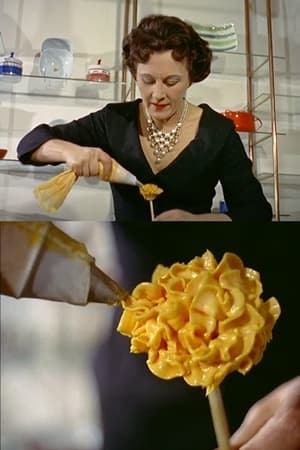
Little film showing a few tips on how to present food graciously. The famous husband and wife cooking team, Fanny and John Cradock, are showing some of the ways to serve savouries. The presentation of the food is as important as the food itself.
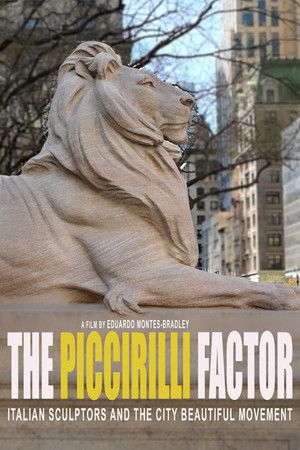
The Piccirilli family settled in New York City and started the largest and most prolific marble carving studio in America. For nearly 50 years, Piccirilli sculptors helped shape the architectural landscapes of Washington and New York through hundreds of monuments, memorials, and artworks, many of which are preserved in museums and private collections.
After Dan Brown's publishing phenomenon The Da Vinci Code was cleared of plagiarism charges, this documentary explores the climate which has permitted a fictional story to make such an effective challenge to conventional history that it has forced a counter-attack from the Church, the art world and academics. Has Brown cracked the most difficult code of all our 21st-century cultural DNA?
Contemporary artist Koki Tanaka sets up a booth at a Los Angeles flea market to sell palm fronds. "I tried to bring something very extreme into the flea-market context. I picked the palm fronds because they are the most useless things in California – they’re what we have to sweep away after a windy day. It was an experiment in registering people’s reaction to a fundamental question about the value of objects. And I was referencing two historical pieces: David Hammons’s Bliz-aard Ball Sale [1983], where he sold snowballs during winter in New York; and a Japanese manga called Munou no Hito [A Worthless Person, 1985], in which the protagonist sells stones by the riverside – stones being sold alongside stones. So both shared quite similar ideas." - Koki Tanaka
A family gathering around what used to be an everyday activity.
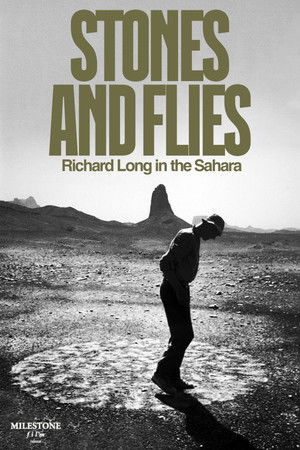
In the fall of 1987, Philippe Haas accompanied the sculptor Richard Long to the Algerian Sahara and filmed him tracing with his feet, or constructing with desert stones, simple geometric figures (straight lines, circles, spirals). In counterpoint to the images, Richard Long explains his approach. Since 1967, Richard Long (1945, Bristol), who belongs to the land art movement, has traveled the world on foot and installed, in places often inaccessible to the public, stones, sticks and driftwood found in situ. His ephemeral works are reproduced through photography. He thus made walking an art, and land art an aspiration of modern man for solitude in nature.
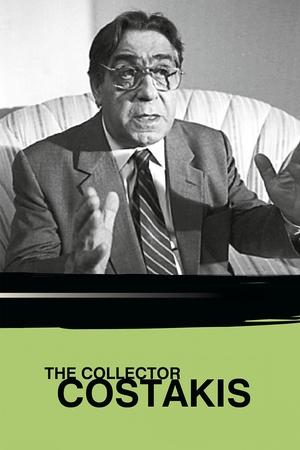
One public housing flat in Moscow stood out above all others: the home of George Costakis, the foremost collector of early 20th century Russian avant-garde art. Its walls were crowded with banned and forgotten works by artists such as Malevich, Tatlin, Kandinsky, Chagall, Lissitzky, Rodchenko, and Kliun; public figures such as Edward Kennedy, Stravinsky, and Alfred Barr visited. Barrie Gavin met the collector in 1982 at his home in Athens. Costakis, a Greek born in Russia, passionately shares his story and those of the great Russian avant-garde artists. Their works are his legacy – without him, they would not have survived the political upheavals in Russia.
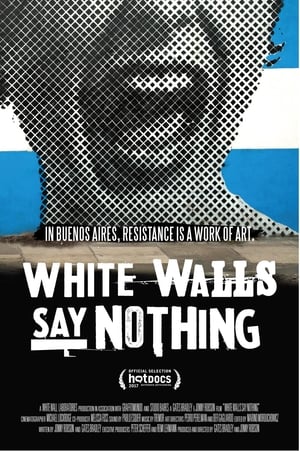
Buenos Aires is a complex, chaotic city. It has European style and a Latin American heart. It has oscillated between dictatorship and democracy for over a century, and its citizens have faced brutal oppression and economic disaster. Throughout all this, successive generations of activists and artists have taken to the streets of this city to express themselves through art. This has given the walls a powerful and symbolic role: they have become the city’s voice. This tradition of expression in public space, of art and activism interweaving, has made the streets of Buenos Aires into a riot of colour and communication, giving the world a lesson in how to make resistance beautiful.
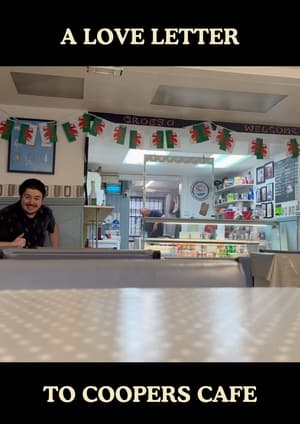
During the summer of 2023, my father decided to hang up the boots and walk away from the family business of 25 years. This is my love letter to the cafe in which my family and I have worked, encapsulating the good vibes and cheery nature the business held for a quarter of a century.
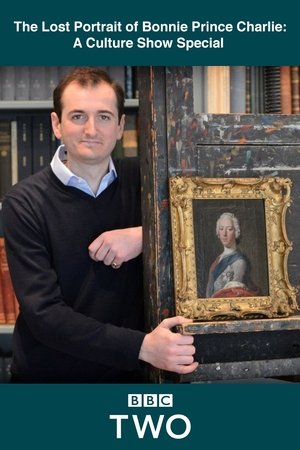
In 2009, art detective Dr Bendor Grosvenor caused a national scandal by proving that the Scottish National Portrait Gallery's iconic portrait of Bonnie Prince Charlie, the rebel Stuart who almost seized power in 1745, was not in fact him. Keen to make amends, and suspecting that a long-lost portrait of the prince by one of Scotland's greatest artists, Allan Ramsay, might still survive, Bendor decides to retrace Charles's journey in the hope of unravelling one of the greatest mysteries in British art.
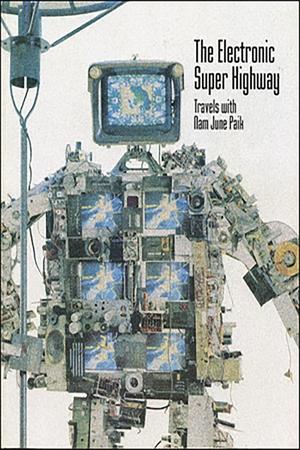
A portrait of Nam June Paik produced as a 'video catalog' for the exhibition 'The Electronic Super Highway', which premiered at The Museum of Art in Fort Lauderdale, Florida, with recent installations, historical background and interviews.
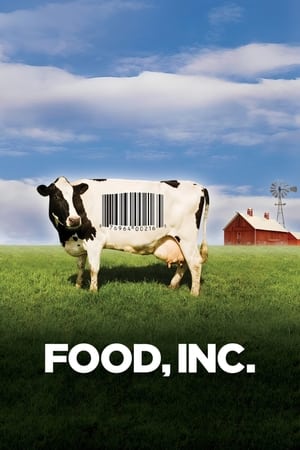
Documentary filmmaker Robert Kenner examines how mammoth corporations have taken over all aspects of the food chain in the United States, from the farms where our food is grown to the chain restaurants and supermarkets where it's sold. Narrated by author and activist Eric Schlosser, the film features interviews with average Americans about their dietary habits, commentary from food experts like Michael Pollan and unsettling footage shot inside large-scale animal processing plants.
In this nostalgic documentary, restaurant critic Giles Coren challenges Heston Blumenthal to take his restaurant The Fat Duck back to 2001 for a magical feast.
A film about art, mathematics, friendship, and social deprivation. Bertil lives in a decommissioned railway station in Skåne. He is internationally renowned, with monumental works displayed across Sweden, yet to gather the courage to walk to the local grocery store he needs a few glasses of wine under his belt. He is powerful, imaginative, humorous, and a resourceful storyteller. He jokes and performs for those around him whenever the opportunity arises. His sculptures are geometrically and mathematically calculated, and his tools are meticulously organized — but his life can be chaotic. One day, something happens: Bertil’s sculptures have disappeared.
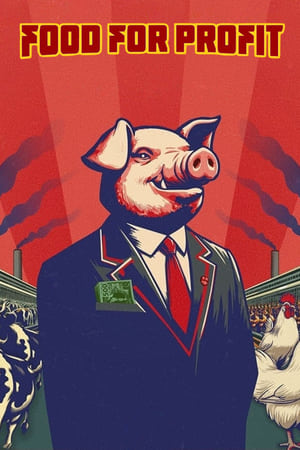
The film exposes the links between Agrifood and politics. With a pool of international experts it analyses the many problems related to factory farming: water pollution, migrants exploitation, biodiversity loss and antibiotic resistance.
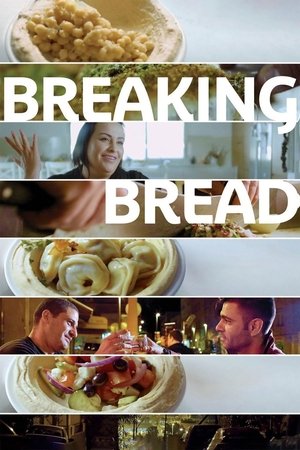
In Breaking Bread, exotic cuisine and a side of politics are on the menu. Dr. Nof Atamna-Ismaeel - the first Muslim Arab to win Israel's MasterChef - is on a quest to make a social change through food. And so, she founded the A-sham Arabic Food Festival in Haifa. There, pairs of Arab and Jewish chefs collaborate on mouthwatering dishes like kishek (a Syrian yogurt soup), and qatayef (a dessert typically served during Ramadan), as we savor the taste of hope and discover the food of their region free from political and religious boundaries.
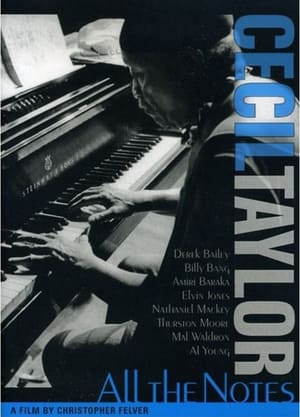
Cecil Taylor was the grand master of free jazz piano. "All the Notes" captures in breezy fashion the unconventional stance of this media-shy modern musical genius, regarded as one of the true giants of post-war music. Seated at his beloved and battered piano in his Brooklyn brownstone the maestro holds court with frequent stentorian pronouncements on life, art and music.
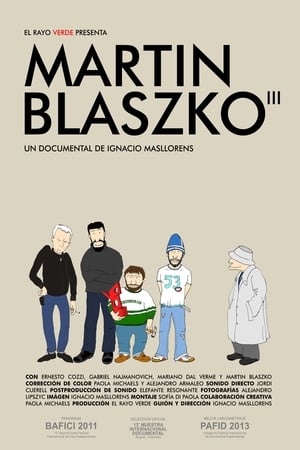
Martin Blaszko is considered one of the most important artists of geometric abstraction in Latin America. This documentary, which ends a trilogy, follows the setup of what ended up being his last art show, through only twenty sequences.
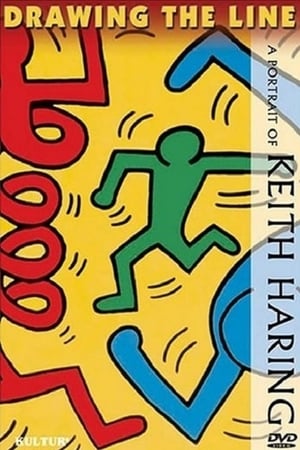
Short documentary about artist Keith Haring, detailing his involvement in the New York City graffiti subculture, his opening of the Pop Shop, and the social commentary present in his paintings and drawings.
A short film with shots of sculptures by Anneke Walvoort. The materiality of film plays an important role: visible grain, flashes of colour, unexpected camera movements.