Mr. Lin is a happily retired man who spends his time keeping company with his toddling grandson, walking his dog, and playing golf with his in-laws. Recently, he has been obsessed with houses with river views. In Lin's city of demolitions and reconstructions, money-making investors buy and sell houses at unaffordable prices. Above the skyline of Taipei, will the boundaries between daydreams and reality ever blur?
A brief glimpse through the life of Granny Lue. A woman of faith, fearlessness, and fierce energy, she never allowed her disability to determine her ability to live.
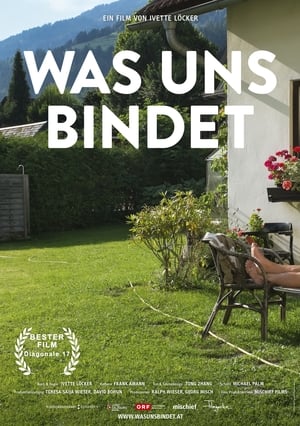
Being mother is the most natural thing in the world. Or so it seems. Yet the demands on women with children have rarely been as overloaded and contradictory as they are in today’s Western world. Promises of happiness are often followed by disadvantages, excessive demands and feelings of guilt. The mother has become an artificially glorified ideal, which nevertheless is often legitimized by the „nature of the woman“. We live in a time when three people could claim to be the same child’s mother: egg donors give their genes to beget children, surrogate mothers deliver babies which they give away immediately after birth, and men raise children by themselves – without a woman at their side. Hence the question arises: What makes a human being a real mother?
OBAIDA, a short film by Matthew Cassel, explores a Palestinian child’s experience of Israeli military arrest. Each year, some 700 Palestinian children undergo military detention in a system where ill-treatment is widespread and institutionalized. For these young detainees, few rights are guaranteed, even on paper. After release, the experience of detention continues to shape and mark former child prisoners’ path forward.
The Freedom of the Sea is a short documentary highlighting the freedom of living in the UK - in contrast to a more restrictive life in Iran - through the joy of daily sea swimming in Brighton.
10 May 2007 - China's staggering economic growth has overshadowed a more subtle shift in Chinese society. In domestic life, many women are now ignore the advice of their mothers and grandmothers, turning instead to counselling hotlines and, increasingly, divorce.
For three years, Vincent Lindon recorded himself on his iPhone to document his insecurities, fears and fits of rage as if in a diary. Thierry Demaizière and Alban Teurlai use these unique recordings to paint an unusual portrait of the actor, who openly addresses personal questions about his profession, his age and his emotions.
A terrorist attack hits Shira's homeland shortly after she moves to the United States. Picking up a camera, she looks for ways to cope with the tragedy, thousands of miles away from those she loves and lost.
A short film following Anthony, a young child from the small, rural town of San Antonio de los Baños, Cuba. We see him in different moments of his daily life as he interacts with different forms of environmental, familial, and social influences. While Anthony displays contradictory traits of creativity, destruction, rigidity, and tenderness as he interacts with his external and internal worlds, we see a story built from the the multidimensionality of Anthony's layered personality as a young man.
In a fading seaside city, a forgotten notebook becomes the unlikely thread connecting two lives. One, burdened by the weight of their memories, fills its pages with raw emotions about lost time and fractured dreams before discarding it. The other, driven by curiosity, discovers the notebook and sets out on a journey to trace the stories it holds. Through its pages, a haunting reminder echoes: “If the whole world forget, never forget. If the whole world forgive, never forgive. Gone, but never forgotten.” As their paths unknowingly cross in shared spaces, both must confront whether to remain anchored in their histories or let go and move forward. A poetic exploration of memory, loss, and renewal, “If We Ever Forgot” asks: can we ever truly leave the past behind?
When a Mongolian nomadic family's newest camel colt is rejected by its mother, a musician is needed for a ritual to change her mind.
What would your family reminiscences about dad sound like if he had been an early supporter of Hitler’s, a leader of the notorious SA and the Third Reich’s minister in charge of Slovakia, including its Final Solution? Executed as a war criminal in 1947, Hanns Ludin left behind a grieving widow and six young children, the youngest of whom became a filmmaker. It's a fascinating, maddening, sometimes even humorous look at what the director calls "a typical German story." (Film Forum)
Two old sisters, living in the same Warsaw apartment, sit on a bench and talk. The 87-year-old elder one seems to care for the other reluctantly and treat her badly. The younger, who is said to be clumsier, has walking problems.
The action is placed in a cramped flat in Warsaw’s district of Ochota. A father and a son, both bedridden, live in a fascinating symbiosis. The son, a well‑known photographer Bernard ben Dobrowolski, is lying in bed because a chronic condition has deformed his body and immobilized him. The father, Dominik, has recently suffered from a stroke. Now they are taking care of each other and crowds of visitors move through their room.
Keenly aware that his niece is going through a particularly rough time at home, Uncle James teaches Ava Dee how to use the Blackmagic Pocket Cinema Camera. As an experiment, he tells her to shoot whatever she wants and he'll edit it into a film.
A nuanced portrait of a new generation, Dear Thirteen is a cinematic time capsule of coming of age in today’s world. Through the eyes of nine thirteen-year-olds, we see how pressing social, geographical and political challenges are shaping, and being shaped by, young people: rising anti-Semitism in Europe, guns in America, gender identity and racial divisions across Australia and Asia. With no adult commentary outside the filmmaker, Dear Thirteen offers an intimate view into the universal uncertainty inherent in growing up.
Comme un rayon de soleil sur la peau
This is a reconstruction of the daily life of an ordinary family. With kindness and gentle humour, the film reveals the relationship between the older and the younger generation. The original concept of a short film study with authentic characters of the Ravager family grew into a feature-length picture on the border between a documentary and fiction. It was made as an improvisation without a previously approved screenplay in the course of only twenty days.
As Iracemas
Afganistanbul