Drama in the Futurists' Cabaret No. 13
Women They Talk About is a part-talkie Vitaphone film, with talking, music and sound effects sequences, starring Irene Rich, directed by Lloyd Bacon and produced and distributed by Warner Bros. It is considered to be a lost film.
Frank Perry's wife Helen is away visiting her mother, and he uses this "free time" for a night of drinking at a nightclub. Unfortunately, when he tries to return home, he enters the wrong house and is nearly arrested When Helen comes back he tells her that the "incident" was actually an initiation rite of the Masons, knowing that his wife has always wanted him to join the group. She excitedly tells her father about Frank's becoming a Mason, since her father is also a Mason. What neither she nor Frank know is that her father has actually been doing the same thing Frank is--pretending to be a Mason when he actually isn't. Complications ensue.
Bryce Gilbert convinces his daughter, Virginia, that she should not elope with a casual boyfriend and sends her to Italy to stay with his fiancée, Duchess Bianca.
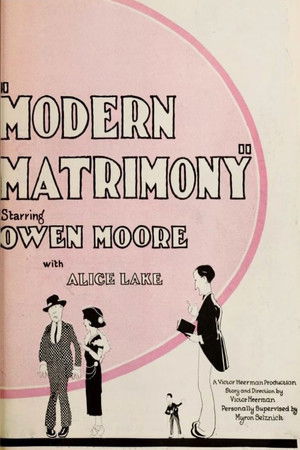
A young woman borrows money from her boss for her wedding dress. After the marriage he asks to be repaid, and she--not liking to ask her husband for money--writes a check on her husband's account. When he discovers that his wife has written a check to another man and not told him, complications ensue.
Indiana Stillwater, the daughter of a wealthy American railroad industrialist, marries English nobleman Viscount Canning and travels to England. Her in-laws are somewhat shocked by her casualness in dress and manner, but welcome her into the family anyway. When her parents invite her to a Sunday-night dinner at their hotel, however, her husband--believing it to be inappropriate behavior for the wife of a nobleman--orders her not to go. Complications ensue.
Glenn Higgins and Patsy Jones are a song-and-dance team traveling the vaudeville circuit across the United States, and land in a Kentucky tank-town filled with sharpies and wise-guys , wearing spats and carrying canes, who have reasons for wanting a horse named "Hot Heels, not to win the race he is scheduled to run in. This does not bode well for the vaudevillians as Glenn, acting on a hot tip from a hot vamp, has bet the pair's bankroll on "Hot Heels" to win.
A lost film. Teddy Drake is a pleasure-seeking aristocrat who ends up expelled from his exclusive Fifth Avenue club for playing practical jokes and other rambunctious antics. He decides to reform his selfish ways and boards a train heading heading for the Southwest.
A young man marries an actress, but meanwhile her uncle has signed a contract binding her to spinsterhood, many complications arise.
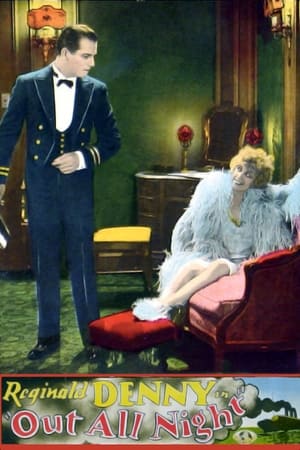
Bob Wharton marries Lorelei Knight, a beauty contest winner. While on their honeymoon, Bob is laughingly abducted by the flirtatious Bernice Lane, who keeps Bob out way past his bedtime.
Lacking patients, Dr. Sumner sets himself up as a psychologist and opens a sanitarium, becoming quite successful. Virginia Zelva, a clairvoyant who wants to get into what she regards as a racket, signs on as his nurse. Sumner falls in love with Virginia and, after numerous complications, wins her for his bride.
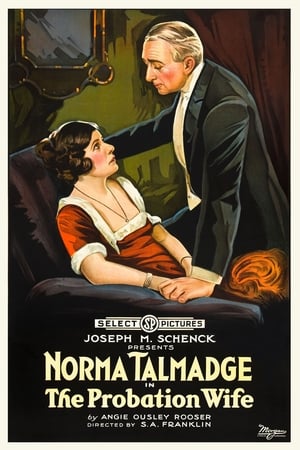
Young marrieds Paul, the Viscount De Sallure, and his bride Florence are in financial straits. Florence’s inheritance is available to her only if she separates from her husband so the pair concoct a scheme to give that appearance. Problems emerage when Paul seems to be taken the ploy to heart with Mlle. Fifi but all turns out well in the end.
One of the two earliest horror films ever made. This film is presumed lost. In this black comedy scene, the bottom falls out of a coffin, the corpse tumble out, and is jolted back to life. Short sequences like this, as well as street scenes and dancing geisha girls were the main subjects of early Nippon cinema, pioneered by Shiro Asano and Shibata Tsunekichi from 1897 onwards. In creating dramatic, scenes, film-makers naturally chose the most striking or bizarre. Another undocumented film, recalled by cameraman Shiro Asano.
Two couples with mismatched mates find new romance blooming in the Bavarian countryside.
Perpetua is a rich little orphan with a kind but absent-minded dreamer of a guardian, Thaddeus, who is very much older than herself. Perpetua wants to live in Thaddeus's house but instead is sent to her eccentric animal loving Aunt's, Miss Majerdie. Unhappy Perpetua runs away to Thaddeus’s. He endures her for a time and finally ships her back to his Aunt Majerdie's. Pursued by several suitors whose ardor cools when the rumor goes round that she is penniless. Her wealth having intimidated him before Thaddeus steps in now and declares his love for her.
When a secretary overhears her boss disparaging her looks, she decides to show him how wrong he is.
Directed by Max Urban.
Heiress Rhoda Canby is badgered by her eccentric relatives Uncle Silas, Aunt Elizabeth, and Cousin Hepzibah. She falls in love with writer Irving Mason, who believes Rhoda to be the heiress' secretary, and courts her as chauffeur "Henry Smith." Accompanied by her African-American nurse Aunt Chloe, Rhoda runs away from home. Irving, meanwhile, is abducted. Upon reading of the supposed suicide of Irving Mason, Rhoda assumes the role of widow and visits his hometown. There she is befriended by Irving's uncles and goes to work in the family's general store. Irving escapes his captors and surreptitiously returns home, but is surprised to find himself presumed dead and Rhoda his widow. When the family store catches fire and Irving saves Rhoda, their true identities are revealed, after which they are married.
Because of the circumstances of her parents' marriage her grandfather rejects their child, Mary. Following her their deaths she is placed in an orphanage where Mary finds hardship.
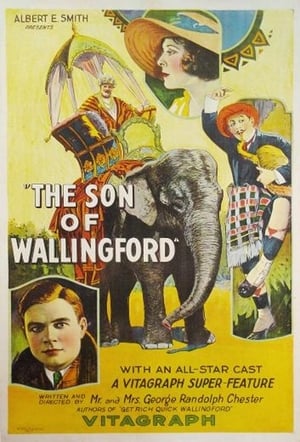
A young man's journey into adulthood, love, and ambition, inspired by a serial by George Randolph Chester exploring themes of love, ambition, and self-discovery, set against the backdrop of the Roaring Twenties.