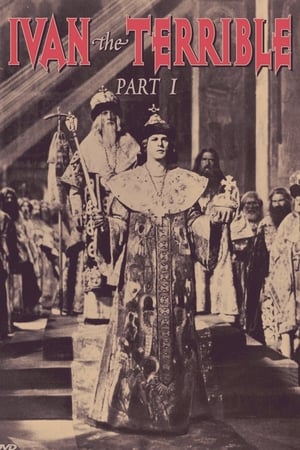
Set during the early part of his reign, Ivan faces betrayal from the aristocracy and even his closest friends as he seeks to unite the Russian people. Sergei Eisenstein's final film, this is the first part of a three-part biopic of Tsar Ivan IV of Russia, which was never completed due to the producer's dissatisfaction with Eisenstein's attempts to use forbidden experimental filming techniques and excessive cost overruns. The second part was completed but not released for a decade after Eisenstein's death and a change of heart in the USSR government toward his work; the third part was only in its earliest stage of filming when shooting was stopped altogether.
When recently single Steven moves into his new apartment, cable guy Chip comes to hook him up—and doesn't let go. Initially, Chip is just overzealous in his desire to be Steven's pal, but when Steven tries to end the 'friendship', Chip shows his dark side. He begins stalking Steven, who's left to fend for himself because no one else can believe Chip's capable of such behaviour.
Rajputana, India, 13th century. The tyrannical usurper Alauddin Khilji, sultan of Delhi, becomes obsessed with Queen Padmavati, wife of King Ratan Singh of Mewar, and goes to great lengths to satisfy his greed for her.
Enraged at the slaughter of Murron, his new bride and childhood love, Scottish warrior William Wallace slays a platoon of the local English lord's soldiers. This leads the village to revolt and, eventually, the entire country to rise up against English rule.
14th-century Franciscan monk William of Baskerville and his young novice arrive at a conference to find that several monks have been murdered under mysterious circumstances. To solve the crimes, William must rise up against the Church's authority and fight the shadowy conspiracy of monastery monks using only his intelligence; which is considerable.
Cartagena, Colombia – 1666. An enslaved woman accused of witchcraft comes face to face with evil incarnate and a Faustian bargain for her freedom while imprisoned in the bowels of the Palace of the Inquisition.
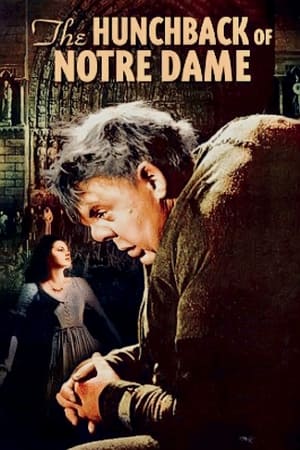
Isolated bell-ringer Quasimodo wishes to leave Notre Dame tower against the wishes of Judge Claude Frollo, his stern guardian and Paris' strait-laced Minister of Justice. His first venture to the outside world finds him Esmeralda, a kind-hearted and fearless Romani woman who openly stands up to Frollo's tyranny.
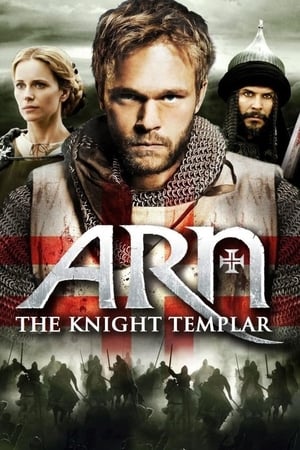
Arn, the son of a high-ranking Swedish nobleman is educated in a monastery and sent to the Holy Land as a knight templar to do penance for a forbidden love.
Sweden, beginning of the 18th Century. Executions are popular entertainment and brothels a given. Still the executioner and the whore are both despised and shunned. The executioner became executioner against his will and the whore, only 17 years old, was forced into the brothel. This is the story of how the two meet and exchange cruelty with tenderness, guilt with innocence.
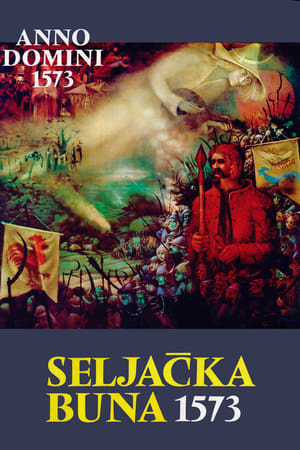
Europe in second half of 16th century was very rough place to live. Peasants of Slovenia and Croatia had even rougher times because of the constant threat of Turk raids and being taxed to death in order to provide defence against the Turks. But, the worst things were arrogant local feudal lords led by Franjo Tahi who were oppresing the common folk. All that led to the great peasant revolt of 1573. The movie is made for the 400th anniversary of the event.
It began much like the common cold. Yet within a day fever took over black swellings the size of baseballs appeared on the neck and finally a highly contagious bloody cough quickly sealed the victim's fate. During the worst biological disaster in the history of mankind the so-called black death released an indiscriminate fury which shook the very foundations of human order. Religious hysteria began to break out and in desperation frenzied masses scrambled to find a scapegoat. When all was said and done nearly one-third of Europe's population had been completely wiped out and devastated survivors were left to contend with a world forever changed both socially and economically. In this feature-length special THE HISTORY CHANNEL-® investigates the origins of this devastating moment in human history and explores the many questions surrounding the terrifying possibility of a modern-day biological threat.
A Muslim ambassador exiled from his homeland joins a group of Vikings, initially offended by their behavior but growing to respect them. As they travel together, they learn of a legendary evil closing in and must unite to confront this formidable force.
The musical version of the successful play of Oldřich Daněk was transferred to the screen by director Jiří Sequens in 1986. It takes place in the 14th century in Bohemia during the reign of King Wenceslas IV. Heroes of the story are three mercenaries who always fight on the wrong side and are always beaten, but they are moral winners of all conflicts and skirmishes.
When Death wants to bring the plague to Württemberg in 1349, he has not reckoned with the two guard soldiers Volckel and Utz, who engage him in a heated argument about plague ordinances and entry regulations.
At the turn of the 10th and 11th centuries Boleslav's kingdom fell apart in the fratricidal war between the Přemyslovci and the other clans the main profiteer of this being the German emperor. At that time it seemed as if the Czech state and the lineage of its princes was awaiting its end..." It is with these words that the tale of this film begins, whose narrative is based upon the the play by František Hrubín of the same name.
Paris, France, 1482. Frollo, Chief Justice of benevolent King Louis XI, gets infatuated by the beauty of Esmeralda, a young Romani girl. The hunchback Quasimodo, Frollo's protege and bell-ringer of Notre Dame, lives in peace among the bells in the heights of the immense cathedral until he is involved by the twisted magistrate in his malicious plans to free himself from Esmeralda's alleged spell, which he believes to be the devil's work.
Historical drama set during the reign of Philip II of Spain. The royal troops have taken up quarters in the village of Zalamea. Captain Don Alvaro is staying with the farmer Pedro Crespo. His daughter Isabel behaves very coldly and dismissively toward the captain, which irritates him. Finally, he takes her by force and humiliates her father. The captain is put on trial in the village. Pedro is appointed judge and, despite all the threats from General de Lope, sentences the captain to death. De Lope then wants to deny him his judicial authority. Surprisingly, King Philip II appears in the village and confirms the harsh sentence, but wants to pardon the offender. However, the sentence has already been carried out.
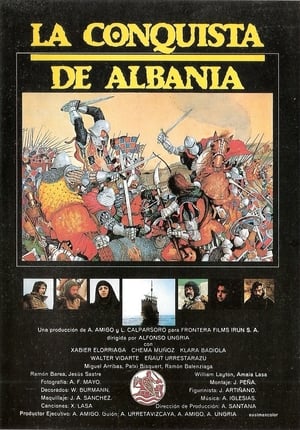
King Carlos II of Spain (r. 1665-1700) once sent his brother Luis to lead a military expedition into Albania and conquer that land for the Spaniards. Since Albania was a part of the dowry of Luis' wife, it seemed like a reasonable idea at the time. While that expedition and its final battle is the subject of this historical film, the scale involved can hardly do justice to the concept. The protagonists talk incessantly, and by the time they get down to the final grand battle, it turns out to be a skirmish between several dozen men.
In an ancient time when majestic fire-breathers soared through the skies, a knight named Bowen comes face to face and heart to heart with the last dragon on Earth, Draco. Taking up arms to suppress a tyrant king, Bowen soon realizes his task will be harder than he'd imagined: If he kills the king, Draco will die as well.
An affair between the second in line to Britain's throne and the princess of the feuding Irish spells doom for the young lovers.