In the Jewish tradition of arguing with God, Jewish prisoners in Auschwitz decide to put God on Trial.
Between 1930 and 1945, Eastern Europe experienced mass violence on an unprecedented scale. Hitler and Stalin exploited the vast region for their respective expansionist plans. It is estimated that around 14 million civilians were murdered—primarily Jews, Poles, Balts, Belarusians, and Ukrainians.
A non-binary teen goes on a journey toward acceptance, after being kicked out.
The Terezin Gravediggers
32 utajovaných stran – zpráva z pekla
A gripping documentary about the courage and determination of a young English stockbroker who saved the lives of 669 children. Between March 13 and August 2, 1939, Nicholas Winton organized 8 transports to take children from Prague to new homes in Great Britain, and kept quiet about it until his wife discovered a scrapbook documenting his unique mission in 1988. Winton was a successful 29-year-old stockbroker in London who "had an intuition" about the fate of the Jews when he visited Prague in 1939. He quietly but decisively got down to the business of saving lives. We learn how only two countries, Sweden and Britain, answered his call to harbor the young refugees; how documents had to be forged and how once foster parents signed for the children on delivery, that was the last he saw of them.
In 1935, German scientists dug for bones; in 1943, they murdered to get them. How the German scientific community supported Nazism, distorted history to legitimize a hideous system and was an accomplice to its unspeakable crimes. The story of the Ahnenerbe, a sinister organization created to rewrite the obscure origins of a nation.
Angolan director and screenwriter Pocas Pascoal reminds us that it’s time for a change, proposing through this film a look at colonialism, capitalism, and their impact on global biodiversity. We observe that the destruction of the ecosystem goes back a long way and is already underway through land exploitation, big game hunting, and the exploitation of man by man.
A frenetic found-footage documentary made entirely from “lost” unlabeled media on YouTube - weaving together nearly a thousand raw videos, each mistakenly or mindlessly uploaded under a generic filename (e.g., IMG 1326, IMG 5493…).
Yukari Nishihara, 25, earns her living as an art model and aspires to become an actress. One day, while she was out, she saw “a man's face about to jump off the roof of a building”, and since then she has been suffering from a peculiar constitution: she sees a suicide while on her period, faints, and develops a fever. The goddess of love does not smile on Yukari, who is unable to become a sweet girl with a nice boyfriend. The only things that can save Yukari now are her best friend Hana, who has a keen intuition, and a suppository that can break a fever in one shot. On the day of an important audition, Yukari has decided that this is her last chance. However, Yukari realizes that she has forgotten her antipyretic suppositories, and her eyes meet those of another soon-to-be suicide victim. She is in a desperate situation. What does Yukari do?
Nazi occupied Poland, during the World War II. Hans, a former brilliant student, has become an SS officer stationed at the Auschwitz-Birkenau concentration camp. When he is commissioned by his superior officer to build an efficient gas chamber, Hans, facing the harsh reality, begins to realize the magnitude of the atrocious acts of which he is being accomplice.
A young Jewish boy travels europe in search of the grave of his Great Grandfather who was killed by the Nazis in the War.
In March 1943, twenty-year-old Ovadia Baruch was deported together with his family from Greece to Auschwitz-Birkenau. Upon arrival, his extended family was sent to the gas chambers. Ovadia struggled to survive until his liberation from the Mauthausen concentration camp in May 1945. While in Auschwitz, Ovadia met Aliza Tzarfati, a young Jewish woman from his hometown, and the two developed a loving relationship despite inhuman conditions. This film depicts their remarkable, touching story of love and survival in Auschwitz, a miraculous meeting after the Holocaust and the home they built together in Israel. This film is part of the "Witnesses and Education" project, a joint production of the International School for Holocaust Studies and the Multimedia Center of the Hebrew University of Jerusalem. In this series, survivors recount their life stores - before, during and after the Holocaust. Each title is filmed on location, where the events originally transpired.
An inspiring 75min DIY documentary film on new art and the young artists behind it. It was all filmed on the heat of live action of the first NOVA Contemporary Culture Festival, July and August 2010 in São Paulo, Brazil.
In 1944 Poland, a Jewish shop keeper named Jakob is summoned to ghetto headquarters after being caught out after curfew. While waiting for the German Kommondant, Jakob overhears a German radio broadcast about Russian troop movements. Returned to the ghetto, the shopkeeper shares his information with a friend and then rumors fly that there is a secret radio within the ghetto.
"Life has passed and we have achieved nothing" Thats's what Ester the youngest says. The eldest, Karola, keeps quite. Fruma, who is my mother, tries to write what she remembers. Three sisters in thier 70's, Holocaust survivors. More then 50 years have passed and still they can't talk of thier memories. This is a film about the trauma...
Based on a true story of inmates at KZ Buchenwald that risked their lives to hide a small Jewish boy shortly before the liberation of the camp.
A dramatic documentary film that deals with the Nazi rise to power in Germany in the 1930s and the development of the persecution of Jews up to the Holocaust. The film tells about the attitude of the Finnish government to the request for the handover of the Finnish Jews presented by Heinrich Himmler in the summer of 1942. The main focus of the film is the life of Jewish refugees in Finland in the years 1938-1942 and the attitude of the Finnish government to their handover in the fall of 1942.
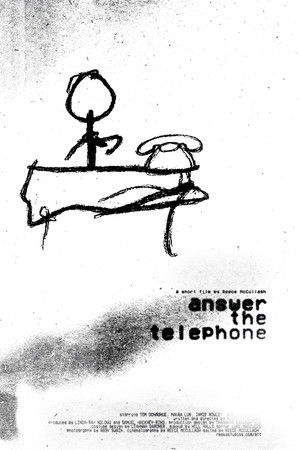
Pigpen has a snore. Bailey has a lot of nerve. And Curt Garrish has a gun.
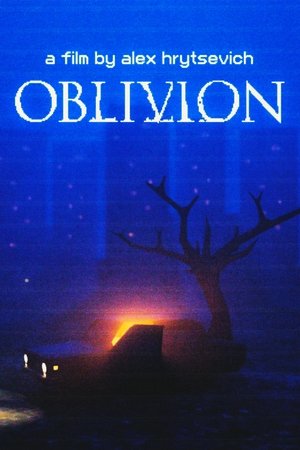
This audio-visual tone poem uses the language of filmmaking to offer a first-hand evocation of the turbulent psychological effects one can experience due to prolonged lack of sunlight.