This work re-examines the relationship between the elements that make up the quality of space, namely: "subject" and "object", "organic" and "mechanical", "reality" and "representation", "wholeness" and "partiality", " determinacy” and “indeterminacy”, “visibility” and “invisibility”, “natural” and “non-natural”.
Benedict, an apathetic sinner, finds himself disenrolled from clarity of his faith, and embarks on the spiritual journey to cease the everlasting darkness.
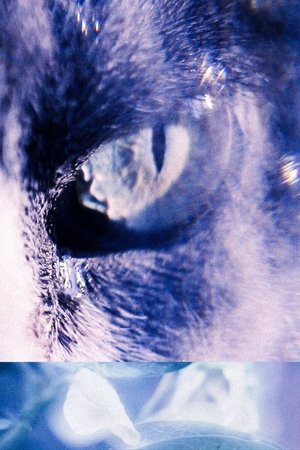
A film without a lens.
Filmed at Masonboro Island, an undeveloped barrier island in southeastern North Carolina, “Tides” contemplates the liminal space between the modern technological world and that more ecological dimension we label as “nature” or “the environment.”
A lost traveler encounters a talking clown puppet that won’t stop looking at a mysterious orange light.
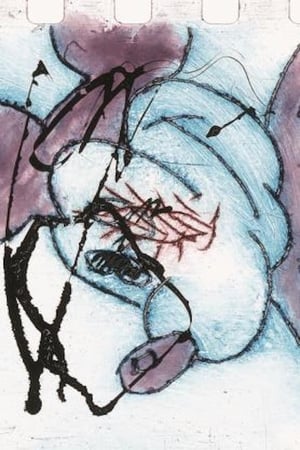
Someone stuck inside a shell struggling to find a safe space.
A musical fantasia on religion and the nature of exploitation.
A conversation Harper has with herself in her own head, interjected with the moments in which she is recalling. Some sort of event sent her into an existential state of mind, where she can't help but think about who she is, and how much control she really has over her life.
An audiovisual investigation into the way Spanish cinema has represented its audience throughout history, and a tribute to those who, for over a hundred years, have inhabited the theaters, mutually nurturing their deepest dreams and aspirations.
Two souls: One seeks to know her life's true essence and the other is haunted by foreign sights of himself, as they both are influenced by an existence beyond human realm—whom continually oversees them across eras, trapping them in a game of time and the unknown.
With the lack of personal video archive, Youhanna (the filmmaker) creates false memories using lost home videotapes shot between the 1990s and 2000s in Europe, Africa, and Asia, with the help of an Artificial intelligence programme, until a real, personal video archive surfaces, transporting him into the past to relive one more memory with his late mother.
The surreal, experimental story of an unseen serial killer.
After concluding the now-legendary public access TV series, The Pain Factory, Michael Nine embarked on a new and more subversive public access endeavor: a collaboration with Scott Arford called Fuck TV. Whereas The Pain Factory predominantly revolved around experimental music performances, Fuck TV was a comprehensive and experiential audio-visual presentation. Aired to a passive and unsuspecting audience on San Francisco’s public access channel from 1997 to 1998, each episode of Fuck TV was dedicated to a specific topic, combining video collage and cut-up techniques set to a harsh electronic soundtrack. The resultant overload of processed imagery and visceral sound was unlike anything presented on television before or since. EPISODES: Yule Bible, Cults, Riots, Animals, Executions, Static, Media, Haterella (edited version), Self Annihilation Live, Electricity.
A couple stroll through a wintry landscape - Is this a dream? Is this Heaven?
New York's floral district, like Amsterdam's is a scene that is most vibrant at the crack of dawn when flowers are shipped in to wholesalers. Very convenient timing if you've spent all night at the disco! If you want it fresh, you have to be there early. Not only are the better florists there to get the freshest flowers, but also the latest, freshest, and hottest dish. The scenario of this video is inspired by the central core of the design world: innuendo, rumors and gossip. Hearsay based on the cruising practices of one of New York's top gay floral designers. A vignette in a pastoral country setting–full of sunflowers and wild flowers–shows what the honey bee is really attracted to. Two lusty youths get it on atop a bed of exotic varieties.
In his Miami studio, built as a solar observatory, a famous painter lives alone, without a wife or children. His only obsession is to paint at dawn. But for some unknown reason, as he prepares to finish his last canvas, that morning the sun does not rise.
how i prefer to remember things
"Bagong Buhay" is a short experimental film that dispels the common belief that packing up and moving to a new place will magically improve one's quality of life. The film challenges this presumption by portraying two contrasting ways of life through objects and locations, encouraging viewers to think critically about the complexities of what makes a better life. In the Philippines, it's believed that relocating to a new area will bring about positive changes in one's existence. True satisfaction is a complex and multifaceted notion, and "Bagong Buhay" encourages us to ponder that relocating to a new place is not a surefire way to attain it.
"This project consists a visual fluidity of construction, harmony and thoughts taking colors and length from this body of autonomy. Different images between figuration and abstraction are created by meaning and phenomenon letting the decoupage revealing a piece of a strange underworld. I built it like a window opened to the fresh air of improvisation by familiar landscapes, those exact moments articulating a connection between light and movement."