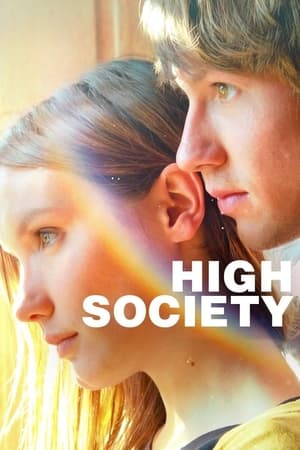
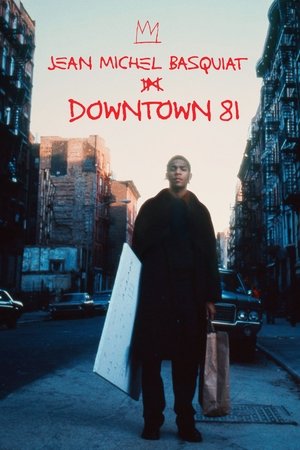
After a painful breakup, Ben develops insomnia. To kill time, he starts working the late night shift at the local supermarket, where his artistic imagination runs wild.
In the mid-1960s, wealthy debutant Edie Sedgwick meets artist Andy Warhol. She joins Warhol's famous Factory and becomes his muse. Although she seems to have it all, Edie cannot have the love she craves from Andy, and she has an affair with a charismatic musician, who pushes her to seek independence from the artist and the milieu.
Peter Olsen, a young social outcast who lives alone on a rundown farm and raises vegetables for a living, finds his only consolation in liquor, though Dorcas Chatham, daughter of the general store owner, begs him to forego this indulgence. Returning from town, he finds a dog by the roadside, apparently injured by a car, and takes it home. Later, on a drunken spree, Peter is attacked by robbers, but the dog comes to his rescue and frightens the assailants away. Stirred by the unselfish devotion of his dog, Peter gradually regains his self-respect, and Dorcas falls in love with him and accepts his proposal, though she fears the dog. When Peter enters the dog in a show, another exhibitor proves to be its owner, and Peter is first parted from, then reunited with, "his" dog. Dorcas overcomes her fear and is united with Peter.
The Vampire is a surviving 1915 silent film drama directed by Alice Guy and starring Olga Petrova. It is one of Petrova's and Guy's few surviving silent films.
Marcia Kane, daughter of an American capitalist, is persuaded by her father to marry the expatriated Russian Grand Duke Sergei, and believing Wally, her real love, to be dead, she consents. Discovering after the ceremony that her father has tricked her, Marcia vows to be the duke's wife in name only, though she refuses Wally's proposal that she go away with him.
Fannie joins Johnny to perform a music-hall act which becomes a success, until two Broadway producers catch the act and offer Fannie a job on their latest show; however, they have no place for Johnny, so Fannie turns down the offer. (Film considered lost.)
After his mother's death, a young man edits the family's home videos to bring back her image. As he delves into the occult he begins to reveal the paradoxical magic of memories and cinema.
When her grandson is kidnapped during the Tour de France, Madame Souza and her beloved pooch Bruno team up with the Belleville Sisters—an aged song-and-dance team from the days of Fred Astaire—to rescue him.
While visiting her sister in Paris, a young woman finds romance and learns her brother-in-law is a philanderer.
Robin Hood is a 1912 film made by Eclair Studios when it and many other early film studios in America's first motion picture industry were based in Fort Lee, New Jersey at the beginning of the 20th century. The movie's costumes feature enormous versions of the familiar hats of Robin and his merry men, and uses the unusual effect of momentarily superimposing images different animals over each character to emphasize their good or evil qualities. The film was directed by Étienne Arnaud and Herbert Blaché, and written by Eustace Hale Ball. A restored copy of the 30-minute film exists and was exhibited in 2006 at the Museum of Modern Art in New York City.
Nunu and Iago are in love with each other. The married guard Girgola wants to get hold of the woman. Girgola gets Iago arrested and makes Nunu marry his retarded brother. On one occasion he finds the woman alone and rapes her. Nunu jumps in the river to commit suicide but gets saved by Iago’s friends. Iago escapes from jail, but Girgola attacks his hideout and haves him killed together with his friends. Girgola also kills Nunu’s old father and accuses Nunu of the murder. Nunu is tied to a pole and dies in the exile.
Dissipated youth Tommy Hilgrade is sent to the lumber lands in the Northwest by his father who hopes that hard living will reform his son. Accompanying Tommy is his sister Marion. Upon their arrival in Canada, lumber foreman Jack Macy is attracted to Marion but, unknown to her, he contributes to Tommy's addiction to drink and gambling. When Marion falls in love with French Canadian Jules Bonnivet after he rescues her from a fall through the ice, Macy schemes to destroy their romance by fabricating the story that Jules is responsible for Tommy's downfall.
Three tales of love, ambition, and neurosis unfold in the city that never sleeps. In "Life Lessons" (Martin Scorsese), a tormented painter channels heartbreak into his art. In "Life Without Zoë" (Francis Ford Coppola), a precocious 12-year-old navigates privilege and loneliness in a Manhattan hotel. And in "Oedipus Wrecks" (Woody Allen), a man’s domineering mother literally becomes a looming presence over New York.
The story of the bond between an aged blind artist, about to create his last masterpiece and a rebellious young artist girl who comes to assist him.
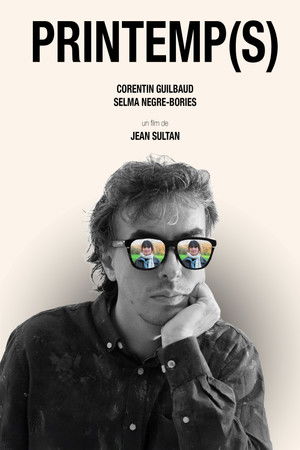
A man entranced by his dreams and imagination is lovestruck with a French woman and feels he can show her his world.
A classic of the silent age, this film tells the story of the doomed but ultimately canonized 15th-century teenage warrior. On trial for claiming she'd spoken to God, Jeanne d'Arc is subjected to inhumane treatment and scare tactics at the hands of church court officials. Initially bullied into changing her story, Jeanne eventually opts for what she sees as the truth. Her punishment, a famously brutal execution, earns her perpetual martyrdom.
Sergei M. Eisenstein's docu-drama about the 1917 October Revolution in Russia. Made ten years after the events and edited in Eisenstein's 'Soviet Montage' style, it re-enacts in celebratory terms several key scenes from the revolution.
Henry and Marion have a lover's quarrel and part in anger. They do not reconcile, and ten years pass without contact. Marion becomes a society girl and spends her time at parties with her friends. Henry has become very ill and wishes to see Marion one more time. He writes asking her to visit. When she recieves the note, she laughs and tosses it on the floor, but, later, on a whim, decides to take all her drunken friends with her to visit him. When they arrive, Marion finds Henry dead, clutching her portrait in his hand. She sends her friends away and falls to her knees in remorse. Mary Pickford's debut!
A dramatized account of a great Russian naval mutiny and a resultant public demonstration, showing support, which brought on a police massacre.
This pioneering documentary film depicts the lives of the indigenous Inuit people of Canada's northern Quebec region. Although the production contains some fictional elements, it vividly shows how its resourceful subjects survive in such a harsh climate, revealing how they construct their igloo homes and find food by hunting and fishing. The film also captures the beautiful, if unforgiving, frozen landscape of the Great White North, far removed from conventional civilization.