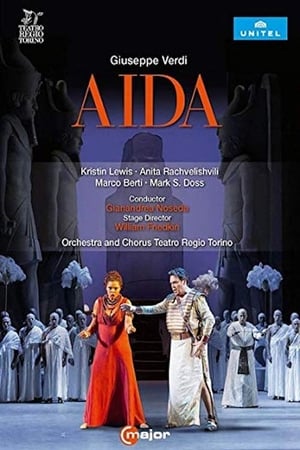
The grand scale and magnificent acoustics of the Roman arena in Verona are ideally suited to the pageantry of Verdi's Egyptian opera, presented here in a staging that is true to the original 1913 production, framed by obelisks and sphinxes and filled with chorus and dancers. Chinese soprano Hui He has won international acclaim for her portrayal of the eponymous slave girl whose forbidden love for the war hero Radamés (Marco Berti, the experienced Verdi tenor) brings death to them both.
The production was the Vienna State Opera debut for the young Swiss conductor Philippe Jordan – the Argentinian tenor Marcelo Álvarez, took the title role. His Charlotte on this occasion was the young Latvian mezzo-soprano Elīna Garanča. Her performances have been enthusiastically received and she has already been labelled as the new mezzo wonder. Staged by internationally sought-after Rumanian director, Andrei Serban, the apparently sentimental love story – normally presented in 18th century period costumes - reveals a study of personal relationships and a close observation of a woman, who comes of age too late. Serban’s aim was to rid the opera of the unjustified reputation of banality that clings to it despite its underlying tragic mood. By setting the production in the stiff, claustrophobic atmosphere of a small town in the 1950s, he aimed to make the audience more aware of its deeper levels of self-denial.
Emmanuelle Haïm has established herself as one of the world’s leading performers, conductors and interpreters of Baroque repertoire, not only with Le Concert d’Astrée, the ensemble she founded in 2000, but with several of the world’s greatest orchestras. Known for her fresh and expressive approach to Baroque music, she has garnered critical acclaim and several international awards with her own ensemble, including Victoires de la Musique Classique, ECHOs, Gramophone Awards, and Grammy nominations.
Disciplined Italian composer Antonio Salieri becomes consumed by jealousy and resentment towards the hedonistic and remarkably talented young Salzburger composer Wolfgang Amadeus Mozart.
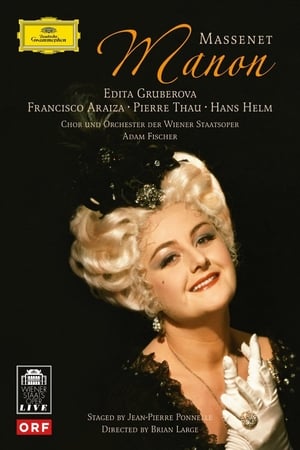
This set has Edita Gruberova singing in top form, all her scooping cast aside, which one finds in abundance in her Lucia under Richard Bonynge. Here, however, she makes ravishing use of those bits of tone that only she can produce: those instances of coloratura and dramatic legato with little asides and small florishes of style that suggest her intelligent approach and her high degree of musical involvement in this role. She does this in her I Puritani and her Anna Bolena, less so in Roberto Deveraux and Maria Stuarda(both sets). Listen to Addio del passato and the Sempre Libra...ravishing, yes, but there are again those nuances learned from Callas that she makes her own. A very singualr perform,ance, and extremely moving with its detail and cry for pity throughout..from the start even. Neil Schicoff is excellent, not an unworthy Alfredo at all! His is a great lyric tenor voice that should have been in the top line.
This May 2010 production of Massenet's 1910 opera "Don Quichotte" marked the opera's centenary and also Jose Van Dam's operatic farewell at the Theatre de la Monnaie, Brussels. It is beautiful in every way--vocally, scenically, sonically, and visually--and a worthy record of Van Dam's farewell. Van Dam is just shy of 70 in this production, but you would never guess it from his singing or stage movements--a consummate artist. His is a noble portrayal and deeply moving. The Act V death scene is a model of beautiful singing and acting.
The writer Dario Fo applies his inventive genius to Rossini's comic opera in its premiere DVD release. Recorded in 2005 under the musical direction of Maurizio Barbacini, Fo's production brings fresh vitality and colour to the story of Lisetta, and of her father Don Pomponio's increasingly ridiculous attempts to find a husband for her through an advertisement in the newspaper LA GAZZETTA. Filmed using high definition cameras with multitrack sound.
Götterdämmerung, the final instalment of Wagner’s Ring of the Nibelung, is a story of human passions. Two essentially benevolent creatures, involved with and possibly doomed by their traffic with the gods, find treachery and evil in the world of the humans, and are ruined by the dark side of humanity. Iréne Theorin, acclaimed worldwide for her portrayal of Wagner’s heroines, stars as Brünnhilde opposite Lance Ryan, who continues his radiant portrayal of the tragic hero Siegfried. The strong cast also includes Mikhail Petrenko as the dark antagonist Hagen and Johannes Martin Kränzle, who once again shines as his father Alberich. Waltraud Meier has a memorable appearance as Brünnhilde’s sister Waltraute. With this 2013 recording of Götterdämmerung, the musically and visually compelling Scala Ring Cycle by Daniel Barenboim and Guy Cassiers was completed and proved to be one of the highlights of the Richard Wagner bicentenary.
A musical drama based on Giuseppe Verdi's opera Rigoletto.
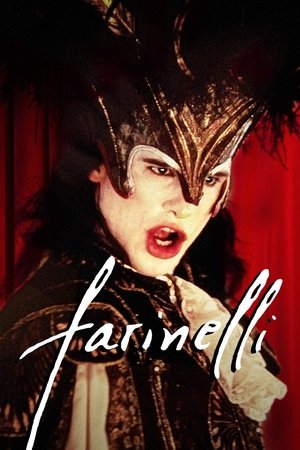
The life and career of Italian opera singer Farinelli, considered one of the greatest castrato singers of all time.
Simon Rattle conducts the Berliner Philharmoniker in Stepháne Braunschweig's production of Richard Wagner's Die Walküre. A Festival d'Aix-en-Provence 2007 production, in coproduction with Osterfestspiele Salzburg. Directed for HDTV and video by Don Kent.
Viva Vivaldi! is a concert by the Italian mezzo-soprano Cecilia Bartoli interspersing arias from the 20 surviving operas of Vivaldi with two concertos. Given with the early music ensemble Il Giardino Armonico before a very appreciative audience in the Théâtre des Champs-Élysées, the performance is part of Bartoli's exploration of the Venetian composer's opera music which also includes The Vivaldi Album. There is a startling dynamic energy, which contrasts powerfully with the more restrained interpretations by singers such as Emma Kirkby. Bartoli's natural Italian and the live atmosphere of Maria Grazia d'Alessio's oboe gives her interpretation of the quietly haunting and melodically rich "Non ti Lusinghi la Crudeltade" from Tito Manlio a particular piquancy. The Flautino Concerto is a most attractive interlude, while the more famous Lute/Violin Concerto beguiles with its exquisite lyricism.
The first-ever audio-visual recording of this opera – directed by Christof Loy, conducted by Marc Albrecht and with Sara Jakubiak, Brian Jagde and Josef Wagner in the leading roles
Starring Jonas Kaufmann as Bacchus and featuring Emily Magee with Daniel Harding conducting the Vienna Philharmonic, Ariadne auf Naxos was filmed at the acclaimed Salzburg Festival in 2012. This release also includes "Le Bourgeois gentilhomme."
Handel's 1724 opera Tamerlano followed the success of his previous year's Giulio Cesare with another colourful historical costume drama. This time the setting is the court of "Timur the Tartar", who has just defeated the Turkish Sultan Bajazet at the battle of Angora. There are, naturally enough, romantic complications when both Tamerlano and his ally, the Greek Prince Andronico, fall in love with Bajazet's daughter Asteria. She, however, has plans to revenge her father's defeat. This production was directed by Jonathan Miller and staged in the intimate surroundings of the Goethe Theatre of Bad Lauchstadt as part of the 2001 Halle Handel Festival.
Premiered in 1787, “Don Giovanni” exposes the timeless theme of a man hovering between vitality and destruction. Neither morality nor the law can stop this serial lover in his quest to conquer all women as he places his own pleasure above all other principles. Today, the rich depth of Mozart’s masterpiece still astonishes audiences with its mix of comedy and seriousness, pleasure and love, entertainment and murder. At the helm of this new Salzburg Festival production, in a near-live broadcast from the Great Festival Hall, director Romeo Castellucci promises to focus on the ambiguity and inner turmoil of this serial lover whose immoral behaviour condemns him to a deadly solitude. The exceptional cast – featuring Italian baritone Davide Luciano (Don Giovanni), Russian soprano Nadezhda Pavlova (Donna Anna) and Finnish bass Mika Kares (the Commendatore) – is accompanied by the chorus and musicians of the musicAeterna ensemble, conducted by Vitaly Polonsky and Teodor Currentzis.
John Eliot Gardiner conducts Gluck’s 1776 French version of “Alceste” at the Théâtre du Châtelet in Paris. Soprano Anne Sofie von Otter takes the title role of Alceste, Queen of Thessaly, who offers to die at the hands of the gods in place of her husband, Admète (Paul Groves), so that the people will not lose their king. Alceste is then saved from the underworld by Hercule (Dietrich Henschel).
“Let us assume that Switzerland is truly a paradise. The music hereto was written long ago. We have merely forgotten it.” (Daniel Schmid) This is the material from which the most Swiss of all operas is made: the legendary Wilhelm Tell – a Swiss hero: straightforward, a primus inter pares of the indomitable freedom fighters, a good shot, surefire. A myth that becomes a poetic playground: nature in turmoil, the struggle for freedom and forbidden love. A legendary overture at a gallop with an iconic post horn motif – all this and much more in the thirty-seventh and last opera by Rossini.
Bedřich Smetana: Hubička
The most popular Czech comic opera, with a libretto by Karel Sabina, marking the 200th anniversary of the birth of Bedřich Smetana, in the current production of the National Theater in Prague. For more than 150 years, The Bartered Bride has dominated Czech opera. No one else, not even Smetana himself, has managed to surpass its popularity, which over the years has become part of our national DNA, so to speak. At the time of its creation in the 1860s, however, The Bartered Bride was actually quite a bold experiment – Bedřich Smetana and librettist Karel Sabina masterfully mocked all those who imagined "national opera" as an idyllic picture of the Czech countryside, where national virtues reign supreme.