This documentary takes an in-depth look at the witch hunts that swept Europe just a few hundred years ago. False accusations and trials led to massive torture and burnings at the stake and ultimately to the destruction of an organic way of life. The film questions whether the widespread violence against women and the neglect of our environment today can be traced back to those times.
Would Jesus Wear a Sidearm?
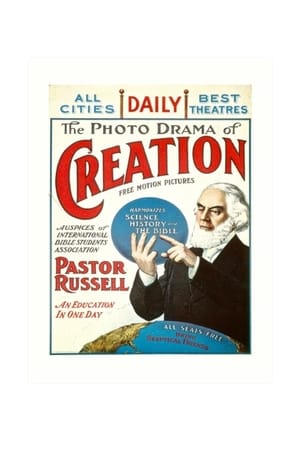
The film presents the Bible's account of God's plan from the creation of the earth through to the end of the 1,000 year reign of Christ.
While seething mobs converged around them, the Prophet Joseph and his brethren quietly submitted themselves to imprisonment in Carthage Jail. Now, as never before, audiences are invited to witness the events of the days preceding the martyrdom. Based on documents handed down through the generations, Carthage offers a glimpse into the turmoil and testimony of the men whose place in history was forever defined by what was to come - a jailer seeking to protect his charges, a governor caught between the persecuted and their persecutors, and a group of Saints whose faith and brotherhood stands as the ultimate witness of the restoration of the gospel of Jesus Christ.
Two well-known Quebec artists (filmmaker Jacques Godbout and playwright René-Daniel Dubois) look at the Battle of the Plains of Abraham. Whose version of this historic event should prevail? Is history best served by documentary or fiction? We also meet Baron Georges Savarin de Marestan and Andrew Wolfe-Burroughs, direct descendants of Montcalm and Wolfe, both of whom died in the battle that would give birth to Canada and to the province of Quebec.
Guru Nanak, the founder of Sikhism, was a 15th-century teacher, poet, and activist whose universal message of justice and equality for all, women’s empowerment, service to others, and devotion to nature and the environment was ahead of his time. However, his story is virtually unknown to much of the Western world. Filmed on location in India, Pakistan, and throughout the U.S., this documentary interweaves the story of Guru Nanak’s life with a look at how his spiritual legacy continues to influence prominent American Sikh men and women, including Mayor Ravi Bhalla of Hoboken, N.J., Grammy Award nominee Snatam Kaur, and others.
The interview, held on January 4, 2001, was the last given by Professor Milton Santos, who died from cancer on June 24 of the same year. The geographer is gone, but his thoughts remains. Its political and cultural ideals inspire the debate on Brazilian society and the construction of a new world. His statement is a true testimony, a lesson that the world can be better. Based on geography, Milton Santos performs a reading of the contemporary world that reveals the different faces of the phenomenon of globalization. It is in the evidence of contradictions and paradoxes that constitute everyday life that Milton Santos sees the possibilities of building another reality. He innovates when, instead of standing against globalization, proposes and points out ways for another globalization.
Part documentary, part expose, this film follows one-time child evangelist Marjoe Gortner on the "church tent" Revivalist circuit, commenting on the showmanship of Evangelism and "the religion business", prior to the start of "televangelism". Preserved by the Academy Film Archive in 2005.
The tragic and shocking story of the notorious Magdalene Laundries, a shameful system, created by the Irish State but supported by all strata of Irish society, which enslaved more than ten thousand women between 1922 and 1996.
Inspired by Patrick Pearse’s poem Mise Éire (“I Am Ireland”), this documentary assembles archival footage from across Europe to trace the rise of Irish nationalism from the 1890s through the 1916 Easter Rising. Directed by George Morrison, the film chronicles key figures and events of the independence movement, with Irish-language narration and a score by Seán Ó Riada.
In this true-life twist on a holiday fable, Jeremy Morris brings a whole new meaning to Christmas spirit when his extravagant seasonal display sparks a dispute with his neighbors that lands them all in court.
When two friends collect money for the so-called "suffering in America" in the streets of Accra, is it for fun, political provocation, or a prophecy? Two Swiss filmmakers will answer these questions with the help of seven musicians from Ghana-M3NSA, Wanlov The Kubolor, Adomaa, Worlasi, Akan, Mutombo Da Poet, and Poetra Asantewa-who have written new songs and produced video clips especially for the documentary film Contradict.
He described his love of art as his greatest inclination from his youth: Johann Joachim Winckelmann as a representative and rediscoverer of Greek and Roman antiquity. He was the father of European art history and was the victim of a robbery-murder in 1768. The documentary tells of his life, his work and his early death.
Join critically-acclaimed author and evolutionary biologist Richard Dawkins and world-renowned theoretical physicist and author Lawrence Krauss as they discuss biology, cosmology, religion, and a host of other topics.
Shot in Southern England over the course of six weeks by a crew of three American filmmakers, CircleSpeak offers a nuanced look at the passions and beliefs of the people immersed in the crop circle phenomenon during the season of 2001. This feature-length documentary presents interviews with serious “researchers”, self-proclaimed “hoaxers”, local farmers and villagers who are all, in one way or another, involved in this strange and compelling summer spectacle taking place year after year.
Fearing for her life, Israeli transgender pioneer Efrat Tilma fled the country as a teenager. Now in her seventies, she must fight for her freedom once again, as the country spirals into political and social regression.
This documentary uncovers the facts behind the tragedy of the RMS Titanic, a British passenger liner that sank on April 15th, 1912. Directed by: Top5sMedia
In the chaotic, highly emotional period after the First World War in 1918, the foreign ministers Gustav Stresemann (1878-1929) and Aristide Briand (1862-1932) put all their energies into trying to lead their countries, Germany and France, which were at enmity with each other, into a peaceful future and a united Europe. After their deaths, Europe has to go through a second hell before the plan of these two visionaries succeeds. The cinematic mix of archive footage and re-enactments shows two statesmen, full of facts and emotion, who give each other nothing in difficult negotiations, but at the same time hold on to their shared vision. Even if these two human lives were not enough to reap the fruits of their labor, they sowed the seeds for the next generation. In 1926, Aristide Briand and Gustav Stresemann were awarded the Nobel Peace Prize. It is a sign that the peoples of the world believe in a Europe at peace.
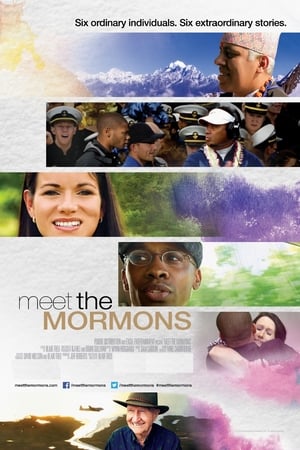
Meet the Mormons examines the very diverse lives of six devout Mormons. Filmed on location and across the globe, Meet the Mormons takes viewers on a journey into the day-to-day realities of individuals living in the U.S., Costa Rica, Nepal and beyond. From their individual passions to their daily struggles, each story paints a picture as rich and unique as the next while challenging the stereotypes that surround the Mormon faith.
This feature-length film tells the story of the passion between Marie de l’Incarnation, a mid-seventeenth-century nun and God, her "divine spouse." Fusing documentary and acting by Marie Tifo, whom we follow as she rehearses for this demanding role, the film paints an astonishing portrait of this mystic who abandoned her son and left France to build a convent in Canada, where she became the first female writer in New France.