A former Prohibition-era Jewish gangster returns to the Lower East Side of Manhattan over thirty years later, where he once again must confront the ghosts and regrets of his old life.
Wyatt and Billy, two Harley-riding hippies, complete a drug deal in Southern California and decide to travel cross-country in search of spiritual truth.
Why did the Roman Empire, which dominated Europe and the Mediterranean for five centuries, inexorably weaken until it disappeared? Archaeologists, specialists in ancient pathologies and climate historians are now accumulating clues converging on the same factors: a powerful cooling and pandemics. A disease, whose symptoms described by the Greek physician Galen are reminiscent of those of smallpox, struck Rome in 167, soon devastating its army. At the same time, a sudden climatic disorder that was underway as far as Eurasia caused agricultural yields to plummet and led to the westward migration of the Huns. Plagued by economic and military difficulties, attacked from all sides by barbarian tribes, the Roman edifice gradually cracked.
Ishq e Qalandar - The Beautiful Sindh is a travel film that takes viewers through one of the most ancient civilizations on Earth called Sindh. Shezan Saleem Jo-G takes a journey of self-realization, the discovery of his roots, and building a connection with people and spirituality in Sindh.
The story of an unruly class of bright, funny history students at a Yorkshire grammar school in pursuit of an undergraduate place at Oxford or Cambridge. Bounced between their maverick English master, a young and shrewd teacher hired to up their test scores, a grossly out-numbered history teacher, and a headmaster obsessed with results, the boys attempt to pass.
Green Flake, a southern slave, joins Church of Jesus Christ of Latter Day Saints as a child. Later on in his life he is sent to pave the way to what is now the Salt Lake Valley and his faith sustains him.
A submissive hooker goes about her trade, suffering abuse at the hands of Japanese salarymen and Yakuza types. She's unhappy about her work, and is apparently trying to find some sort of appeasement for the fact that her lover has married.
Set in the decadent 1920s, Temptress Moon tells the very complicated story of a wealthy family living on the outskirts of Shanghai. Their youngest daughter, Ruyi, is brought up as a servant to her opium-addicted father and brother. Meanwhile, her brother-in-law Zhongliang has a successful, if illegal, career seducing and blackmailing married women in the city. When he comes to Ruyi's home the two fall in love, and trouble ensues.
Le monde de Khéops
A small town is protected by one of the famous Ten Tigers of Kwangtung. The town is very safe as Ti Lung and his Kung Fu students patrol for criminals. Enter the rival Kung Fu school whom Ti Lung's students have beaten in a lion dance competition and then humiliated in a brawl. The rival school is joined by an opium dealing Kung Fu master who plans to turn the town into a community of addicts!
China is in unrest, as the Republic falls prey to Warlords like Kahn Xin, who holds an entire province hostage to the opium trade—and destroys all who oppose him. Only the revered Wudang monks dare stand in Kahn’s way in order to protect the very soul of China. Among them is the Westerner, White Crane, a spiritual master of the martial arts and protector of the innocent. Revenge is not in Crane’s heart—until a mercenary army storms the temple and slaughters the beloved female Grandmaster Myling. Out of the ashes of the temple ruins, Crane rises—with vengeance in his heart. Crane comes upon Jane Marshall, a New York lounge singer and her gangster boss Bingo Quo. But it’s Bingo’s dangerous professional ties to Kahn that draw both Crane and Jane deep into the Warlord’s lair. Now torn between the spiritual Wudang teaching and the cold-blooded life of an assassin, Crane is about the cross the fine line between justice and revenge.
Bound by unspoken grief, reclusive 91-year-old Stan and his young carer find unexpected solace on the windswept plains of a once-bustling WWII airfield, where memory still lingers.
In the chaotic, highly emotional period after the First World War in 1918, the foreign ministers Gustav Stresemann (1878-1929) and Aristide Briand (1862-1932) put all their energies into trying to lead their countries, Germany and France, which were at enmity with each other, into a peaceful future and a united Europe. After their deaths, Europe has to go through a second hell before the plan of these two visionaries succeeds. The cinematic mix of archive footage and re-enactments shows two statesmen, full of facts and emotion, who give each other nothing in difficult negotiations, but at the same time hold on to their shared vision. Even if these two human lives were not enough to reap the fruits of their labor, they sowed the seeds for the next generation. In 1926, Aristide Briand and Gustav Stresemann were awarded the Nobel Peace Prize. It is a sign that the peoples of the world believe in a Europe at peace.
In Shanghai, an American girl who helps run an opium ring meets an American agent disguised as a mining engineer. The two fall in love, and she has to determine where her loyalties lie.
A true story of shocking violence catapults a picturesque little town into history. The close sibling relationship between the two maids takes on a new dimension as their overbearing employer discovers a sexual fever between the two sisters.
A young man fights to overcome violence plaguing his village and succeed as a professional kabaddi player.
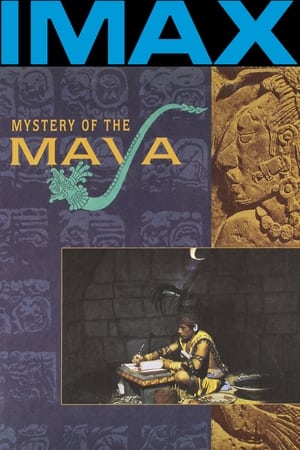
Filmed in IMAX, a young Mayan boy who lives close to the ruins becomes acquainted with an archaeologist (Guerra) and asks her to tell him about his ancestors. The crew travelled to over 15 locations in Mexico and Guatemala, including Tulum and Chichén Itzá.
Bandera, Texas (THE COWBOY CAPITAL OF THE WORLD) is a captivating documentary that explores the vibrant history, unique culture, and enduring values of the small town of Bandera, Texas.
La France de l'épuration, entre vengeance et justice
The Spruce Forest explores one of the darkest pages in Romanian history. Inspired by the drama of Fântâna Albă on April 1, 1941, the film reconstructs the fate of a Romanian community in Bessarabia, massacred in a desperate attempt to find refuge from the Soviet occupation. The testimony of a survivor of this genocide becomes the backdrop against which archival images and his wife's memories of Siberia are superimposed, in a dizzying game of mirrors that questions the notion of historical truth and reveals forgotten traumas with potentially devastating consequences in the present.