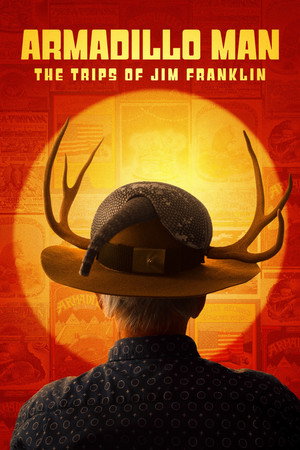
Armadillo Man: The Trips of Jim Franklin tells the story of the iconic poster artist who helped establish the Austin music venue, Armadillo World Headquarters, and is credited with making Austin "weird."
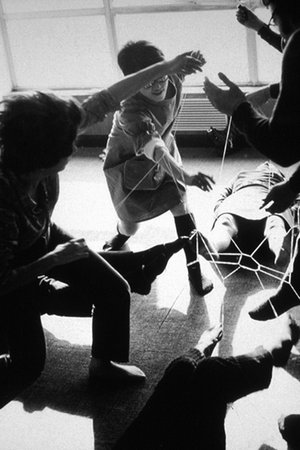
Artistic experimental documentary short that explores the universe of Brazilian artist Lygia Clark. Sensorial experiences, the perception of the body, forms and tactile sensations are mixed and reflect the human race as part of the cosmos, getting lost to find itself. Art, stripped of its virtuous image, as an action of the common human being, the expression of living things, runs from the mechanical repetition of movements and attitudes.
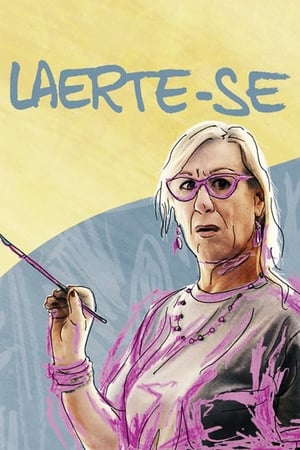
In this film, Laerte conjugates the body in the feminine, and scrutinizes concepts and prejudices. Not in search of an identity, but in search of un-identities. Laerte creates and sends creatures to face reality in the fictional world of comic strips as a vanguard of the self. And, on the streets, the one who becomes the fiction of a real character. Laerte, of all the bodies, and of none, complicates all binaries. In following Laerte, this documentary chooses to clothe the nudity beyond the skin we inhabit.
OHO is considered one of the most interesting, complex and important examples of post-war avant-garde art in Central and Eastern Europe. After achieving major success as one of the first from Eastern Europe to exhibit at New York's MoMA, the group disbanded in 1971. OHO was not just an art collective but a unique cultural phenomenon that explored the visible and the immaterial through art, philosophy, sociology, science and coexistence with the earth and nature. Already in the 1960s, the group was raising relevant questions about anthropocentrism, ecology and the economics of the art. This documentary about OHO by Damjan Kozole is rich in never-before-seen archival material and, for the first time, comprehensively presents this inspiring phenomenon of intertwining art and life. - Slovenian Film Database
This MGM Passing Parade series short takes a look at changing definitions of art in the United States.
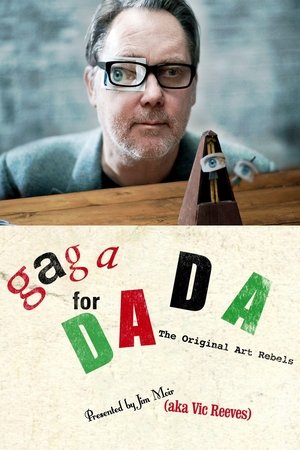
To celebrate the 100th anniversary of the birth of the surreal art movement, comedian Jim Moir (a.k.a. Vic Reeves) presents this documentary exploring the history of Dadism and the lasting influence it has had on himself and others.
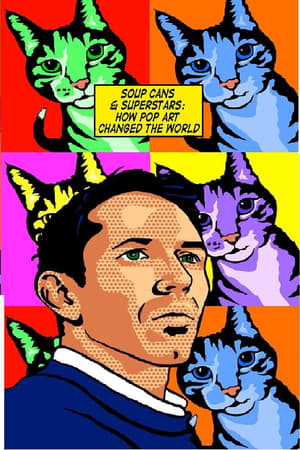
Alastair Sooke champions pop art as one of the most important art forms of the twentieth century, peeling back pop's frothy, ironic surface to reveal an art style full of subversive wit and radical ideas. In charting its story, Alastair brings a fresh eye to the work of pop art superstars Andy Warhol and Roy Lichtenstein and tracks down pop's pioneers, from American artists like James Rosenquist, Claes Oldenburg and Ed Ruscha to British godfathers Peter Blake and Allen Jones. Alastair also explores how pop's fascination with celebrity, advertising and the mass media was part of a global art movement, and he travels to China to discover how a new generation of artists are reinventing pop art's satirical, political edge for the 21st century.
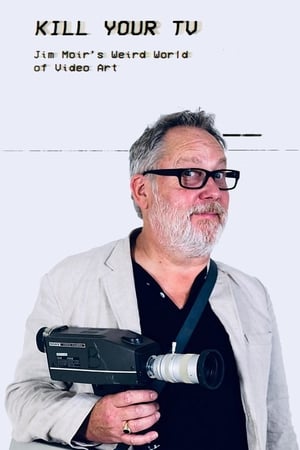
Jim Moir (aka Vic Reeves) explores Video Art, revealing how different generations ‘hacked’ the tools of television to pioneer new ways of creating art that can be beautiful, bewildering and wildly experimental.
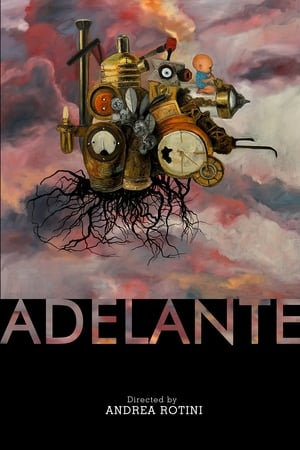
Facing one of humanity’s biggest questions, ‘what is left of us after our death?’, this haunting documentary covers the author’s thought process on the idea of what might remains of us after we die, supported by the vision of an artist who decided to come back in Italy after spending forty-seven years in New York and turn his little apartment into a mausoleom where his death-filled artworks will lay along with his ashes. Raising questions like ‘are the things we create in our lifetime the mark of our existance?’ and ‘can the artist escape death trough the art objects?’ the documentary touches a vast variety of themes and ideas as well as paying a visit to one of the oldest mausoleums in ancient mythology, the Acheron River.
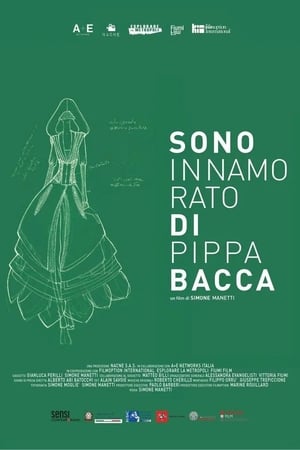
Giuseppina Pasqualino di Marineo, better known as Pippa Bacca, was a 34 years old Italian artist. She crossed 11 countries involved in wars, hitchhiking with another Milanese artist, Silvia Moro, both wearing a wedding dress. This was a performance for peace, trust and hoping to prove that if you rely on others, you’ll receive good things only. After travelling many roads, the two artists decided to split for a while in Istanbul, planning to meet again in Byblos. Pippa left then, alone, and nobody heard from her again.
11 JUNE 2013 is one hundred years since Norwegian women got full voting rights on an equal basis with men. Norway was among the first countries in the world to introduce universal suffrage for both women and men. The work for universal suffrage for women went on for many years and was an issue that many people got involved in. The Voting Rights Committee has chosen to highlight four women who played a decisive role in the suffrage issue.
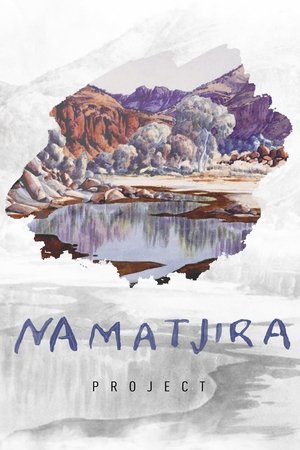
From the remote Australian desert to the opulence of Buckingham Palace - Namatjira Project is the iconic story of the Namatjira family, tracing their quest for justice.
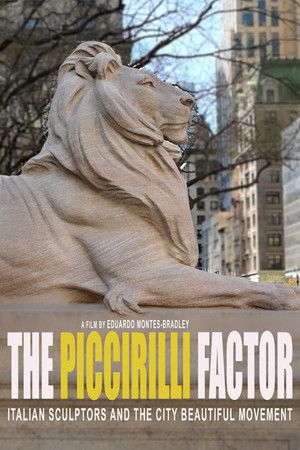
The Piccirilli family settled in New York City and started the largest and most prolific marble carving studio in America. For nearly 50 years, Piccirilli sculptors helped shape the architectural landscapes of Washington and New York through hundreds of monuments, memorials, and artworks, many of which are preserved in museums and private collections.
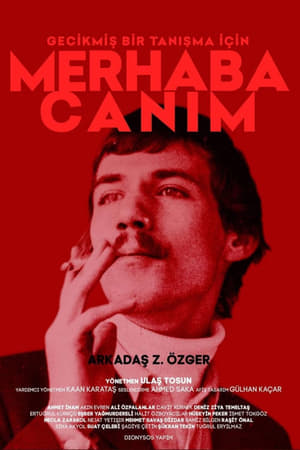
The documentary is titled after Arkadaş Z. Özger’s poem “Hello My Dear” which had caused much controversy in the period it was first published. Considered to be in defiance of heteronormativity, the said poem includes references to the poet’s personality, his family, his relationship to the society, and his “unexpected” death, which came three years after its publication. Today, 50 years after it was written, the documentary follows these same lines in the poem utilising cinematic elements. The documentary also rediscovers the poetics; reaches out to the family, the comrades, the friendships, departing from the official historical accounts, cognizant of his experience of otherness, in pursuit of the “lost” portrait of Arkadaş Z. Özger.
This film features some of the most important living Postmodern practitioners, Charles Jencks, Robert A M Stern and Sir Terry Farrell among them, and asks them how and why Postmodernism came about, and what it means to be Postmodern. This film was originally made for the V&A exhibition 'Postmodernism: Style and Subversion 1970 - 1990'.
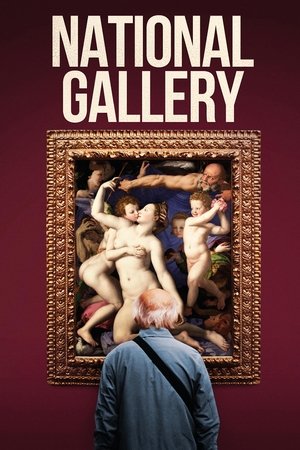
A portrait of the day-to-day operations of the National Gallery of London, that reveals the role of the employees and the experiences of the Gallery's visitors. The film portrays the role of the curators and conservators; the education, scientific, and conservation departments; and the audience of all kinds of people who come to experience it.
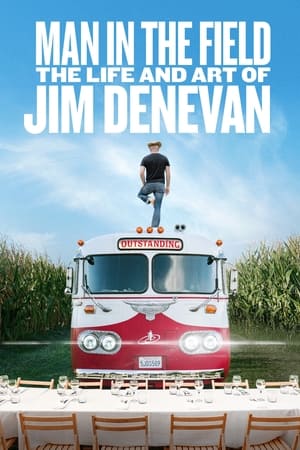
In this graceful study of the balance between solitude and community, artist and chef Jim Denevan roams across the US, transforming landscapes into breathtaking, sustainable dining experiences framed by ephemeral installation art.
A documentary about the artist Desiderio, directed by Andrea Rotini. With the partecipation of Alessandro Riva, Chiara Canali, Francesco Santaniello. Texts and translations by Gemma Jalenti
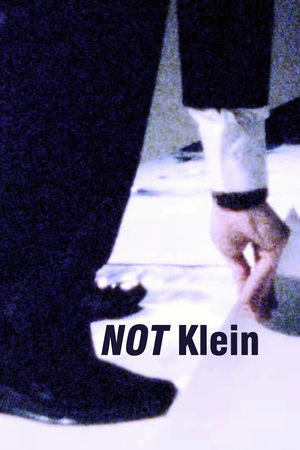
Mike Bidlo’s performative re-creation of Yves Klein's, "Anthropométries de l'époque bleue" at the Palladium in NYC.
An aging, reclusive painter shares stories about his life and brushes with death.