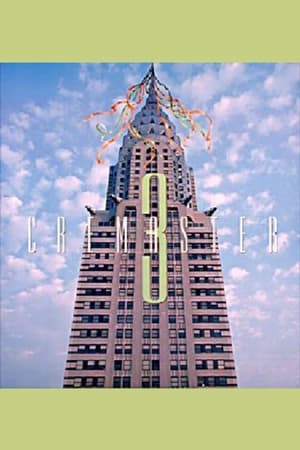
CREMASTER 3 is set in New York City and narrates the construction of the Chrysler Building, which is in itself a character - host to inner, antagonistic forces at play for access to the process of (spiritual) transcendence. These factions find form in the struggle between Hiram Abiff or the Architect...
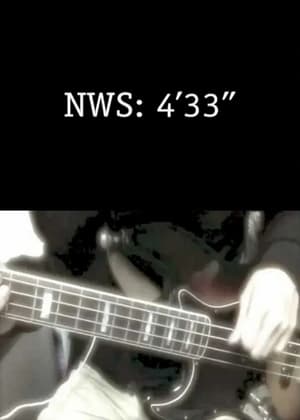
In February 2013, the New World Symphony presented Making the Right Choices: A John Cage Centennial Celebration, a spectacular three-day festival dedicated to the music and ideas of John Cage. As part of the festival, NWS hosted a new video installation entitled NWS: 4’33″, created by New York-based composer, director, performer and recording artist Mikel Rouse; which consisted of video performances contributed by Cage fans via a special YouTube site set up by Rouse. The public was invited to record and submit their own video, and visit the installation during the festival to see their work in the SunTrust Pavilion at the New World Center. These videos will be included in an online Archive of the event, a lasting tribute to this defining and seminal artist.
Patria I is a medium-length film by Juan Ibarlucía and Magela Crosignani that reimagines the form of the Baroque oratorio within the post-industrial landscape of Argentina in 2026. Drawing on a south american reinterpretation of the myth of Cain, and employing music, poetry, performance, and installation art, the work takes the audience on a powerful sonic and emotional journey that spans an extraordinary range of human experience—from extreme violence to compassion and tenderness.
"Dancing is sculpting in time." Shot around Indy Simin's "Echt in Vorm."
An unnamed passer-by is forced to trace a circular route inside an abandoned tram station, facing loss and time. The broken walls act as a channel, transmitting fragmentary, blurred and analogical memories.
In the first stages of prototype, Storm is an interactive VR installation that places audiences in the path of a phenomenal, awe-inspiring storm. Take a moment to be swept into an exhilarating multi-sensory vortex.
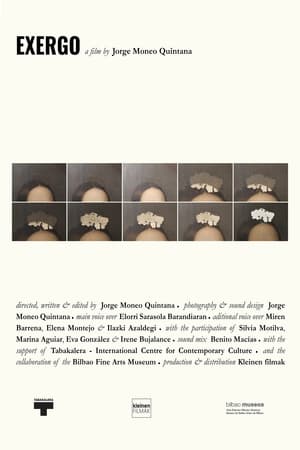
Departing from peripheral details of some paintings of the Bilbao Fine Arts Museum, a female narrator unravels several stories related to the economic, social and psychological conditions of past and current artists.
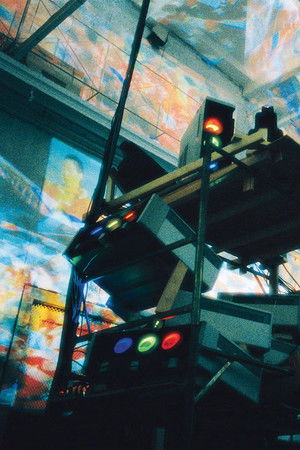
Sistine Chapel is an audio-visual collage of new footage and samples from Paik’s past videos, which featured many of his friends, collaborators, and public figures. It was Paik’s own way of summarizing his artistic career with video. The film installation consists of fast-paced and overlapping images that completely cover the gallery walls and ceiling—one of the most under-appreciated parts of architecture, according to Paik. With its electronic visuals and booming audio, interspersed with periods of silence, the immersive installation stands in stark contrast to the experience of its namesake.
Decalcomania
Arrancar los ojos is a project that proposes a constellation of works around the gaze and its political dimension. A reflection on the concepts of institutional violence, repression and collective trauma, focusing on the pattern of eye attacks by state security forces.
Matei, a young shepherd boy living in the outskirts of Romania, finds more comfort among his sheep than with his abusive, alcoholic dad. But now Matei is starting to mimic his father's violence, he's faced with a question: 'Who am I?'
Short film in competition at the 48Hours Film Project. Sci-Fi/Mystery genre. Directed by Simone Marsella, starring Ludovica Castrichella, Dario Grasso and Federico Imola.
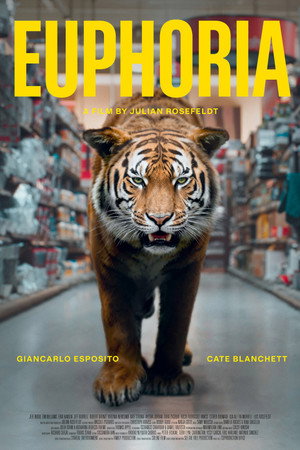
A journey through the history of capitalism and greed. Populated by surreal characters and animals, a dystopian New York serves as the backdrop for a hypnotizing trip deep into the complexity of human nature at its best and worst.
JORDAN is a lonely Manhattan painter. When GINGER, a suicidal 19 year old squatter calls Jordan by accident, she threatens to kill herself if he doesn't meet her for lunch. This dark dramedy is 'Breakfast at Tiffany's' on lithium. 16mm film
An audiovisual work that consists of 6593 frames of dust collected and scanned over a 2 month process by Nan Wang into an animated work combined with digital footage.
Zineb Sedira pays tribute to the history of African Cinema and the filmmakers who had inspired her.
Three very different people — a quantum physicist, a neuroscientist (Sheetal Sheth), and an FBI agent — find themselves drawn into a spiraling mystery. Confronted with a mysterious car accident, the three must interpret clues that defy common sense. Their collective quest takes them from science to art to music to mysticism in a widening search for answers. After an intense outward chase to satisfy their rational minds, the trio realizes the answers they desire lie buried deep within themselves. As each seeker begins to embrace the true nature of reality, each is rewarded with revelations beyond their wildest imaginings. What they learn leaves them humbled and in awe of the strange and beautiful universe we call home. When everything makes sense, nothing makes sense. This highly philosophical narrative has been applauded by scientists, artists, thinkers, scholars, media, academia, students and audiences from 10 to 80+ years old.
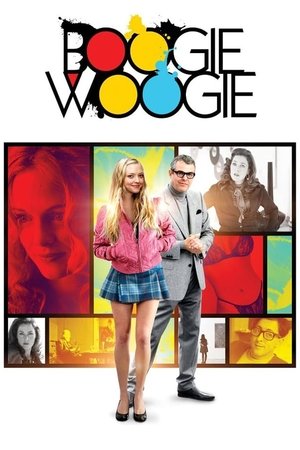
In London's contemporary art world, everyone has a hustle. Art Spindle runs a high-end gallery: he hopes to flip a Mondrian for millions. One of his assistants, Beth, is sleeping with Art's most acquisitive client, Bob Macclestone. Beth wants Bob to set her up in her own gallery, so she helps him go behind Art's back for the Mondrian. Bob's wife, Jean, sets her eye on a young conceptual artist, Jo, who lusts after Art's newest assistant, Paige. Meanwhile, self-absorbed videographer Elaine is chewing her way through friends and lovers looking to make it: if she'll throw Dewey, her agent, under the bus, Beth may give her a show. And the Mondrian? No honor among thieves.
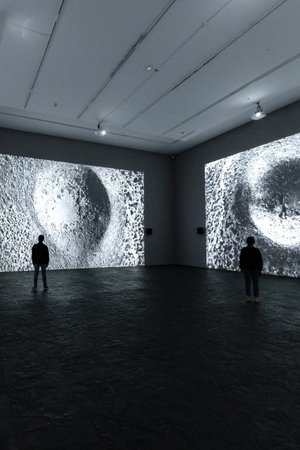
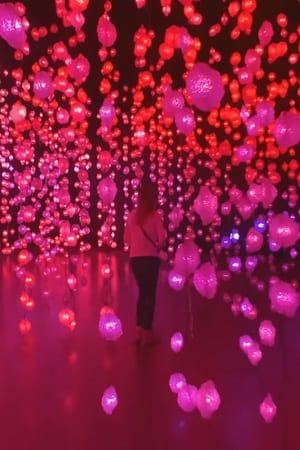
Each pixel is separated like an exploded screen, set in a chaotic way into the space. The video has a whole movement in the room, as one three dimensional image. The experience resembles the brain, working with electromagnetic waves and low voltage information.
A reflection on the iconic headquarters of the Johnson Publishing Company in downtown Chicago. The eleven-story Modernist building on South Michigan Avenue was home to Jet and Ebony magazines since its design in 1971. The building was heralded as the first major downtown Chicago building designed by an African-American architect since the eighteenth century. In the case of the Johnson family and its legacy, Hartt looks to the intersection of the publisher’s ideals and values, the style and aesthetics embodied by the site and the lasting cultural impact of the magazines.