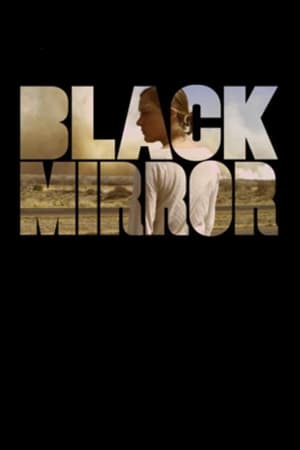
A nameless drifter navigates a barren landscape punctuated by satellite dishes, radio towers and droning airplanes. Stopping periodically in anonymous hotel rooms, she makes attempts to connect to an unidentified second party.
An abstract and detailed observation of a young life told through a series of observational montages. Part of the 'Technicolour' series of films from Lot 108 Productions.
An experimental media installation of three windows exploring fragments of liminality. Three unique re-constructions of experiential instances volumising the cataclysms of thresholds. Experience the absence of definition, the absence of boundaries set and the absence of rationale. A myth is not to be understood, a myth is passed on, like a game of Chinese whispers, it takes its course and ages with time, suiting the demography and tale, it warps and distorts
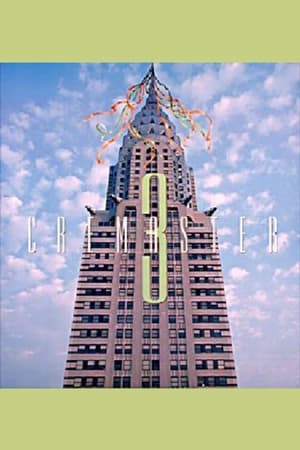
CREMASTER 3 is set in New York City and narrates the construction of the Chrysler Building, which is in itself a character - host to inner, antagonistic forces at play for access to the process of (spiritual) transcendence. These factions find form in the struggle between Hiram Abiff or the Architect...
Inspired by Edogawa Ranpo’s novel, A Brute’s Love. The visual direction of this film is heavily influenced by Salvador Dalí, along with lots of other painters the director admired over the years. In many ways, this film is a reflection of personal artistic evolution.
Short film in competition at the 48Hours Film Project. Sci-Fi/Mystery genre. Directed by Simone Marsella, starring Ludovica Castrichella, Dario Grasso and Federico Imola.
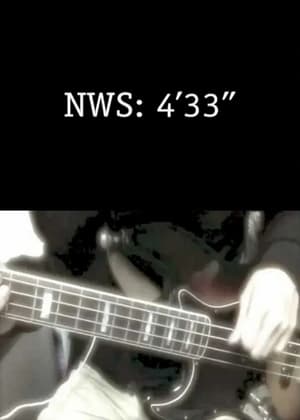
In February 2013, the New World Symphony presented Making the Right Choices: A John Cage Centennial Celebration, a spectacular three-day festival dedicated to the music and ideas of John Cage. As part of the festival, NWS hosted a new video installation entitled NWS: 4’33″, created by New York-based composer, director, performer and recording artist Mikel Rouse; which consisted of video performances contributed by Cage fans via a special YouTube site set up by Rouse. The public was invited to record and submit their own video, and visit the installation during the festival to see their work in the SunTrust Pavilion at the New World Center. These videos will be included in an online Archive of the event, a lasting tribute to this defining and seminal artist.
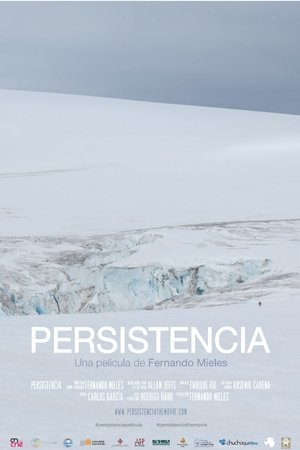
In Antarctica, an artist prepares his installation simultaneously with a group of scientists conducting research. An essay on the persistence and loneliness of the creative act; like the flight of a butterfly in chaos theory or a silent prayer. A sensory experience. A visual poem made of ice, snow and wind.
After developing a poem at the height of the lockdown on a dystopian journey through the streets of North London to the tranquil relief of the Park. The poem, illustrated with the occasional image, reflects the range of emotions many people have gone through in these difficult times.
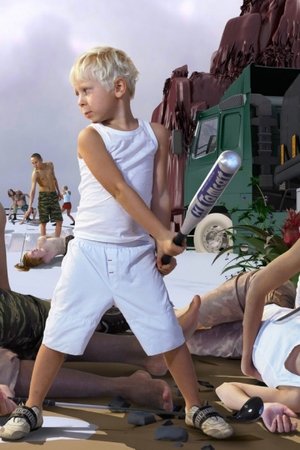
The virtual world generated by the real world of the twentieth century is growing exponentially, like an organism in a Petri dish. Crossing its own borders in to new zones, it absorbs its founders and mutates in to something absolutely new. In this new world real wars look like a game on americasarmy.com. Prison torture appears more like the sadistic exercises of modern-day valkyries. Technologies and materials transform the artificial environment in to a fantasy landscape of a new epoch. This paradise is a mutated world where time is frozen and the past is neighbor to the future.
These 131 video monitors stacked in a grid present simultaneous, continuous footage of the German artist during the last year of his life. In this filmed diary-project that Dieter Roth executed while convalescing in Reykjavik and Basel, we see him not only working in his studio but also while he sleeps, bathes, and uses the bathroom. It is nearly impossible to pay attention to only one video without becoming distracted by an unexpected sound or movement coming from one of the many other screens. Each monitor broadcasts a different point in the artist's daily routine, while the gridlike arrangement of monitors reinforces a sense of order and chronology.
Short experimental film by Nan Wang
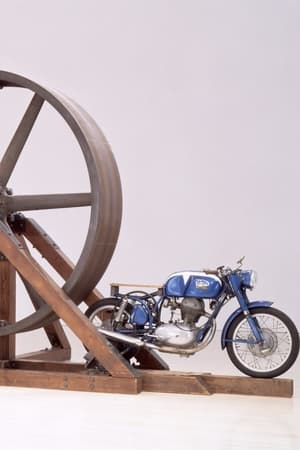
During the 1980 exhibition of Burden's monumental kinetic sculpture The Big Wheel at Ronald Feldman Fine Arts, New York, Burden and Feldman were interviewed by art critic Willoughby Sharp. Burden articulates the process of creating The Big Wheel, a 6,000-pound, spinning cast-iron flywheel that is initially powered by a motorcycle, and discusses its relation to his earlier performance pieces and sculptural works. Addressing his motivations and the meaning of this potentially dangerous mechanical art object, Burden discusses such topics as the role of the artist in the industrial world, "personal insanity and mass insanity," and "man's propensity towards violence."
An unnamed passer-by is forced to trace a circular route inside an abandoned tram station, facing loss and time. The broken walls act as a channel, transmitting fragmentary, blurred and analogical memories.
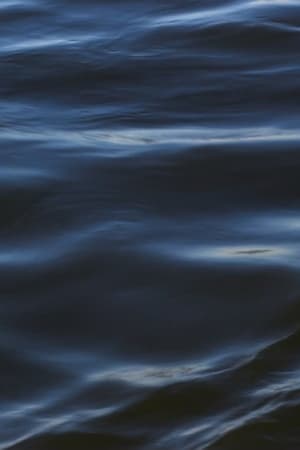
The decision to move to Holland doesn't sound like a wise idea. Why move to a country that could be flooded at any moment? For the last 25 years, the political climate has shifted. The public debate on migration has become harsher, more heated, and polarized. What would have been considered right-wing xenophobia back then, is now considered mainstream. Populists simplify complex realities into good and evil, victims and perpetrators: ‘us’ versus ‘them’. Their rhetoric often consists of dehumanizing words and metaphors. One of these is ‘water’. In reality, water is not an immediate threat to the average Dutch person; but it is a huge threat to the thousands trying to reach the Netherlands. People trying to survive the Mediterranean Sea in rubber boats. Trying to survive winter on the Aegean coast in primitive tents. To them, water really is deadly.
Diptych installation video. Digital phenomenology disentangling the production of desire. 2025
"Regina José Galindo’s Tierra (2013) explores connections between the exploitation of labor, resources, and human life in Guatemala. Presented at a larger-than-life scale, Galindo stands naked on a parcel of land that is excavated by an encroaching bulldozer. Conjuring imagery of machine-dug mass graves, the work draws attention to the massacre of hundreds of thousands of Indigenous people, mostly Maya Ixil, during the Guatemalan Civil War (1960–96). As the excavator digs around her, the artist stands fixed and unrelenting." - MoMA PS1
This cabinet of curiosities is a product of the exchange of ideas with the artist Ricardo González . We talked about how the cymatics and patterns that nature produces have an echo in artisanal production in Masaya, Nicaragua. Visits to various museums in Paris gave further support to these observations. This video installation condenses that meeting of ideas.
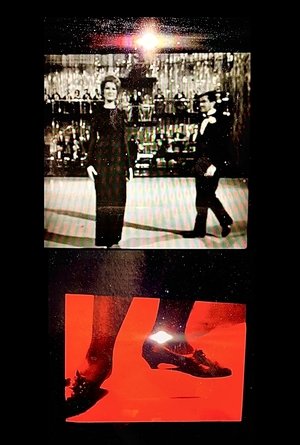
"...Digital Video Effect: “Holes”, 2003, in which the appearance of thousands of dots on screen—revealing and concealing images of horrible accidents (which Price, again, found online)—is accompanied by as many key strikes on a synthesizer whose notes sample the human voice. The resulting sound (in the tonality one possesses when a doctor employs a tongue depressor and asks you to say “ahhh”) also induces a nausea." - Excerpt from Artforum
A reflection on the iconic headquarters of the Johnson Publishing Company in downtown Chicago. The eleven-story Modernist building on South Michigan Avenue was home to Jet and Ebony magazines since its design in 1971. The building was heralded as the first major downtown Chicago building designed by an African-American architect since the eighteenth century. In the case of the Johnson family and its legacy, Hartt looks to the intersection of the publisher’s ideals and values, the style and aesthetics embodied by the site and the lasting cultural impact of the magazines.